Monday, October 8, 2018

Powerful artists

Here are some artists currently doing remarkable work at the intersection of art, environment and science. Thanks to Josh Harrison for the suggestions:

David Haley

"Ecological artist, David Haley, believes our ability to survive Climate Change is the enactment of a complex evolutionary narrative. As the dance of creation and destruction, also, demands new opportunities and meanings for the other side of collapse, his inquiries into the nature of water, whole systems ecology, complexity, and integral critical futures thinking inform his arts practice, academic research, education and community developments."

Tim Collins & Reiko Goto

"Tim Collins is an artist, author and planner, working across art, science and philosophy for over twenty years. He has worked within a wide range of communities developing research, methods and practices that take best advantage of art and aesthetics in the public interest...Over the last decade, Collins and his partner Reiko Goto have been developing artwork, tools and technologies that attend to the silent, the invisible and the different temporal relationships that occur at the scale of forests and gardens."
Jonathan Baxter

"Jonathan Baxter is an ‘artist and …’ He works across disciplines – both art and non-art related – using psychoanalytic methodologies and performative practices to variously open up, challenge and propose what is."


Lucas Ihlein 

"Ihlein is an award-winning Australian artist whose work explores the relationship between socially engaged art, agriculture and environmental management."


=================

Recommendations for artists who are compatible with field station science

Take a look at these artist's websites to see if their work resonates with yours:

"...I promised to send along the list of artists I know of who would be a great fit for a residency at a field station (and/or they may have already done something like this in the past)

Carolina Aragon

Cathleen Faubert
Helen Glazer
Ryan Griffis
Sarah Kanouse
Brian Knep
Mikhail Mansion
Jane Marsching
Lize Mogel
Teri Rueb
Brooke Singer
Joseph Smolinski
Andi Sutton

These are some that are at the top of mind at the moment, but I could certainly come up with more if folks are interested.

Best wishes,

Catherine D'Ignazio

Assistant Professor, Emerson College
Senior Fellow, Emerson Engagement Lab
Research Affiliate, MIT Center for Civic Media
@kanarinka | www.kanarinka.com | 617-501-2441"

System Drawing

To connect art and science process, photographer Andrea Frank of SUNY-New Paltz developed a program called System Drawing.

These sessions are "experimental trans-disciplinary four-day think tanks. The research is thematically framed by pressing environmental concerns, which are addressed through a creative systems thinking lens and resonate with social, historical, economic, and psychological factors"

The program involves, "group-based creative processes that support new ways of conscientiously connecting with our environment and each other. A System Drawing session usually starts with experiential body work to expand multi-sensory awareness, which is followed by a slow walk through the chosen site and environment. For each session, a set of site specific tools and materials is provided. Participants intuitively interact with the material, while also fluidly responding to each other’s interventions."

Thursday, October 4, 2018

Festival for the Earth


ABOUT FESTIVAL FOR THE EARTH

Festival for the Earth is a 2-day international gathering proposing...transformations, reflections and alternative modalities to reframe environmental issues.

Knowledge access and information flows are highly important as actual environmental emergencies urge a radical change of perspective and practices. To this end, the Festival for the Earth is conceived by the artist Maria Rebecca Ballestra as an art project for social transformation that aims to instigate creativeness directed at positive transformation processes in science, humanities, economy, ecology and art.

The conference’s location alternates between Venice and the Principality of Monaco, two cities that are already linked by strong historical ties, two symbolic places where the relationship between “water” and land (characterized by its scarcity) has shaped both the minds of their citizens and their history. In December 2018 the Festival’s third edition will return to Venice and will be hosted in the prestigious locations of Ca’ Foscari University Venice, Ateneo Veneto, the Natural History Museum of Venice and the Botanical Garden of Padova.

For more information about the Festival and requests for interviews:

Stefania Pensabene
+39 335 724 94 29
press@festivalfortheearth.com
www.festivalfortheearth.com
twitter: @Ffortheearth – istagram: ffortheearth – facebook: Festivalfortheearth

Monaco, 04 October 2018 – Festival for the Earth comes back to the most famous lagoon in the world for its 2018 edition, with a wide range of conferences, workshops, artist talks and events to be held in different locations around Venice on December 3 and 4.  In its third edition, however, the Festival will also expand its reach to the Botanical Garden of Padua, one of the most ancient and beautiful in the world, which will host film projections and discussions at its Auditorium.

Once again, Festival’s guest speakers will come from the top of the academia and professional world (Nobel, Pulitzer and Goldman Prize Winners will join us in Venice), but also members of influential international organizations. We are honored to announce that HSH Prince Albert II of Monaco and Mr. Youba Sokona, UN’s Intergovernmental Panel on Climate Change (IPCC) Vice-Chair will give the opening speeches of the Festival, followed among others by world renowned climatologist Nigel Tapper, who contributed to the IPCC study that resulted in the joint award of the Nobel Prize to Al Gore and the IPCC, by Pulitzer Prize Daniel Fagin and by Goldman Prize Rossano Ercolini.

Saturday, August 18, 2018

Jean Painlevé documentaries

"Jean Painlevé was a film director, critic, theorist, and animator, yet his interests and studies also extended to mathematics, medicine, and zoology. Amazingly, all these disparate strands came together in a groundbreaking, decades-spanning artistic career. Operating under the credo: Science is fiction, Painlevé forged his own unique cinematic path, creating countless short films for both the viewing public and the scientific community. Moreover, he was also one of the first filmmakers to take his camera underwater. Surreal, otherworldly documents of marine life, these films transformed sea horses, octopi, and mollusks into delicate dancers in their own floating ballets." 

On Amazon.com

Monday, July 30, 2018

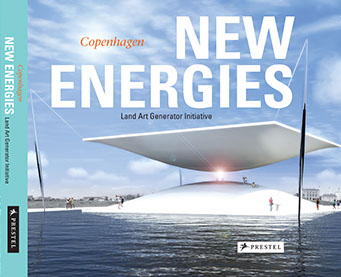
Land Art Generator Initiative


"The Land Art Generator provides a platform for artists, architects, landscape architects, and other creatives working with engineers and scientists to bring forward solutions for sustainable energy infrastructures that enhance the city as works of public art while cleanly powering thousands of homes...

The goal of the Land Art Generator is to accelerate the transition to post-carbon economies by providing models of renewable energy infrastructure that add value to public space, inspire, and educate—while providing equitable power to thousands of homes around the world."


Thursday, July 12, 2018

Common Ground Art, Data, and Ecology at New York State Field Stations

"This report assesses the potential for collaboration in New York State between the arts and field stations: places and programs where scientific researchers conduct long-term studies of diverse ecosystems. It provides an overview of how and where this transdisciplinary work is currently taking place, and makes recommendations to advance this effort across the state. It seeks to encourage further opportunities for artists that, when combined with environmental research, can aid community development and quality of life by advancing awareness of social-ecological systems: how people use, perceive, and shape our environment."
The report finds that art/science collaboration at field stations is powerful, and advances a series if recommendations in 3 emphasis areas:

1). Advance existing art residencies at field stations: These programs would benefit from support for planning and implementation of programs; evaluation; and connection to national gatherings and conversations.

2). Share information and best practices from across the field: a centralized and accessible information resource—including case studies, best practices, documentation, and a directory of representative artists—would help field stations conceptualize programs and make the case for support within their institutions and externally, and in NYS and beyond, spread documentation of the transformative outcomes of this work.

3). Create formal and informal opportunities for crosssector networking: Our convening demonstrated the value of cross-sector dialogue, and underscored the need for more such opportunities including facilitated conversations between field stations, regional art and science salons, a statewide conference, and a data, art, and environment working group.

Read the entire report here

Wednesday, July 4, 2018

Advancing "One Water" Through Arts and Culture: A Blueprint for Action


"The US Water Alliance believes that arts and culture can move the needle for One Water management—an approach to water management that is inclusive and integrated to ensure a sustainable water future for future generations...

The urgent and multifaceted nature of our water challenges calls for new ways of thinking, acting, and investing. Water leaders across the nation are embracing the One Water approach—managing water resources in a more integrated, inclusive, and sustainable manner in order to secure a bright and prosperous future for our children, communities, and country.

ArtPlace America and the US Water Alliance believe there is tremendous opportunity to utilize arts and culture strategies to advance One Water. As creative thinkers and doers, artists can be powerful partners for water leaders seeking to reimagine traditional approaches to water planning and management and connect with communities in new ways.

Our partnership has been a collaboration in the finest sense of the word. Together we learned about each other’s sectors, challenged assumptions, and have developed a powerful framework for how to use arts and culture to forge One Water progress. We are so inspired by the creative ways that utilities, environmental groups, public agencies, and other water practitioners are collaborating with artists and cultural leaders. But it is only the beginning."
Read the full report here