As we attempt to link art and science to increase the power of each, ArtSciConverge encourages developing partnerships with other like-minded entities like museums, university programs, artist residencies, arts councils, and other cultural institutions.
But there may be potential allies we've been overlooking: religious organizations.
I was recently gob-smacked when a group of fundamentalist Christians disrupted a public meeting to promote a hands-off management strategy for addressing western wildfire, and to express their heartfelt belief that this was the best way to protect iconic wildlife. I didn't see that coming from a sector that, in my experience, has aggressively claimed stewardship over the Earth, and--often--an understanding that it was put here for us to use up before the Apocalypse. But it's good news for ArtSciConverge: we can work with that!
Throughout history, many religious traditions have addressed the challenge of human existence by withdrawing their practitioners from worldly life, or by adopting deeply cynical perspectives on the need to accelerate the arrival of an apocalyptic end. But, like art and science, religion can also be, and often is, used as a mechanism for understanding and shaping the world. Significant examples of religious engagement in the world's problems include:
Engaged Buddhism. Founder Thích Nhất Hạnh interprets Buddhism is a way of linking authentic Buddhist practice—particularly mindfulness—with social action. The western efforts are centered in Loubes-Bernac, France and Berkeley, CA. This sect identifies an explicit social ethos present in the earliest recorded Buddhist teachings, and adopts the non-violent resistance of Mahatma Gandhi and Martin Luther King. Beside Hanh's efforts, the current Dalai Lama has expressed a need for Buddhists to be more involved in the socio-political realm, stating, "Buddhists have not acted vigorously to address social and political
problems. In this, we have much to learn from the Christians." Engaged Buddhism is the model for the larger Engaged spirituality, which refers to religious or spiritual
people who actively engage in the world in order to transform it in
positive ways while finding nurture, inspiration and guidance in
their spiritual beliefs and practices.
Christianity has a long and checkered record of social engagement, a history that includes some of the most violent, oppressive and exploitative policies and episodes in recorded human history. Frankly, given current headlines, there is still too much of this and a long way to go to end it. But Christian organizations like the Sojourners work "to articulate the biblical call to social
justice, inspiring hope and building a movement to transform
individuals, communities, the church, and the world."
Network of Spiritual Progressives. Founded as an interfaith organization in 2005 by Rabbi Michael Lerner in Berkeley, CA, the network seeks to influence American politics towards more humane, progressive values.
Other efforts may spring from the mystical traditions of major religions, or develop Earth and nature-based spirituality (deep ecology, radical environmentalism, hallucinogen-based spirituality, etc.); these New-Age movements have often been severely criticized for lack of intellectual rigor, which rather misses the point.
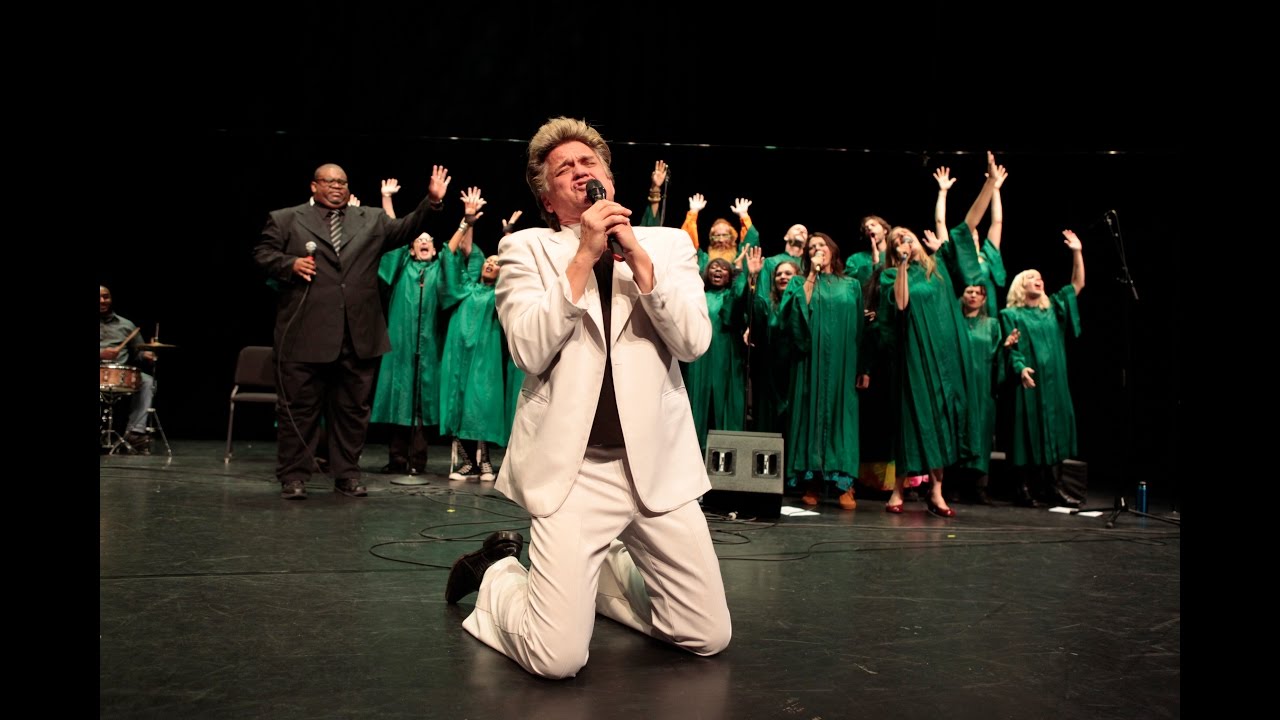
Artists have not failed to notice all this. One excellent ongoing project is Reverend Billy's Church of Stop Shopping, whose Fundamentalist theatricality is twisted in service of a deep message of economic revolution.
In 2014, 4 artists, 4 scientists and the project coordinator, all from the University of Wyoming, met at the prestigious Ucross Foundation ranch for a 2-week retreat. The results of that collaboration—called the Cross-Pollination Experiment--are astonishing and ongoing. The following is a record of correspondence about the project between me (Faerthen Felix), participant Michael Dillon, and organizer Jeff Lockwood.
Jeffrey A. Lockwood is Professor of Natural Sciences & Humanities at the University of Wyoming. He began his career as an entomologist, then shifted to philosophy.
Brochure, explaining the project and some of its outcomes.
-----------------------------
FF:It looks like Ucross facilitated the Cross-Pollination Experiment. How did they find all of you? Was it an open call, or were you recruited? It sounds like there was an "organizer" and Ucross didn't just invite you all out to stay, then leave you alone. Who was that organizer, and how was the experiment structured? Were there structured exercises, specific goals and deliverables?
MD: Jeff [Lockwood] was the mastermind of the initial Cross-Pollination project (which led to all the other good stuff), did the fund raising (from many sources on and off campus), and was the leader. He planned all the activities, the approach, etc. Briefly, we were invited by Jeff and then all lived together for 2 weeks -- we had separate housing but spent most of our meals and lots of free time just hanging out. This was a critical element, in my opinion, because we had the chance to really get to know and trust each other. Jeff ran nightly post-dinner meetings in which we reflected on the day, discussed the positive, negative, difficult, exciting, etc.
Our first day was a "perspective" day, in which we all had the morning to prepare a presentation about the place (Ucross) through our eyes/experience/academic background. We spent the afternoon moving between our studios giving and attending these presentations (8 in all). Jeff then organized a "speed dating" for the next day in which each artist spent 1 hour with each scientist discussing ideas. The goal was to come out of each of those meetings with several concrete ideas for how you could collaborate in a meaningful way. That is, not just artists interpreting the science or scientists trying their hand at art, but rather collaborations that enhanced both disciplines. Jeff paired us up (not sure how he decided as there were so many interesting collaborations possible!) and then we went to work. We had less than a week to make progress on the collaboration as Jeff had already scheduled a "Saturday University" event for the end of the trip in which we would present our "products" to the broader public in the Ucross space.
JL: Some backstory…I did a residency at Ucross as a writer. And in the course of that time, I had some lovely chats with Sharon Dynak, the executive director. She indicated that Ucross was increasingly interested in projects that would integrate natural sciences and arts, particularly as a means of gaining a deeper appreciation of the ranch and surrounding countryside. I was putting together a pitch for a UW venture in this regard when Shannon Smith (executive director of Wyoming Humanities Council) met up with me and became super-excited about the possibilities. So Ucross provided enormous in-kind support and WHC provided financial support (especially in terms of the public presentations as UW’s Saturday University program that summer). I should also note that the UW Biodiversity Institute provided funding. I’ve also attached one of the original proposals so you can see what approach was being advocated.
FF:I find that, almost universally, people who have engaged in art/sci collaborations find them useful and positive, but it is difficult to measure outcomes clinically, and there is little actual science available on the results. Do you have any publication references that somehow document the effectiveness of the collaboration?
MD: I know what you mean, but don't have references. Our own experiences and all the products that have emerged are the best evidence I can provide.
"This has been an incredibly productive, fruitful venture: 3 exhibitions, a documentary film, an online repository of microbe portraits and artist responses to them, an opera, and Xbox Kinect video game, 3 NSF grants to date totaling over $6 million in funding. The cross pollination website has links to videos and other information about the different projects. We continue to actively develop new projects and collaborations. This venture has been one of the most exciting, invigorating, rewarding, and fun things I've done for quite some time!" -- MD
JL: I’m there with Michael. Our products speak for the productivity of this venture. But one of the deliverables is also a sense of morale, excitement, playfulness and fulfillment for academic artists and scientists who may not see much “external” reward and, indeed, have good reason for demoralization.
FF:I found this statement by Jeff Lockwood really interesting: "These synergies have revealed elements of the natural world that would otherwise be overlooked by both artists and scientists." Can you elaborate and provide some examples? This is a big aspect of our push to get more art at field stations: that art is a discovery process that can enhance scientific creativity, and uncover raw material for science. But finding clear and obvious A-to-B examples is challenging.
MD: One example was my collaboration with Rachael Shaw, a dancer/choreographer. We used the notation of dance (Laban notation) to quantify the posture and movements of bees after exposure to sublethal doses of pesticides. A tool from choreography allowed us to better quantify something that was otherwise difficult to describe but visually obvious: bees move differently when exposed to minute quantities of pesticides. Unfortunately, we have not published this work. Rachael moved not long after the initial Ucross trip and we've found it difficult to find time to work together from a distance. Other examples are the microbestiary, and a collaboration between Jeff and Anne Guzzo (a composer): an opera about the disappearance of the Rocky Mountain Locust.
JL: Yup, LOCUST: THE OPERA is premiering this September (I’ve attached the proposal for that project so you can get a sense of the science/art collaboration)—and I should add that Ashley Carlisle, one of the Ucross participants, will be designing and producing our costumes, scenery, etc.
FF:It's great that UWYO faculty work with Ucross. I think field research stations would really benefit from identifying artist-residencies near them to collaborate with on art/sci linkages.
MD: Ucross was fantastic - very supportive of the whole endeavor. But, although some of our art faculty apply for and are awarded residencies at Ucross, I am not sure that the Art/Science residency is an ongoing element for them.
JL: I think that one of the key features that made our venture successful (in addition to my very carefully selecting participants—there was no open call for people) is that everyone came from one institution, which has allowed the venture to continue for years with all sorts of combinations and recombinations of people based on interests and opportunities. And such ongoing collaborations would be very difficult to sustain across institutions (heck, they’re hard enough across departments and colleges in a single institution!).
FF:Is there any kind of exportable prescription that either guided the process, or emerged from it? Something like the HJ Andrews Ecological Reflections program that is kind of plug-and-play for any field station that wants to participate, or Best Practices, or anything like that I can direct field stations to?
MD: I think that, in our case, the key was Jeff's vision -- the combination of prescribed reflection and conversation time, of a deadline for a product, and also of flexibility so the group could go where it wanted to (we often veered from Jeff's original plan - to his consternation and delight, I think).
JL: If there is anything approximating a set of guidelines/rules, it might be found in this very concise summary on YouTube. I’ve attached the text that I used for this Ignite presentation:
IGNITE
Science & Art: Instructions for Making a Chimera
1.
I have had the joy of orchestrating a three-year project bringing art and science into collaboration. We call ourselves the Ucross Pollinators to honor the institution hosting our gatherings—and to capture the underlying spirit.
2.
The Wyoming Humanities Council has been our principle supporter because they understand that if the arts are the flowers of civilization and the sciences are its stems, then the humanities are the roots.
3.
Our products include: National Science Foundation grants infused with art, a Microbestiary of unicellular life, a choreographic scoring method to encode insect movement, and operatic arias evoking the geology of Wyoming.
4.
I’d like to share with you what I’ve learned as an academic anthropologist, observing artists and scientists working and creating together—as well some thoughts about the institutional framework in which they are embedded.
5.
As for the people, here’s a simple but important consideration. Scientists are not artists and vice-versa. Each pursues distinct ways of knowing themselves and the world. To which I say, Viva la difference!
6.
The recipe for a tasty collaboration of artists and scientists is not to blend them into a homogenous smoothie, nor to make a loosely tossed salad. Instead, simmer them together into a mouthwatering stew.
7.
For our venture, I chose “big dogs”—people at the top of their game, not those needing to yap to establish their dominance in the pack. I’ve found that little dogs are much more likely to bite.
8.
The sense of wonder among the participants that catalyzed collaboration was akin to watching a spellbinding magician—and then being even more enchanted upon learning how the scientific or artistic trick was done.
9.
The one quality that is critical to fruitful art-and-science ventures is playfulness—a vulnerable, childlike willingness to ask “why not?”, to wonder “what if?”, and to genuinely share one’s toys.
10.
Scientists and artists need more than a one-night stand to achieve satisfaction. Fulfillment requires sustained interaction, and fertility is enhanced by proximity. And so, being colleagues at the same institution is a tremendous asset.
11.
Collaboration does not mean artists making science pretty. Rather, it requires mutual respect and that means genuine parity of power and prestige. In this dance, each must be willing to lead—and to follow.
12.
Without constraints, the possibilities at the intersection of science and art are astronomical. We need boundaries. Or as Robert Frost said of free verse poetry: It’s like playing tennis with the net down.
13.
An interdisciplinary team is often seen as having an ecologist and geologist. Nobody ever adds a poet or dancer. We sought transdisciplinarity—engagement that was synergistic rather than additive.
14.
I’ve observed that pairs work extremely well. Having one partner allows intimacy. Academic orgies don’t entail the commitment that sustains relationships. Maybe science and art collaborations are like American marriage—serial monogamy.
15.
Turning to the institutional context, universities might tolerate, but rarely encourage, science-art collaborations—unless there’s money to be had. So, individuals must find working together to be internally rewarding.
16.
Trying to define science and art is an unhelpful starting point institutionally—much like attempting to define the humanities. It’s like saying that before dating, one must define beauty, intelligence, and love.
17.
The university has islands of authentic collaboration—such as the Art Museum and the Biodiversity Institute—floating in a sea of institutional ambivalence. For the most part, we have a College of Arts or Sciences.
18.
STEM (Science, Technology, Engineering and Math) is a glutton. Adding the Arts to create STEAM (I prefer MEATS) still leaves artists nibbling crumbs from the table. But please sir, I want some more.
19.
Art-and-science collaborations subvert institutional norms. The results don’t add up on a spreadsheet; they defy administrative classification. These projects are viewed as the icing, not the cake, of a respectable academic career.
20.
In conclusion, art-and-science collaborations are acts of humanistic faith. The Cross-Pollinators will continue to pursue beautiful, grotesque, and strangely enchanting works that take flight—or not.
Cross-Pollination Experiment documentary. Explains the program in detail as it unfolded.
Saturday University lecture. Explains some of the trouble communicating the project.
This 2011 article by Ariane Koek is an excellent discussion of the potential and pitfalls of art/science collaboration.
=================
Olafur Eliasson's "Your Split Second House", shown at the Venice Architecture Biennale in 2010, took physics as its jumping-off point.
It is one of the fashionable arts movements of the moment. It is also one of the most troubled because the aesthetic is unsubtle and still evolving. With the seemingly giddy rise of the wonders of science in our culture, epitomised by the boyish Brit physicist Brian Cox's blockbuster TV series, “Wonders of the Universe” on the BBC, arts/science (sometimes called “sciart”) is gaining ascendancy in the 21st century as a movement of influence and power.
Almost every week, across the world, exhibitions are opening that are billed as arts/science to cash in on this emerging trend, which is also driven by new funding possibilities from science in the current arts cash crisis.
But we are in the middle of a crisis of another kind—a reduction in the wonder of creativity itself, and the question of who controls it and how. Creativity, and where it comes from, is one of the last great human frontiers, and one over which we have little control, cash crisis or no cash crisis.
But there is a battle to do just that, and reduce creativity to a systematic formula in our function-obsessed, input-output, application-driven world. Artists are being driven to become scientific, from the moment they fill in a funding application predicting their final production.
Let me explain. I work in arts/science myself. So, you could argue, who I am to talk? After all, I have created an artists’ residency programme at Cern, the world’s largest particle physics laboratory and home to the large hadron collider. But it has at its heart the wonder of the creative process. It is not a residency which is process-driven or defined by an outcome; nor does it demand communication about or homage to the science.
I have deliberately set it up to be a laboratory of the imagination, where freeplay can happen. The science and the place are springboards of the imagination for the artists, not the destination, reason, mission or simulacra of production. When they apply, prospective artists may be asked to imagine a project they would like to carry out, but we fully expect that to change completely once they come to Cern—and who knows what will happen then? That’s part of the process.
This goes against the trends that can be seen in the arts/science aesthetic which has emerged from the 20th century, which contains, in my view, three very dangerous strands.
First, art as a communicator of science, where the artist represents the science to the outside world. This is, essentially, art as a publicity and communications tool, and can happen consciously or unconsciously when the artist becomes subsumed in the science. This is becoming critical in the current cash crisis, when artists are seeking new ways of funding their work and science promises new purse-strings.
Second, science as a means of production, where scientific methods, experimentation and technologies become the channel through which art is processed and made, subjugating the imagination to reductive processes.
Third, science as art – for example, when a snapshot of a cell is admired as beautiful or a chemists' laboratory is found in an art gallery. Both instantly become art, “daringly” crossing the threshold of the arts/science boundary, but in reality saying nothing more than that. It is an intervention that leads nowhere.
But there is a fourth, more invisible, strand, where the arts and science are in fluid interchange—just as they were in the time of Leonardo da Vinci, when he moved easily between the two. Here, the disciplines are honoured for their similarities as well as their essential differences.
Let me explain this fourth and more subtle strand in full. Arts and science are similar in that they are expressions of what it is to be human in this world. Both are driven by curiosity, discovery, the aspiration for knowledge of the world or oneself, and perhaps, as the conceptual artist Goshka Macuga said on her recent visit to Cern, a desire for world domination. She was half joking.
But they express themselves in different ways: the arts through the body and mind, often driven by the exploration of the ego, contradictions and the sheer messiness of life; science through equations, directed, collaborative research and experimentation that works in a progressive, linear fashion.
As Dr Michael Doser, the experimental physicist on Cern's cultural board for the arts, says: “What I find wonderful about working with artists is that they are just as fascinated by side routes and diversions as they are by the direction in which they are going. This is what makes artistic work really different from scientific work.”
These oscillations between sameness and differences form what I call the fourth aesthetic—the Leonardo way. Honour the differences and then amazing work, true arts/science work, happens. One example is Olafur Eliasson's Your Split Second House, shown at the Venice Architecture Biennale in 2010, which took physics as its jumping-off point.
This installation of twirling water-sprays momentarily separated the drops of water under strobe lights. It is a piece about perception, and was inspired by thinking about how long it takes an astronaut to get out of a black hole. The answer is about a day. But to people who are not in the hole, the astronaut takes forever.
Or take the work of Mariko Mori, which is driven by engaging with opposites and the oscillations between the two: reality and fantasy, seriousness and humour, human and machine, technology and nature, science and religion. This is shown very clearly by Wave UFO, which is simultaneously an architectural piece, a scientific experiment in which the visitor’s brain waves become the work of art in a space-age pod, and a temple to meditation.
The piece is fuelled as much by science and technology as it is by Buddhism and an investigation of religion. Critically, Eliasson and Mori are not so enthralled by the wonders of science that their work loses its wonder and integrity.
For nine months, I tracked a very confident young Swiss artist and astrophysicist working together on a residency. For four months, they were equally enthralled by each other. But then there was a turning point. The artist said to me: “The science is so amazing that I have to prove that I understand it and that I too have a brain.”
From that moment, I knew he was lost. The work he did at the end of the residency was at best a communications piece trying to explain what quantum fields were. Now, a year later, he has rediscovered his playfulness by regaining his distance from the all-intoxicating wonder of particle physics, and is starting to create great work again.
I will leave you with two quotes, one from an artist and one from a scientist, in order to practise what I preach: mutual respect, equal exchange and difference.
Albert Einstein: “The most beautiful experience we can have is the mysterious. It is the fundamental emotion which stands at the cradle of true art and true science. Whoever does not know it and can no longer wonder, no longer marvel, is as good as dead, and his eyes are dimmed.”
Keith Tyson: “If you attempt to marry and equate art with science, then you fail. If you allow what is not similar about art and science, and their different methods and processes, to co-exist and thrive, then a real art/science collaboration and aesthetic will emerge. But at the end of the day, art and science are united by one logic and one impulse—both are attempts to understand what it is to be human and the world around us.”
That’s why I call Collide@Cern, the programme I have created, Cern’s latest great experiment, colliding elements even more elusive than the Higgs boson: namely, human creativity and the imagination. It was founded to honour the creative process, and to keep science and the arts in an equal balance of wonder—and apart, too. Let’s just have spaces for this to happen, and let the magic and the mystery—those chance operations the great John Cage talked about—occur.
The writer is a Clore Fellow and is head of international arts development and the arts programme at Cern. She created Cern's arts policy and its main strategy, the Collide@Cern Artists' Residency programme.
Emotions play a central role in the
decisions we make. For example, we
often make poor investment choices
because we are driven by our emotions
rather than rational judgment
(Tversky & Kahneman 1991). On the
positive side, when emotional input
is added to learning experiences, it
makes them more memorable and
exciting. The brain deems the information
more important and enhances
memory of the event. Presenting
facts alone is less likely to result in
long-term changes in feelings and behaviors
(Sylwester 1994; Weiss 2000;
Cable & Ernst 2003).
The arts offer a way to make an
emotional connection to people, and
the visual and performing arts can
help conservation practitioners reach
new audiences. Art can provoke
reactions that typical education and
outreach methods do not. Art has the
potential to inform audiences or participants
in a new way about conservation
topics, and it can stimulate
new dialogues and actions...
Stephen Tonsor at the Carnegie Natural History Museum directed us to this 2013 document produced by The Studio for Creative Inquiry at Carnegie Mellon University.
It's a set of recommendations for artist in residence programs at universities, based on a survey of 14 universities, and paying special attention to the IP issues. The recommendations could also be very helpful to FSML art programs, as well.