Showing posts with label event. Show all posts

Thursday, October 4, 2018

Festival for the Earth


ABOUT FESTIVAL FOR THE EARTH

Festival for the Earth is a 2-day international gathering proposing...transformations, reflections and alternative modalities to reframe environmental issues.

Knowledge access and information flows are highly important as actual environmental emergencies urge a radical change of perspective and practices. To this end, the Festival for the Earth is conceived by the artist Maria Rebecca Ballestra as an art project for social transformation that aims to instigate creativeness directed at positive transformation processes in science, humanities, economy, ecology and art.

The conference’s location alternates between Venice and the Principality of Monaco, two cities that are already linked by strong historical ties, two symbolic places where the relationship between “water” and land (characterized by its scarcity) has shaped both the minds of their citizens and their history. In December 2018 the Festival’s third edition will return to Venice and will be hosted in the prestigious locations of Ca’ Foscari University Venice, Ateneo Veneto, the Natural History Museum of Venice and the Botanical Garden of Padova.

For more information about the Festival and requests for interviews:

Stefania Pensabene
+39 335 724 94 29
press@festivalfortheearth.com
www.festivalfortheearth.com
twitter: @Ffortheearth – istagram: ffortheearth – facebook: Festivalfortheearth

Monaco, 04 October 2018 – Festival for the Earth comes back to the most famous lagoon in the world for its 2018 edition, with a wide range of conferences, workshops, artist talks and events to be held in different locations around Venice on December 3 and 4.  In its third edition, however, the Festival will also expand its reach to the Botanical Garden of Padua, one of the most ancient and beautiful in the world, which will host film projections and discussions at its Auditorium.

Once again, Festival’s guest speakers will come from the top of the academia and professional world (Nobel, Pulitzer and Goldman Prize Winners will join us in Venice), but also members of influential international organizations. We are honored to announce that HSH Prince Albert II of Monaco and Mr. Youba Sokona, UN’s Intergovernmental Panel on Climate Change (IPCC) Vice-Chair will give the opening speeches of the Festival, followed among others by world renowned climatologist Nigel Tapper, who contributed to the IPCC study that resulted in the joint award of the Nobel Prize to Al Gore and the IPCC, by Pulitzer Prize Daniel Fagin and by Goldman Prize Rossano Ercolini.

Tuesday, November 7, 2017

Creativity and Collaboration: Revisiting Cybernetic Serendipity & Symposium


1. Creativity and Collaboration: Revisiting Cybernetic Serendipity


- and -

2. Role/Play: Collaborative Creativity and Creative Collaborations Student Fellows Symposium


National Academy of Sciences; Washington, DC
March 12-14, 2018

This unique interdisciplinary experience is two distinct but related events that include the Student Symposium on March 12 and the Colloquium on March 13-14.

* * *

1. Role/Play: Collaborative Creativity and Creative Collaborations Student Fellows Symposium 

March 12, 2018, Washington D.C.

Supported by the Arthur M. Sackler Foundation for the Arts, Sciences and Humanities and Google, Inc.
Organized by Liese Liann Zahabi and Molly Morin

CALL FOR SUBMISSIONS - DUE NOVEMBER 15

North American graduate students enrolled in masters and doctoral programs across all disciplines are invited to apply to participate in the Monday, March 12 Student Fellows Symposium and attend the Sackler Colloquium which follows on March 13-14, (please note that the selected students are expected to attend all three days of events). Approximately 50 graduate students will be selected to participate in a series of 15-minute and 6-minute talks and a creative exhibition/poster session that will take place during the Student Fellows Symposium.

Overview:
Scientists thinking like artists—artists thinking like scientists. When these traditionally defined roles mix together, how is the process of making work or conducting research altered? Does the play between disciplines benefit a designer’s practice, an engineer’s output, or a scientist’s data? What are the hazards and opportunities?

There is power in looking past the sometimes narrow confines of one discipline: possibilities emerge, allowing artists/designers/engineers/scientists to ask different questions and create innovations. However, this is difficult work. Navigating uncharted territory compounds the uncertainty and potential for missteps that are already a part of the creative, scientific, and engineering process. Emerging areas of research require academics and practitioners to occupy varied and hybrid roles, and to begin investigations within unmapped spaces of inquiry. How can we build stronger bridges that connect innovations in art and design to those in science and engineering?

This symposium will bring creative and scientific realms together, creating opportunities for thinkers to play within different spaces of inquiry to ask questions about the ways we embark upon this kind of research, to relay techniques and guidelines that have worked in the past, and to explore how we can better support each other in our endeavors. This one-day gathering will give attendees the chance to connect with each other, to create a network of like-minded thinkers, and to share stories of struggle and success. The understandings developed during the Student Fellows Symposium can contribute to the discussions during the March 13-14 Sackler Colloquium.

PLACES FOR EXPLORATION MIGHT INCLUDE:
big-data ... wearables ... ubiquitous computing ... navigation ... education ... medical practice ... health ... serious games ... information design ... ontologies ... cyborgs … actor network theory ... new materialism ... neuroscience ... ethnography ... artificial intelligence ... textiles ... robotics ... product design ... interface design ... biological systems ... sustainability ... tactical media ... cognition … mapping ... genetics ... bio art ... sci-art ... visualization ... molecular modeling ... quantified self ... smart homes ... surveillance ... public policy ... human-centered design ... privacy … generative art/design … cybernetics ... information visualization ... data journalism ... interaction ... immersive experiences ... integration ... social media ... citizen science

Student Fellow Symposium Agenda

Awards:
Awards will include registration for all three days for all awardees (includes some meals during the conference). West coast students will receive $800 in travel subsidy, students traveling from the Northeast, Midwest, and Southeast will receive $600 in travel subsidy. Local students in the District of Columbia, Maryland, and Virginia will receive registration for all three days, but no travel support.

Submission Instructions: Applications are accepted via email to roleplaysymposium@gmail.com by November 15th at 12 midnight Eastern Time. PDF document must include your name, phone number, email address, the University where you are an enrolled graduate student, and the name and email address of your faculty adviser who supports your application.

A 150-word abstract should indicate one or more of the following types of presentations for which you would like to be considered. The selection committee will then decide which format would work best for the schedule.

  1. 15-minute talks: should be accompanied by a visual presentation of some kind, and present a specific project or collaboration. 
  2. 6-minute talks: should be accompanied by a visual presentation, and will be an abbreviated format for sharing work; should present a specific project or collaboration. 
  3. Creative exhibition/poster session: posters should present a specific project or collaboration and be 24 inches by 36 inches; posters will be exhibited on an easel and the student will be present during the poster session to give quick talks about the work. Pieces for the creative exhibition must either be standalone artifacts, or must be able to be shown in an easel; any artworks that require technology such as a laptop or iPad should be provided by the student for the session; the student will be present during the creative exhibition session to give quick talks about the work.

Selections will be finalized by December 1, 2017 and all applicants notified by email.

* * *

2. Arthur M. Sackler Colloquium Creativity and Collaboration: Revisiting Cybernetic Serendipity


March 13-14, 2018; Washington, D.C.
Organized by Ben Shneiderman, Maneesh Agrawala, Donna Cox, Alyssa Goodman, Youngmoo Kim, and Roger Malina

Colloquium Agenda

Registration - will open in December 2017

Monday, September 11, 2017

Art That Raises Awareness of Forest Ecology Issues

LaynaJoy Rivas and Eva Reiska’s “Sysimetsä”, a memorial
for those affected by the fires that destroyed Lake County, as
well as for a beloved art space by the name of
Ravens Landing back in 2015.
1. Trees (and/or forests) are iconic symbols in virtually every culture;
2. Western US forests are in crisis.

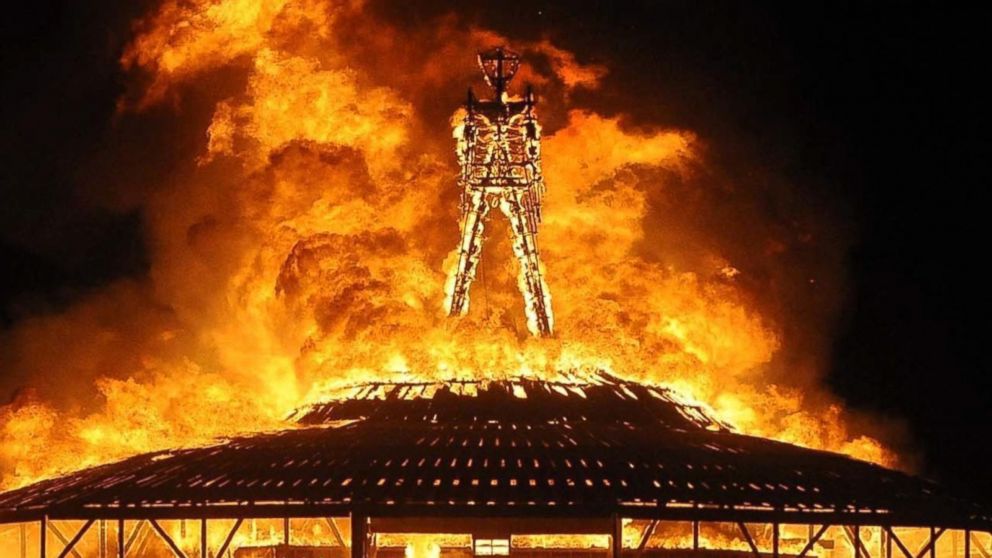
Combining or juxtaposing previously unrelated ideas is how humans create new knowledge, whether with art or science. So, how are artists combining these two ideas at Burning Man, one of the country's most controversial art events?

"Ursa Mator," by Mr. and Mrs. Ferguson: a gorgeous
sculpture covered in shimmering, edge-wise pennies takes 
on additional meaning as the Man burns in the background. 
Large wildfire destroys forest ecosystems, including 
iconic wildlife.
Black Rock City--the temporary Nevada city of 70,000 people (including an airport that is the busiest one in Nevada while it lasts!)--displayed numerous tree &/or forest issue themed artworks in 2017.

The most significant of these conceptual artworks was undoubtedly The Temple. Each year, a Temple is constructed as a locus of communal and personal release. People post photos, stories, keepsakes, mementos and messages relating to loved ones they have lost, or issues they are struggling with. The entire Temple is then burned to the ground on the last evening of the weeklong event in a solemn, silent ritual of cleansing and renewal that counters the rowdy, Saturnalian burning of the Man structure on the previous evening.

This year, the Temple architects chose to highlight western forest health problems by using lumber milled from dead salvage logs. This forest health theme is aligned nicely with the purpose and function of both the Temple, and the entire Burning Man ethos, which aims to alter attitudes of citizens in order to address systemic dysfunction in western culture.

More info about the Temple philosophy this year.


* * *

Burning Man is not the only group of artists working on forest issues, of course. Some artists are actively trying to change social policy.

Saving The West (STW) is a UC Santa Cruz-based, artist-led group working to create a new kind of timber industry that can use the small, torchy material that needs to come off of dry western forests in order to restore ecological function and resiliency. Without industry, there is no way to pay for the work that everyone, including loggers and environmentalists, now knows needs to be done. Meanwhile, our precious forests will continue to die off and/or burn. The current timber industry has retracted so far, and is still so focused on large trees--and lucrative salvage logging of the standing dead--that it is not useful at all in addressing this problem. Unfortunately, it's good business to let the forests continue to die.

STW recently received a grant from the US Forest Service to start a bi-state Wood Utilization Team working in California and Nevada in the Central Sierra Nevada Mountains.

Saving the West: A Whole Systems Proposal in Brief from Helen and Newton Harrison on Vimeo.


Friday, October 28, 2016

Nerdcon:Stories

"Stories, of course, are an easy thing to love. They’re how we understand the world… how we pass information from person to person." -- Hank Green
The second annual Nerdcon:Stories took place in Minneapolis on October 14-15, 2016.

Nerdcon:Stories is a multi-disciplinary convention celebrating the socially transformative power of narrative. The convention is organized by Hank and John Green, successful science populizers and YouTube vloggers. Their output includes Crash Course, SciShow, the Brain Scoop, and many other channels and series which have garnered the brothers over 650-million views and 3-million subscribers.


Thursday, June 30, 2016

Realising Potentials: Arts-based sustainability science

Realising Potentials: Arts-based sustainability science is a two-day workshop conceived as an experiential site for exploration and dialogue around arts-based sustainability science.

Two main motivations guide the workshop:
  1. To open up an experiential space where artists and scientists can share, connect and expand different experiences, projects and discussions in the field of arts-based sustainability research. A space to experience others’ approaches, to play, to be surprised… A space to explore together, pushing our boundaries, acting/thinking out of the box.
  2. To catalyse a network of Arts-based Sustainability Science as a community of learning, practice and mutual support. A network expanding in time the sharing of the workshop and connecting different actors working in the field, so as to allow us to critically approach and expand different practices, collaborate together, and face different challenges as they emerge.
When and where?

The workshop will be held in Barcelona (Spain), in November 3rd-4th, 2016 at the Institute of Catalan Studies (Institut d’Estudis Catalans, IEC).

How?

During the workshop, participants will engage in different experiential laboratories and discussions to share, collectively explore and critically inquire different experiences of arts-science hybridation -both from artists and researchers, methodological boundaries and challenges as sustainability researchers and practitioners, and the potentials of bringing together the arts and the aesthetics and sustainability science.

Who?

This workshop is coordinated by a group of sustainability scientists and practitioners who have experimented with a variety of arts-based approaches and it is open to both artists and researchers interested in this intersection.

Participants are invited to share art and research projects directly developed within collaborations among artists and scientists, dealing with one of the thematic areas in question. Understanding the four pillars of sustainability – environmental, social, cultural and economic - proposals should embed the interactions between social and natural sciences and the arts as insightful ways to generate new understandings and relationships, make people aware of the importance of a balanced relationship between human beings and the environment, in its diverse levels, and trying to encourage people to realize potentials as agents of social-ecological transformations.

More details.

Tuesday, May 31, 2016

Mary Beth Leigh | TEDxFairbanks

Seeing the Elephant: Reintegrating Arts, Humanities & Sciences
"Collaborations between the arts, humanities and sciences can strengthen our connection to the ecosystems in which we live. This TEDx talk highlights work done by Mary Beth Leigh combining ecology, dance, visual art, and other media to advance the arts, sciences, and public understanding of social-ecological issues. 
Mary Beth Leigh is an Associate Professor of Microbiology at the University of Alaska Fairbanks and is an organizer of state and national efforts to integrate the arts and humanities with ecological science. She directs the Alaska-based program, In a Time of Change, and co-organizes the nationwide networks, Ecological Reflections and ArtSciConverge. 
This talk was given at a TEDx event using the TED conference format but independently organized by a local community. Learn more at http://ted.com/tedx"

Monday, December 7, 2015

ArtSciConverge partnership at Aquarium of the Pacific

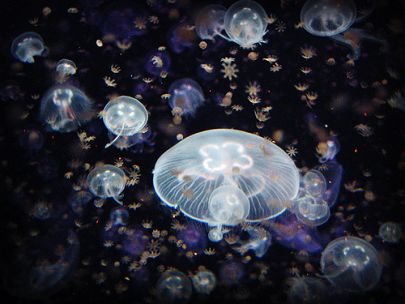
"The Aquarium of the Pacific has commissioned a project that brings art and science together to
translate the movement of sea jellies, or jellyfish, into a symphony...The Symphony of Jellies was developed based on an algorithm that tracks the movements of sea jellies and translates them into sounds...

Marty Quinn, founder of the Design Rythmics Sonification Research Lab, developed software and hardware to capture sea jellies movements with digital video footage and translate them into sounds through a process he calls MoveMusic sonification. Composer Eddie Freeman of Icarus Music used those sounds to create musical motifs and orchestration. Aquarium President and CEO Dr. Jerry Schubel and Aquarium Trustee Dennis Poulsen served as advisors and partners on the project."

Schubel and Quinn are members of the ArtSciConverge effort, and met as participants in the 2015 Reno Workshop.

Tuesday, September 29, 2015

Art as Cultural Diplomacy

This expired Call For Papers by Cassandra Sciortino, University of California - Santa Barbara is a fascinating example of seeking problem solution through art.

This idea is a strong theme in FSML art programs that seek to enhance fundamental discovery and push scientific knowledge through to social policy and action.

The CFP was for a panel of the recent Re-Inventing Eastern Europe (The Fourth Edition) conference in Kraków, Poland. Presented topics included some information that is philosophically interesting and highly pertinent to ambitious FSML art programs, including:
=======================
CFP: Art as Cultural Diplomacy (Krakow, 24-26 Apr 2015)

Krakow, April 24 - 26, 2015
Deadline: Mar 23, 2015

Call for Papers for the Panel: Art as Cultural Diplomacy: (Re)Constructing Notions of Eastern and Western Europe

(As part of the Fourth Euroacademia International Conference ‘Re-Inventing Eastern Europe’, to be held in Krakow, Poland in 24th - 26th of April 2015, including a visit to Auschwitz – Birkenau on 26th of April 2015)

Deadline: 23rd of March 2015

Art as Cultural Diplomacy: (Re)Constructing Notions of Eastern and Western Europe Panel Proposed by: Cassandra Sciortino, University of California, Santa Barbara

Panel Description

The panel “Art as cultural diplomacy” seeks papers that explore the function of art (in its broadest definition) as an instrument of cultural diplomacy by the state and, especially, by nongovernmental actors. The main theme of the session is the question of art and diplomacy in Europe before and after the fall of the Berlin Wall. Papers are welcome which explore issues related to the role of art, diplomacy and the politicization of the European Union and its candidate countries, as are those which consider how the arts have pursued or resisted East-West dichotomies and other narratives of alterity in Europe and worldwide. The panel seeks to combine a wide range of interdisciplinary perspectives to explore how art—its various practices, history, and theory—are an important area of inquiry in the expanding field of cultural diplomacy.

Some examples of topics include:
  • How can art serve as a neutral platform for exchange to promote dialogue and understanding between foreign states?
  • How can art, including organized festivals (i.e. film, art, music.), cultivate transnational identities that undermine dichotomies of East and West, and other narratives of alterity in Europe and beyond it?
  • The implications for art as an instrument of diplomacy in a postmodern age where geopolitics and power are increasingly mobilized by image based structures of persuasion
  • How has/can art facilitate cohesion between European Union member states and candidate states that effectively responds to the EU’s efforts to create “unity in diversity.”
  • The politics of mapping Europe: mental and cartographic
  • Community based art as a social practice to engage issues of European identity
  • The difference between art as cultural diplomacy and propaganda
  • The digital revolution and the emergence of social media as platforms for art to communicate across social, cultural, and national boundaries?
  • Diplomacy in the history of art in Europe and Eastern Europe
  • Artists as diplomats
  • Art history as diplomacy—exhibitions, post-colonial criticism, global art history, and other revisions to the conventional boundaries of Europe and its history of art
  • The international activity of cultural institutes

Please apply on-line or submit abstracts of less than 300 words together with the details of affiliation until 23rd of March 2015 to application@euroacademia.eu

For full details of the conference, please see before applying the conference website: http://euroacademia.eu/conference/re-inventing-eastern-europe-the-fourth-edition/

Reference:
CFP: Art as Cultural Diplomacy (Krakow, 24-26 Apr 2015). In: H-ArtHist, Mar 4, 2015 (accessed Sep 25, 2015).
Thanks to ArtHist for the original post. 

2015 London Design Festival

Some beautiful and evocative environment-themed artwork appeared at the recent 2015 London Design Festival. Here are some standouts:

"Designed by Austrian designers mischer'traxler, the installation comprises 250 mouth-blown glass globes, each containing a single laser-cut, foil-printed insect. As infrared motion sensors attached to the hanging bulbs sense a visitor's presence, the insects start to frantically fly around in their glass containers, like a cabinet of curiosities come to life."

"Designer Tino Schaedler of Optimist Design has created the first Virtual Reality experience at London Design Festival. A black fiberglass sculpture has a VR helmet for the visitor to use and experience a transformation of the room (as pictured). The team collaborated with sound designers Nordmeister from LA, to enhance the experience with spatial sound design."

"This bench is made from a unique material called Concrete Canvas, which is a mouldable version of normal concrete. The material comes as a flexible fabric which hardens when you add water to form a thin, durable, waterproof and fire-resistant concrete layer. It can be used to create temporary housing and reduces the environmental impact of concrete building by up to 95pc."

Monday, September 28, 2015

Innovative public outreach at Sanibel Captiva

Hi, Thought this might be of interest for the blog on a collaboration with the Rauschenberg foundation.

=============

Xavier Cortada
Caloosahatchee CLEER (create, learn, exchange, entertain and restore) is a multi modal event to open conversations with the public about the Sanibel Captiva Conservation Foundation's science and policy initiatives while creating community art pieces and listening to three professional singer/songwriters. 

The event includes the opportunity to paint wooden message fish to be delivered to Tallahassee, make personal pledges to help clean the water, and enjoy the creation of four iconic art pieces commissioned for the project by Xavier Cortada, an environmental restoration artist. 

It has been demonstrated by similar past events, discussing science and policy with residents and visitors in more informal one-on-one festive setting, people delve deeper into the subject of water quality around Sanibel and Captiva. It has also gives SCCF an opportunity to gauge the knowledge people already have and where educational needs may exist.

Musicians for the two November events are J Robert Houghtaling of Marco, Austin Church of Cocoa Beach and Brent Moyer of Nashville TN and Jackson WY.

We have done 3 events like this in the past and people have been great. It is the first time I am putting all the components together after a Communicating Science workshop. 

Eric
-- 
Eric C. Milbrandt, Ph.D.
Director
Marine Laboratory
Sanibel-Captiva Conservation Foundation
900A Tarpon Bay Rd.
Sanibel, FL 33957

Check out the ML website:

RECON Observing Network

Follow me on Twitter:

@SCCF_Marine_Lab

Wednesday, September 23, 2015

Request to form OBFS Ad Hoc ArtSciConverge Committee

Gothic Community Center.
In September, 2014, a Working Group on Art@FSMLs formed during the Wood's Hole Organization of Biological Field Stations/National Association of Marine Laboratories (OBFS/NAML) Joint Meeting. The group started this blog, and began to explore ways to facilitate and encourage art at sites of long-term environmental research.

Last week, OBFS held their 2015 Annual Meeting at the Rocky Mountain Biological Laboratory in Gothic, CO, along with concurrent meetings of the Global Network of Mountain Observatories (GNOMO) and iDigBio.

Photos here.

The Working Group presented an update of activities, and examples of several field station and marine lab art programs.

The OBFS Board recognized the growing importance of supporting interdisciplinary field station use, and is converting the Art@FSMLs Working Group into a permanent Ad Hoc Committee within the organization.


Local resident


View presentations: 
  • Intro and update (PDF)

  • Cedar Point, NE (PDF)

  • ArtLab, Mountain Lake, VA (PDF)

  • Art at LUMCON, LA (PDF)

* * *

Watch additional FSML art program videos:

Ann Carlson at Jasper Ridge...


Picture Jasper Ridge. A performance hike by artist, Ann Carlson. from Stanford Arts Institute on Vimeo.

Art at Cedar Point...


Art at Cedar Point from Kat Shiffler on Vimeo.


Thursday, September 17, 2015

Creative Disturbance

Creative Disturbance is an international, multilingual network and podcast platform supporting collaboration among the arts, sciences, and new technologies communities.

Creative Disturbance is doing a series of podcasts on art and climate change as part of a participation in COP21.

If anyone has art and climate change podcasts they would like published, please contact Susan Erickson on their art and earth science channel (or the YASMIN listserv).


Wednesday, September 16, 2015

Artist talk

Join us at the Harvard Forest this Friday, September 18th for an artist talk with David Buckley Borden as he presents new projects that demonstrate the power of combining multiple disciplines (art, design, and science) to spotlight pressing environmental issues and everyday ecological phenomena. Borden’s work promotes a shared environmental awareness and heightened cultural value of ecology in a variety of media, ranging from site-specific installations in the woods to data-driven maps in the gallery.

David Buckley Borden – Artist & Landscape Architect, Cambridge, MA
Hybrid Vigor | Ecology x Art x Design
Friday, 18 September, 2015 at 11:00 a.m., Harvard Forest Seminar Room

You may also join remotely in real-time via the web – slides and audio available at:
https://harvardforest.adobeconnect.com/_a1106599018/borden/

All the best,
Audrey

~~~~~~~~~~~~~~~~~~~~~~
Audrey Barker Plotkin
Site and Research Manager
Harvard Forest, 324 N. Main St.
Petersham, MA 01366
978-756-6168
978-724-3595 (FAX)
http://harvardforest.fas.harvard.edu
~~~~~~~~~~~~~~~~~~~~~~