As we attempt to link art and science to increase the power of each, ArtSciConverge encourages developing partnerships with other like-minded entities like museums, university programs, artist residencies, arts councils, and other cultural institutions.
But there may be potential allies we've been overlooking: religious organizations.
I was recently gob-smacked when a group of fundamentalist Christians disrupted a public meeting to promote a hands-off management strategy for addressing western wildfire, and to express their heartfelt belief that this was the best way to protect iconic wildlife. I didn't see that coming from a sector that, in my experience, has aggressively claimed stewardship over the Earth, and--often--an understanding that it was put here for us to use up before the Apocalypse. But it's good news for ArtSciConverge: we can work with that!
Throughout history, many religious traditions have addressed the challenge of human existence by withdrawing their practitioners from worldly life, or by adopting deeply cynical perspectives on the need to accelerate the arrival of an apocalyptic end. But, like art and science, religion can also be, and often is, used as a mechanism for understanding and shaping the world. Significant examples of religious engagement in the world's problems include:
Engaged Buddhism. Founder Thích Nhất Hạnh interprets Buddhism is a way of linking authentic Buddhist practice—particularly mindfulness—with social action. The western efforts are centered in Loubes-Bernac, France and Berkeley, CA. This sect identifies an explicit social ethos present in the earliest recorded Buddhist teachings, and adopts the non-violent resistance of Mahatma Gandhi and Martin Luther King. Beside Hanh's efforts, the current Dalai Lama has expressed a need for Buddhists to be more involved in the socio-political realm, stating, "Buddhists have not acted vigorously to address social and political
problems. In this, we have much to learn from the Christians." Engaged Buddhism is the model for the larger Engaged spirituality, which refers to religious or spiritual
people who actively engage in the world in order to transform it in
positive ways while finding nurture, inspiration and guidance in
their spiritual beliefs and practices.
Christianity has a long and checkered record of social engagement, a history that includes some of the most violent, oppressive and exploitative policies and episodes in recorded human history. Frankly, given current headlines, there is still too much of this and a long way to go to end it. But Christian organizations like the Sojourners work "to articulate the biblical call to social
justice, inspiring hope and building a movement to transform
individuals, communities, the church, and the world."
Network of Spiritual Progressives. Founded as an interfaith organization in 2005 by Rabbi Michael Lerner in Berkeley, CA, the network seeks to influence American politics towards more humane, progressive values.
Other efforts may spring from the mystical traditions of major religions, or develop Earth and nature-based spirituality (deep ecology, radical environmentalism, hallucinogen-based spirituality, etc.); these New-Age movements have often been severely criticized for lack of intellectual rigor, which rather misses the point.
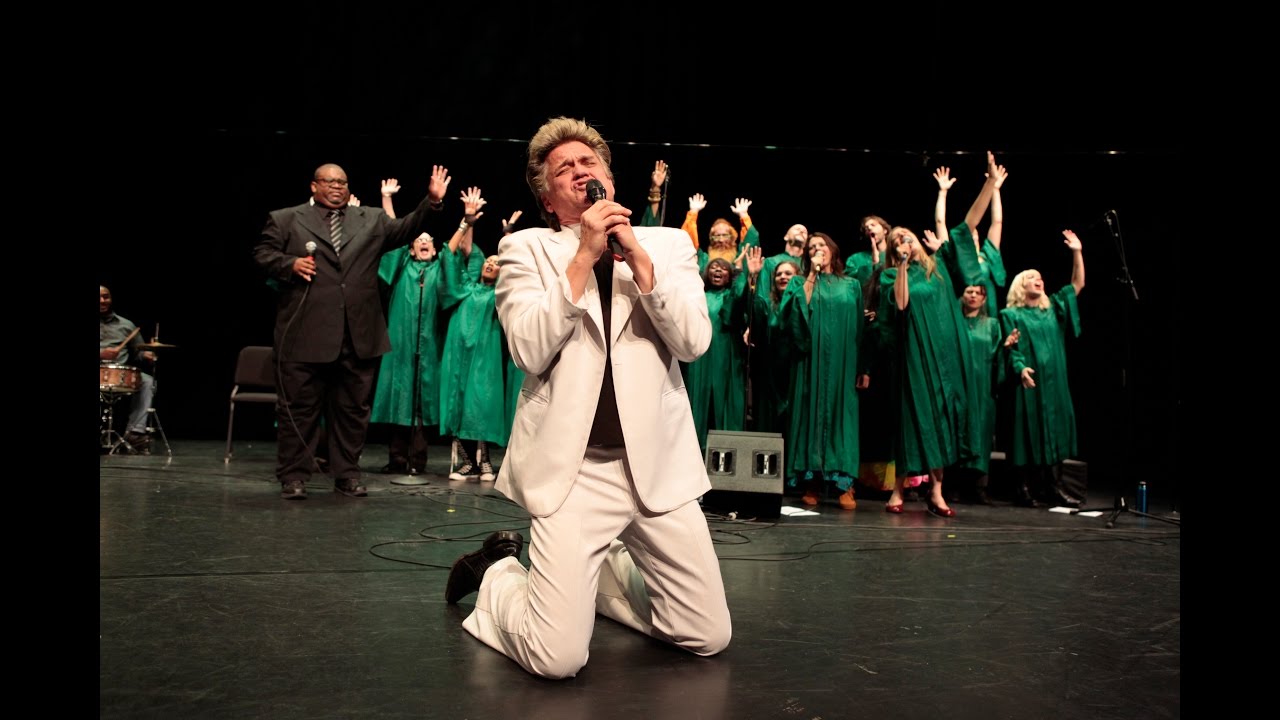
Artists have not failed to notice all this. One excellent ongoing project is Reverend Billy's Church of Stop Shopping, whose Fundamentalist theatricality is twisted in service of a deep message of economic revolution.
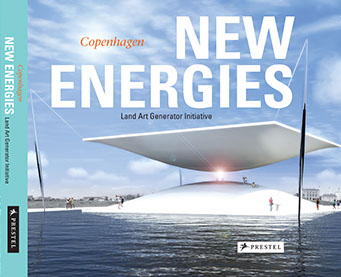
"The Land Art Generator provides a platform for artists, architects,
landscape architects, and other creatives working with engineers and
scientists to bring forward solutions for sustainable energy
infrastructures that enhance the city as works of public art while
cleanly powering thousands of homes...
The goal of the Land Art Generator is to accelerate the transition to
post-carbon economies by providing models of renewable energy
infrastructure that add value to public space, inspire, and
educate—while providing equitable power to thousands of homes around the
world."
The urgent and multifaceted nature of our water challenges
calls for new ways of thinking, acting, and investing.
Water leaders across the nation are embracing the One
Water approach—managing water resources in a more
integrated, inclusive, and sustainable manner in order to
secure a bright and prosperous future for our children,
communities, and country.
ArtPlace America and the US Water Alliance believe
there is tremendous opportunity to utilize arts and culture
strategies to advance One Water. As creative thinkers
and doers, artists can be powerful partners for water
leaders seeking to reimagine traditional approaches to
water planning and management and connect with
communities in new ways.
Our partnership has been a collaboration in the finest
sense of the word. Together we learned about each
other’s sectors, challenged assumptions, and have
developed a powerful framework for how to use arts and
culture to forge One Water progress. We are so inspired
by the creative ways that utilities, environmental groups,
public agencies, and other water practitioners are
collaborating with artists and cultural leaders. But it is
only the beginning."
In 2014, 4 artists, 4 scientists and the project coordinator, all from the University of Wyoming, met at the prestigious Ucross Foundation ranch for a 2-week retreat. The results of that collaboration—called the Cross-Pollination Experiment--are astonishing and ongoing. The following is a record of correspondence about the project between me (Faerthen Felix), participant Michael Dillon, and organizer Jeff Lockwood.
Jeffrey A. Lockwood is Professor of Natural Sciences & Humanities at the University of Wyoming. He began his career as an entomologist, then shifted to philosophy.
Brochure, explaining the project and some of its outcomes.
-----------------------------
FF:It looks like Ucross facilitated the Cross-Pollination Experiment. How did they find all of you? Was it an open call, or were you recruited? It sounds like there was an "organizer" and Ucross didn't just invite you all out to stay, then leave you alone. Who was that organizer, and how was the experiment structured? Were there structured exercises, specific goals and deliverables?
MD: Jeff [Lockwood] was the mastermind of the initial Cross-Pollination project (which led to all the other good stuff), did the fund raising (from many sources on and off campus), and was the leader. He planned all the activities, the approach, etc. Briefly, we were invited by Jeff and then all lived together for 2 weeks -- we had separate housing but spent most of our meals and lots of free time just hanging out. This was a critical element, in my opinion, because we had the chance to really get to know and trust each other. Jeff ran nightly post-dinner meetings in which we reflected on the day, discussed the positive, negative, difficult, exciting, etc.
Our first day was a "perspective" day, in which we all had the morning to prepare a presentation about the place (Ucross) through our eyes/experience/academic background. We spent the afternoon moving between our studios giving and attending these presentations (8 in all). Jeff then organized a "speed dating" for the next day in which each artist spent 1 hour with each scientist discussing ideas. The goal was to come out of each of those meetings with several concrete ideas for how you could collaborate in a meaningful way. That is, not just artists interpreting the science or scientists trying their hand at art, but rather collaborations that enhanced both disciplines. Jeff paired us up (not sure how he decided as there were so many interesting collaborations possible!) and then we went to work. We had less than a week to make progress on the collaboration as Jeff had already scheduled a "Saturday University" event for the end of the trip in which we would present our "products" to the broader public in the Ucross space.
JL: Some backstory…I did a residency at Ucross as a writer. And in the course of that time, I had some lovely chats with Sharon Dynak, the executive director. She indicated that Ucross was increasingly interested in projects that would integrate natural sciences and arts, particularly as a means of gaining a deeper appreciation of the ranch and surrounding countryside. I was putting together a pitch for a UW venture in this regard when Shannon Smith (executive director of Wyoming Humanities Council) met up with me and became super-excited about the possibilities. So Ucross provided enormous in-kind support and WHC provided financial support (especially in terms of the public presentations as UW’s Saturday University program that summer). I should also note that the UW Biodiversity Institute provided funding. I’ve also attached one of the original proposals so you can see what approach was being advocated.
FF:I find that, almost universally, people who have engaged in art/sci collaborations find them useful and positive, but it is difficult to measure outcomes clinically, and there is little actual science available on the results. Do you have any publication references that somehow document the effectiveness of the collaboration?
MD: I know what you mean, but don't have references. Our own experiences and all the products that have emerged are the best evidence I can provide.
"This has been an incredibly productive, fruitful venture: 3 exhibitions, a documentary film, an online repository of microbe portraits and artist responses to them, an opera, and Xbox Kinect video game, 3 NSF grants to date totaling over $6 million in funding. The cross pollination website has links to videos and other information about the different projects. We continue to actively develop new projects and collaborations. This venture has been one of the most exciting, invigorating, rewarding, and fun things I've done for quite some time!" -- MD
JL: I’m there with Michael. Our products speak for the productivity of this venture. But one of the deliverables is also a sense of morale, excitement, playfulness and fulfillment for academic artists and scientists who may not see much “external” reward and, indeed, have good reason for demoralization.
FF:I found this statement by Jeff Lockwood really interesting: "These synergies have revealed elements of the natural world that would otherwise be overlooked by both artists and scientists." Can you elaborate and provide some examples? This is a big aspect of our push to get more art at field stations: that art is a discovery process that can enhance scientific creativity, and uncover raw material for science. But finding clear and obvious A-to-B examples is challenging.
MD: One example was my collaboration with Rachael Shaw, a dancer/choreographer. We used the notation of dance (Laban notation) to quantify the posture and movements of bees after exposure to sublethal doses of pesticides. A tool from choreography allowed us to better quantify something that was otherwise difficult to describe but visually obvious: bees move differently when exposed to minute quantities of pesticides. Unfortunately, we have not published this work. Rachael moved not long after the initial Ucross trip and we've found it difficult to find time to work together from a distance. Other examples are the microbestiary, and a collaboration between Jeff and Anne Guzzo (a composer): an opera about the disappearance of the Rocky Mountain Locust.
JL: Yup, LOCUST: THE OPERA is premiering this September (I’ve attached the proposal for that project so you can get a sense of the science/art collaboration)—and I should add that Ashley Carlisle, one of the Ucross participants, will be designing and producing our costumes, scenery, etc.
FF:It's great that UWYO faculty work with Ucross. I think field research stations would really benefit from identifying artist-residencies near them to collaborate with on art/sci linkages.
MD: Ucross was fantastic - very supportive of the whole endeavor. But, although some of our art faculty apply for and are awarded residencies at Ucross, I am not sure that the Art/Science residency is an ongoing element for them.
JL: I think that one of the key features that made our venture successful (in addition to my very carefully selecting participants—there was no open call for people) is that everyone came from one institution, which has allowed the venture to continue for years with all sorts of combinations and recombinations of people based on interests and opportunities. And such ongoing collaborations would be very difficult to sustain across institutions (heck, they’re hard enough across departments and colleges in a single institution!).
FF:Is there any kind of exportable prescription that either guided the process, or emerged from it? Something like the HJ Andrews Ecological Reflections program that is kind of plug-and-play for any field station that wants to participate, or Best Practices, or anything like that I can direct field stations to?
MD: I think that, in our case, the key was Jeff's vision -- the combination of prescribed reflection and conversation time, of a deadline for a product, and also of flexibility so the group could go where it wanted to (we often veered from Jeff's original plan - to his consternation and delight, I think).
JL: If there is anything approximating a set of guidelines/rules, it might be found in this very concise summary on YouTube. I’ve attached the text that I used for this Ignite presentation:
IGNITE
Science & Art: Instructions for Making a Chimera
1.
I have had the joy of orchestrating a three-year project bringing art and science into collaboration. We call ourselves the Ucross Pollinators to honor the institution hosting our gatherings—and to capture the underlying spirit.
2.
The Wyoming Humanities Council has been our principle supporter because they understand that if the arts are the flowers of civilization and the sciences are its stems, then the humanities are the roots.
3.
Our products include: National Science Foundation grants infused with art, a Microbestiary of unicellular life, a choreographic scoring method to encode insect movement, and operatic arias evoking the geology of Wyoming.
4.
I’d like to share with you what I’ve learned as an academic anthropologist, observing artists and scientists working and creating together—as well some thoughts about the institutional framework in which they are embedded.
5.
As for the people, here’s a simple but important consideration. Scientists are not artists and vice-versa. Each pursues distinct ways of knowing themselves and the world. To which I say, Viva la difference!
6.
The recipe for a tasty collaboration of artists and scientists is not to blend them into a homogenous smoothie, nor to make a loosely tossed salad. Instead, simmer them together into a mouthwatering stew.
7.
For our venture, I chose “big dogs”—people at the top of their game, not those needing to yap to establish their dominance in the pack. I’ve found that little dogs are much more likely to bite.
8.
The sense of wonder among the participants that catalyzed collaboration was akin to watching a spellbinding magician—and then being even more enchanted upon learning how the scientific or artistic trick was done.
9.
The one quality that is critical to fruitful art-and-science ventures is playfulness—a vulnerable, childlike willingness to ask “why not?”, to wonder “what if?”, and to genuinely share one’s toys.
10.
Scientists and artists need more than a one-night stand to achieve satisfaction. Fulfillment requires sustained interaction, and fertility is enhanced by proximity. And so, being colleagues at the same institution is a tremendous asset.
11.
Collaboration does not mean artists making science pretty. Rather, it requires mutual respect and that means genuine parity of power and prestige. In this dance, each must be willing to lead—and to follow.
12.
Without constraints, the possibilities at the intersection of science and art are astronomical. We need boundaries. Or as Robert Frost said of free verse poetry: It’s like playing tennis with the net down.
13.
An interdisciplinary team is often seen as having an ecologist and geologist. Nobody ever adds a poet or dancer. We sought transdisciplinarity—engagement that was synergistic rather than additive.
14.
I’ve observed that pairs work extremely well. Having one partner allows intimacy. Academic orgies don’t entail the commitment that sustains relationships. Maybe science and art collaborations are like American marriage—serial monogamy.
15.
Turning to the institutional context, universities might tolerate, but rarely encourage, science-art collaborations—unless there’s money to be had. So, individuals must find working together to be internally rewarding.
16.
Trying to define science and art is an unhelpful starting point institutionally—much like attempting to define the humanities. It’s like saying that before dating, one must define beauty, intelligence, and love.
17.
The university has islands of authentic collaboration—such as the Art Museum and the Biodiversity Institute—floating in a sea of institutional ambivalence. For the most part, we have a College of Arts or Sciences.
18.
STEM (Science, Technology, Engineering and Math) is a glutton. Adding the Arts to create STEAM (I prefer MEATS) still leaves artists nibbling crumbs from the table. But please sir, I want some more.
19.
Art-and-science collaborations subvert institutional norms. The results don’t add up on a spreadsheet; they defy administrative classification. These projects are viewed as the icing, not the cake, of a respectable academic career.
20.
In conclusion, art-and-science collaborations are acts of humanistic faith. The Cross-Pollinators will continue to pursue beautiful, grotesque, and strangely enchanting works that take flight—or not.
Cross-Pollination Experiment documentary. Explains the program in detail as it unfolded.
Saturday University lecture. Explains some of the trouble communicating the project.
As an artist I entered the project with the hopes of being inspired by something that would lead to a visual expression. I wanted my "research" to be creative and I allowed it to unfold as a series of related but diverse information gathering excursions.
Electrofishing with Chris [Lorentz, Professor of Biology, Thomas More College] gave me an understanding of the amazing ecosystem of the river itself. Next I met with the Ohio River foundation and talked about the main causes of pollution in the river. In 2015 there was a 500 mile long algae bloom on the river, and this phenomena captured my creative imagination as a subject to focus my goals. I did research about the documented history of industrial pollution on the river, and at the public library found an especially amazing photograph of the Cincinnati river bank from the 19th century.
In the photo you can clearly see the sewage run off exiting buildings at the rivers edge. In this small section of the photo you can see the open sewer ditch. The photo was taken in 1848 and the next year a cholera epidemic swept the city.
In my design courses, I try to get students to become more sensitive to color and shape as tools to shape an environment.
For the algal bloom project, I met with a select group of talented students and we talked about the algal bloom as an experience, something immersive and expressive, so that we might find a way to personify it visually.
First we decided on a shape quality and the beginning of a color system. These decisions were based on principles of good design married to the specific attributes of the algal bloom. Here is a first small hand painted design. In this painting, we stuck to the literal blue green color scheme and used a botanical motif. The rectangle itself is a golden rectangle and the shapes are interacting with further golden ratio divisions within the larger rectangle.
Although this initial design is very interesting to look at, it does not embody the voracious life cycle and disruptive quality of the bloom. We took the initial painting and spent a long time working with it on the computer, mirroring and multiplying the design across a larger expanse. We changed the color to be more perceptually intense, and further intensified the relationship between the botanical shapes and the internal geometry of the design. The final design is here:
We hosted the NCBDS conference on the beginning design student here at UC a couple weeks ago, and I presented the project and printed the poster at a large scale.
I would love to display it more, either virtually or physically, Do you know of any opportunities? I have a file that can be printed at various scales, and it is a really exciting/immersive visual experience.
An Anthropocene Primer is a great example of a project weaving humanities and science together seamlessly to explore a serious current socio-ecological issue. The online Hypothes.is software allows anyone to annotate and contribute to the project.
This unique residency is a collaborative initiative of Leonardo/The International Society for the Arts, Sciences and Technology (ISAST) and Djerassi Resident Artists Program. Empiricism and intuition are not mutually exclusive. The goal of the project is to explore and expand how the creativity of scientists and artists are connected.
Collaborative Research grants support groups of two or more scholars
engaging in significant and sustained research in the humanities. The
program seeks to encourage interdisciplinary work, both within the
humanities and beyond.
Projects that include partnerships with
researchers from the natural and social sciences are encouraged, but
they must remain firmly rooted in the humanities and must employ
humanistic methods.
This AASHE.org webinar from Nov. 1, 2017 is an excellent justification for art/science collaboration. It includes presentations from Emily Bosanquet, Assistant Professor, Pacific Northwest College of Art; Elizabeth Demaray, Associate Professor of Fine Art, Head of Sculpture Concentration, Rutgers University; and Kim Landsbergen, Associate Professor of Biology and Environmental Science, Antioch College.
These three academics and practitioners each have dynamic art/sci collaborations, and a lot of interesting things to say about them. The presentation was packed with excellent quotes about why this cross-disciplinary collaboration makes so much sense.
Emily Bosanquet is an interdisciplinary scientist whose "current research interest is in supporting cross disciplinary dialogue between artistic practices and scientific methodologies within a pedagogical framework in order to address social and ecological concerns."
Demaray discussed several of her hilarious and awe-inspiring projects, including PandoraBird, which offers music to wild birds, then generates Pandora radio stations based on their measured listening preferences. Demaray also discussed her FloraBorg project, which robot-izes potted plants and automates moving them to places that better meet their needs, as judged by species-specific programming, internal and environmental sensors, and weather database connections.
Kim Landsbergen is an ecologist. She discussed a project where invasive plants were used to create a journal on invasive plants. The project was received with far more enthusiasm than any scientific paper she has ever passed around.
Held October 13-15, 2018 in Philadelphia, PA, "this training combines best practices from the arts-and-cultural sector with specific, hands-on information about artists' residencies.
Whether you are still in the early dreaming stage of creating an artist colony or working with an established institution that is developing a new residency program, the Emerging Program Institute will offer models for success, a community of peers, and access to residency leaders, funders, and connectors.
#aac18epi
Topics include:
community engagement and the relevance of place
building a support base and funding your program
equity and access in artist outreach, engagement and selection
business planning for artist residencies
"ask an expert" panels of residency leaders, artists and government funders
case studies, site visits - and more!
PLEASE NOTE: We cap attendance at 50 people to keep the program participatory and accessible. This Institute sells out every year, so we encourage you to register early to secure your spot! Registration opens in June."
Additionally, the training is held just before the 2018 Alliance of Artist Communities annual conference in Philadelphia, so you can plan to attend that event as well, to make connections that will benefit your program.
"Public Lab is a community where you can learn how to investigate environmental concerns. Using inexpensive DIY techniques, we seek to change how people see the world in environmental, social, and political terms.
I. The Problem
Communities lack access to the tools and techniques needed to participate in decisions being made about their communities, especially when facing environmental hazards.
II. The Collaboration
We are an open network of community organizers, educators, technologists and researchers working to create low cost solutions for monitoring air, water and land.
Discover, collaborate on, and contribute to locally important matters with the support of a global community.
III. The Solution
Join us today, as we work together to build and inspire a community of DIY activists and explorers using simple tools to build a growing body of data about our local environments."
"The Cambridge Conservation Initiative (CCI) is a unique collaboration between the University of Cambridge and leading internationally-focused biodiversity conservation organisations clustered in and around Cambridge, UK.
CCI seeks to transform the global understanding and conservation of biodiversity and the natural capital it represents and, through this, secure a sustainable future for all life on Earth. The CCI partners together combine and integrate research, education, policy and practice to create innovative solutions for society and to foster conservation learning and leadership."
Matt works in Fundraising for the RSPB Eastern England team. He will be spending his month of sabbatical time at CCI as our first poet in residence, starting on Monday 14 August.
Part of Matt’s role with RSPB is to explore engagement with the arts and he is the lead on the RSPB / The Rialto Nature and Place poetry competition which now additionally partners with CCI and BirdLife.
Matt’s poetry has been published in leading international magazines and journals such as The Poetry Review, New Statesman and The Dark Horse. His debut pamphlet, The Organ Box, was published in 2014.
Throughout his sabbatical, Matt will be based in the Artist in Residence studio (floor 2M of the East Tower). He will break his time up into one week a month, and he will also be at CCI some Fridays over the next few months.
In addition to providing Matt with time to write and network at CCI, the residency has a number of ambitions, all with the aim to gain a deeper understanding of how creative writing can help provide public engagement opportunities and deliver conservation objectives. Matt will be working to:
Host poetry events at CCI with leading poets
Develop the Nature and Place competition to increase its fundraising potential
Work with Modern Poetry in Translation magazine on an issue of international environmental poetry
Facilitate opportunities for other early career poets to engage with CCI to produce new work for publication and performance.
Matt will also offer colleagues from CCI member organisations opportunities to engage with the residency. Opportunities include:
One to ones with people interested in developing their own writing and reading
Establish a workshop group for those interested in writing new poems
Joining a mailing list to receive a fortnightly poem from the existing canon on a nature / conservation theme, with an explanatory note by him.
Matt is contactable on matt.howard@rspb.org.uk, please do get in touch if you are interested in getting involved.
Information on the intranet can be found here.
"...Hurt and Pyle, who render vibrant visualizations based on data from Spitzer and other missions, are hybrids of sorts, blending expertise in both science and art. From squiggles on charts and columns of numbers, they conjure red, blue and green worlds, with half-frozen oceans or bubbling lava...Visualizations based on data can also inform science, leading to genuine scientific insights...For Hurt, the real goal of scientific illustration is to excite the public, engage them in the science, and provide a snapshot of scientific knowledge."
"We kind of cover each other's blind spots a bit"
"...art is as much a historical record of our changing understanding of the universe as the textbooks we write." -- Robert Hurt, IPAC Center
"While replicable fact is the domain of science, human perception and value are the domains of art and the humanities."
This New Republic article from 2012 is an excellent rebuttal to the "scientism," of those who argue that the arts and humanities are somehow less reliable and useful than science:
If Marx and Freud are favorite whipping boys for those worried about the [validity of the humanities], the compliment is readily returned...nineteenth-century physics and chemistry [were infested] with the proliferation of “ether theories.” No less a figure than Maxwell even characterized the ether as “the best confirmed entity in [science].
Rigorous mathematical studies of gene-cultural coevolution reveal that when natural selection combines with cultural transmission, the outcomes reached may differ from those that would have been produced by natural selection acting alone, and that the cultural processes involved can be sustained under natural selection...culture appears to be at some level autonomous and in some sense irreducible, and this is what scientism cannot grasp.
But there is still a deeper reason for the enduring importance of the humanities. Many scientists and commentators on science have been led to view the sciences as a value-free zone...Yet on a broader view, which explores the purposes and their origins, it becomes clear that judgments of the significance of particular questions profoundly affect the work done and the environments in which it is done. Behind the complex and often strikingly successful practices of contemporary science stands a history of selecting specific aspects of the world for investigation.
What we discover depends on the questions taken to be significant, and the selection of those questions, as well as the decision of which factors to set aside in seeking answers to them, presupposes judgments about what is valuable. Those are not only, or mainly, scientific judgments. In their turn, new discoveries modify the landscape in which further investigations will take place, and because what we learn affects how evidence is assessed, discovery shapes the evolution of our standards of evidence. Judgments of value thus pervade the environment in which scientific work is done. If they are made, as they should be, in light of the broadest and deepest reflections on human life and its possibilities, then good science depends on contributions from the humanities and the arts. Perhaps there is even a place for philosophy.
Healthy relationships between the sciences and the humanities should aspire to the condition of the best marriages—to a partnership in which different strengths and styles are acknowledged and appreciated, in which a fruitful division of labor constantly evolves, in which constructive criticism is given and received, in which neither party can ever make a plausible claim to absolute authority, and in which the ultimate goal is nothing less than the furtherance of the human good.
The article also includes highlights of a fascinating discussion between the artist's associates and collaborators.
Some interesting quotes from the article:
The more intuitive approach of artists can provide
a window into the complex models, calculations and simulations of
the scientific world… Natural world issues require more than just
a technical fix. They require systems of thinking and creativity to
imagine and illustrate the best possible solutions. -- Prof. Caroline Digby from the Wits Centre for Sustainability in Mining and Industry
Sustainability
is not primarily a scientific problem; rather, it requires us as citizens,
communities and societies to rethink the way in which we live
our personal lives… This requires engaging the hearts, minds and
imaginations of a wide set of people across many different spheres
of society. Artists have a particularly important role to play in this
regard – not only in creating a space that can help bridge and connect
between different actors, but in contributing and opening our minds
to completely new ways of seeing the world and our place in it. -- Dr. Reinette Biggs of the Stockholm Resilience Institute and the University of Stellenbosch
How can art and science integrate into
a discipline or collaboration that aids
transformative understanding?
Art is the expression of creative ideas that
are likely informed by prior knowledge
but not restricted by natural, economic or
social rules. Science is a knowledge that
we have built through methodical enquiry
over many generations into how nature,
economics and society work. When art is
introduced into science, it gives permission
to seek different ways of addressing the
same problem. It enables one to leapfrog
or do a U-turn. As stated in New Roles for
Art Are Clarified (Carney 2010), Tim Collins
declares that, “while replicable fact is the
domain of science, human perception
and value are the domains of art and the
humanities. – Philipp Kirsch, University
of Queensland
How do such partnerships reach wider
audiences?
I have been astounded by how much easier
it is to interest people in the science when
it is encompassed in an artwork. Before, I
was only talking to the small community
of people who were already thinking about
these issues. People like the art – and they
like the idea that the art has some scientifc
substance behind it. Some, not all of them,
want to know more details about our
science questions and I am challenged to
maintain their interest and expand it. – Sally
Archibald, WITS
How can partnerships between artists
and scientists contribute to resilient
systems and change?
The data on climate change is indisputable,
but how does one develop an emotional
appreciation of the potential consequences?
I think this must come through experience
and art is a fantastic mechanism to develop
emotional experiences and consider
possibilities. – Caroline Lehmann,
Biogeography, University of Edinburgh
How has an artist’s work influenced
your work and vice versa?
Hannelie sometimes brings aspects that I
think of as ‘outside’ the system, into the
discussion. At its simplest, ecology is the
study of the interactions between organisms
and their environment and it is refreshing to
have a different take on the shape and form
of these interactions. – Sally Archibald
I started to write a conference paper
about the potential to re-imagine mining
overburden as a building material. To
change the way that the industry framed
everything as waste rock, waste dumps,
waste piles etc. In researching this, I
uncovered the genre of Land Art. These
artists have given considerable thought to
moving earth to make art. I strongly believe
in the potential for artists to create not just
new mine closure landscapes, but to also
drive improved community relations when
working side-by-side with the engineers and
financial managers in mine planning and
operations. – Phillip Kirsch
"Nature as Muse" Microgrants Deadline to apply: June 16th, 2017 Grant award: $200
Grant theme: The theme of this grant is "Nature as Muse" and is intended for artists, scientists, or transdisciplinary practitioners who draw inspiration from nature in her varied forms, contexts, and scales. This grant aims to help the grantee bring an existing project to completion.
What we're looking for: Are you almost done with a large-scale painting related to nature that you need some extra funds to purchase paint for? Are you $200 away from collecting your final specimens for analysis? Is there a piece of equipment that would bring your project or research to the next level? We're looking for applicants that have existing projects that are close to completion but need some help to get there. Preference will be given to trans-, cross-, and multi-disciplinary projects. Such projects include art works that engage science and nature, science research that engages nature and aesthetics, and the like. More info here.
Are you a performance artist interested in collaborating with a geologist? Are you a programmer looking to interact with an art historian? Are you a poet who wants to work with an expert in the birth of the universe? Are you a microbiologist seeking to visualize your findings with the help of a sculptor?
"The Bridge: Experiments in Science & Art" is now open for applications. This virtual collaborative residency program creates pairs of cross-disciplinary professionals who embark on a fourth month long collaboration of their own devising. In this open call format, we find the best three pairs based on fitness, to help you meet the collaborator of your professional dreams. Each pair - which often span geographies - collaborates to inform each other's work, as well as create something new. With an emphasis on exploring the natural process of collaboration, "The Bridge" residents are not bound by rules or expectations, and are limited only by each collaboration's imagination.
Deadline to apply: July 5, 2017
Residency period: September 1 - December 31, 2017