Showing posts with label partners. Show all posts

Saturday, March 16, 2019

Overlooked Allies?

As we attempt to link art and science to increase the power of each, ArtSciConverge encourages developing partnerships with other like-minded entities like museums, university programs, artist residencies, arts councils, and other cultural institutions.

But there may be potential allies we've been overlooking: religious organizations.

I was recently gob-smacked when a group of fundamentalist Christians disrupted a public meeting to promote a hands-off management strategy for addressing western wildfire, and to express their heartfelt belief that this was the best way to protect iconic wildlife. I didn't see that coming from a sector that, in my experience, has aggressively claimed stewardship over the Earth, and--often--an understanding that it was put here for us to use up before the Apocalypse. But it's good news for ArtSciConverge: we can work with that!

Throughout history, many religious traditions have addressed the challenge of human existence by withdrawing their practitioners from worldly life, or by adopting deeply cynical perspectives on the need to accelerate the arrival of an apocalyptic end. But, like art and science, religion can also be, and often is, used as a mechanism for understanding and shaping the world. Significant examples of religious engagement in the world's problems include:
  • Engaged Buddhism. Founder Thích Nhất Hạnh interprets Buddhism is a way of linking authentic Buddhist practice—particularly mindfulness—with social action. The western efforts are centered in Loubes-Bernac, France and Berkeley, CA. This sect identifies an explicit social ethos present in the earliest recorded Buddhist teachings, and adopts the non-violent resistance of Mahatma Gandhi and Martin Luther King. Beside Hanh's efforts, the current Dalai Lama has expressed a need for Buddhists to be more involved in the socio-political realm, stating, "Buddhists have not acted vigorously to address social and political problems. In this, we have much to learn from the Christians." Engaged Buddhism is the model for the larger Engaged spirituality, which refers to religious or spiritual people who actively engage in the world in order to transform it in positive ways while finding nurture, inspiration and guidance in their spiritual beliefs and practices.
  • Christianity has a long and checkered record of social engagement, a history that includes some of the most violent, oppressive and exploitative policies and episodes in recorded human history. Frankly, given current headlines, there is still too much of this and a long way to go to end it. But Christian organizations like the Sojourners work "to articulate the biblical call to social justice, inspiring hope and building a movement to transform individuals, communities, the church, and the world."
  • Network of Spiritual Progressives. Founded as an interfaith organization in 2005 by Rabbi Michael Lerner in Berkeley, CA, the network seeks to influence American politics towards more humane, progressive values.
Other efforts may spring from the mystical traditions of major religions, or develop Earth and nature-based spirituality (deep ecology, radical environmentalism, hallucinogen-based spirituality, etc.); these New-Age movements have often been severely criticized for lack of intellectual rigor, which rather misses the point.

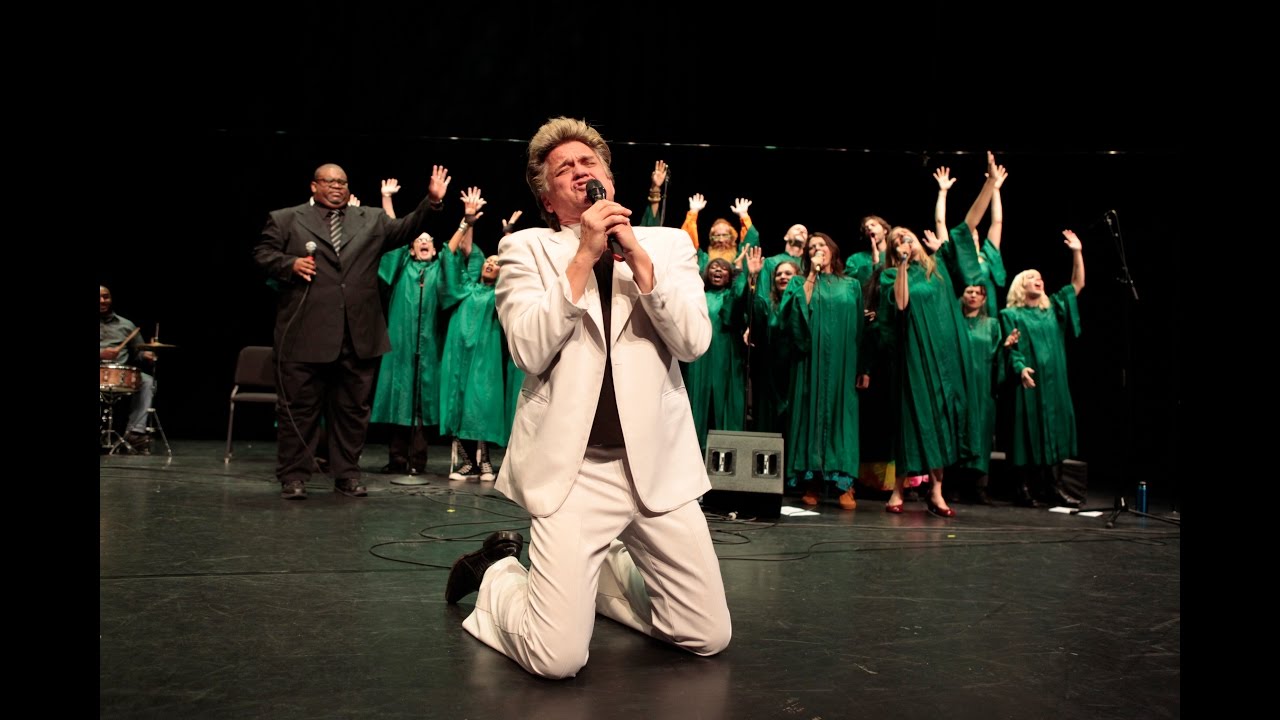
Artists have not failed to notice all this. One excellent ongoing project is Reverend Billy's Church of Stop Shopping, whose Fundamentalist theatricality is twisted in service of a deep message of economic revolution.

Monday, July 30, 2018

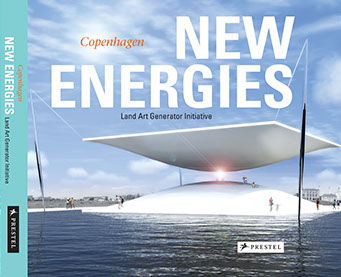
Land Art Generator Initiative


"The Land Art Generator provides a platform for artists, architects, landscape architects, and other creatives working with engineers and scientists to bring forward solutions for sustainable energy infrastructures that enhance the city as works of public art while cleanly powering thousands of homes...

The goal of the Land Art Generator is to accelerate the transition to post-carbon economies by providing models of renewable energy infrastructure that add value to public space, inspire, and educate—while providing equitable power to thousands of homes around the world."


Thursday, June 21, 2018

Map of FSMLs and Artist-Residencies

Finding an artist-residency program to work with on ArtSciConverge at your field station or marine lab (FSML) can really help. They can refer good artists to you, and act as partners in art/sci projects, grant applications and other programs. Some of these residencies are even looking for scientists to enrich their residencies, and you can help them find some.

Many artist residencies are already focused on ecology. I've worked with the Organization of Biological Field Stations (OBFS) and the Alliance of Artist Communities (AAC) to produce a map to help you find each other. I'd like to keep developing the map with more residencies, since many FSMLs also produce research in the social sciences and humanities, as well as the hard sciences.

Let us know if you use the map to make a connection.


View Potential Partners in ArtSciConverge in a full screen map

Saturday, December 16, 2017

Call for Open Peer Review: An Anthropocene Primer

Version 1.0 of An Anthropocene Primer is hosted by the IUPUI Arts and Humanities Institute as an open access book. In collaboration with Indiana University Press, we are inviting the public to participate in an open peer review of the volume between October 23, 2017 and February 1, 2018. We will revise the primer in response to the comments and intend to publish the text as an open access book as well as a hard copy volume in 2018.
An Anthropocene Primer is a great example of a project weaving humanities and science together seamlessly to explore a serious current socio-ecological issue. The online Hypothes.is software allows anyone to annotate and contribute to the project.

The primer website and blog also includes references to other interesting and successful art/sci collaborations, papers, and open peer review projects like the Rivers of the Anthropocene, and Environmental Humanities and Climate Change.

Here's how to get involved:


Friday, November 3, 2017

Art program archive guidelines

The Nevada Museum of Art - Center for Art + Environment is a cutting edge operation that is the only permanent art and environment center in the world. NMA-CA+E works closely with UC Berkeley's Sagehen Creek Field Station to develop their artist-in-residency program.

As part of that relationship, the Center permanently archives the process of art production at the field station. In 2017, they produced guidelines for artists and archivists who wish to do the same. You are free to download and use these guidelines for your own program. Please credit the Nevada Museum of Art - Center for Art + Environment in any publications.

Friday, October 27, 2017

Alliance of Artist Communities - 2018 Emerging Program Institute, October 13-15, 2018


Field stations and marine labs with a current or proposed artist residency should seriously consider attending this AAC training, which
"...combines best practices from the arts-and-cultural sector with specific, hands-on information about artist residencies."
Held October 13-15, 2018 in Philadelphia, PA, "this training combines best practices from the arts-and-cultural sector with specific, hands-on information about artists' residencies.

Whether you are still in the early dreaming stage of creating an artist colony or working with an established institution that is developing a new residency program, the Emerging Program Institute will offer models for success, a community of peers, and access to residency leaders, funders, and connectors. #aac18epi

Topics include:

  • community engagement and the relevance of place 
  • building a support base and funding your program 
  • equity and access in artist outreach, engagement and selection 
  • business planning for artist residencies 
  • "ask an expert" panels of residency leaders, artists and government funders 
  • case studies, site visits - and more!

PLEASE NOTE: We cap attendance at 50 people to keep the program participatory and accessible. This Institute sells out every year, so we encourage you to register early to secure your spot! Registration opens in June."

Additionally, the training is held just before the 2018 Alliance of Artist Communities annual conference in Philadelphia, so you can plan to attend that event as well, to make connections that will benefit your program.


Tuesday, August 15, 2017

First Poet in Residence at CCI


"The Cambridge Conservation Initiative (CCI) is a unique collaboration between the University of Cambridge and leading internationally-focused biodiversity conservation organisations clustered in and around Cambridge, UK.  
CCI seeks to transform the global understanding and conservation of biodiversity and the natural capital it represents and, through this, secure a sustainable future for all life on Earth. The CCI partners together combine and integrate research, education, policy and practice to create innovative solutions for society and to foster conservation learning and leadership."

Matt Howard from RSPB on sabbatical at CCI as our first Poet in Residence.

Matt works in Fundraising for the RSPB Eastern England team. He will be spending his month of sabbatical time at CCI as our first poet in residence, starting on Monday 14 August.

Part of Matt’s role with RSPB is to explore engagement with the arts and he is the lead on the RSPB / The Rialto Nature and Place poetry competition which now additionally partners with CCI and BirdLife.

Matt’s poetry has been published in leading international magazines and journals such as The Poetry Review, New Statesman and The Dark Horse. His debut pamphlet, The Organ Box, was published in 2014.

Throughout his sabbatical, Matt will be based in the Artist in Residence studio (floor 2M of the East Tower). He will break his time up into one week a month, and he will also be at CCI some Fridays over the next few months.

In addition to providing Matt with time to write and network at CCI, the residency has a number of ambitions, all with the aim to gain a deeper understanding of how creative writing can help provide public engagement opportunities and deliver conservation objectives. Matt will be working to:
  • Host poetry events at CCI with leading poets
  • Develop the Nature and Place competition to increase its fundraising potential
  • Work with Modern Poetry in Translation magazine on an issue of international environmental poetry
  • Facilitate opportunities for other early career poets to engage with CCI to produce new work for publication and performance.
Matt will also offer colleagues from CCI member organisations opportunities to engage with the residency. Opportunities include:
  • One to ones with people interested in developing their own writing and reading
  • Establish a workshop group for those interested in writing new poems
  • Joining a mailing list to receive a fortnightly poem from the existing canon on a nature / conservation theme, with an explanatory note by him.
Matt is contactable on matt.howard@rspb.org.uk, please do get in touch if you are interested in getting involved. Information on the intranet can be found here.

Sunday, April 2, 2017

Call for submission of evidence

From Roger Malina...
-------------------------------

Dear Colleague,

We are seeking your input on a National Academies of Sciences, Engineering, and Medicine study that is examining the evidence behind the assertion that educational experiences that integrate the humanities and arts with science, technology, engineering, math, and medicine lead to improved educational and career outcomes for undergraduate and graduate students.

http://sites.nationalacademies.org/PGA/bhew/humanitiesandstem/index.htm

The committee undertaking this study began its work in July of 2016 and the final product of our deliberations will be the publication of a detailed, evidence-based report in the spring of 2018 that will describe the known impact of integrative approaches to teaching and learning in higher education on students' academic performance and career readiness. We are currently in the information gathering stage of the study process and we would like to ask whether you, or others at your institution, have data and information to share that could inform this study.

Are there programs or courses at your institution that integrate the arts and humanities with science, technology, engineering, mathematics, and/or medicine? If so, what is known about the impact of these educational experiences on the students at your institution?

Has your institution ever evaluated or assessed these educational experiences formally or informally? If so, what data can you share?

Are there factors at your institutions that make integration across disciplines difficult to achieve? If so, what are they? Have any educational experiences or programs at your institution that integrated the arts and humanities with sciences, technology, engineering, math, and/or medicine ended or been discontinued? If so, why did the experience or program end?

We would greatly appreciate your input as we work to meet the charge of this study. The data and information you share will not only contribute to the evidence base the committee will examine, but will also aid us in our effort to gather sufficiently broad input to ensure that we consider all important perspectives and information pertinent to this topic. In addition to your input, please also forward this request for content to those colleagues and thought leaders, as well as affiliated partners in higher education, who you think might make a unique contribution to this study. Please note that any information you or your colleagues share with the committee will be made public, consistent with the Federal Advisory Committee Act.

If you have information to share, please submit it using this link:

http://nas.integration-questionnaire.sgizmo.com/s3/

It would be very helpful to us if you could contribute your input by May 1, 2017 to allow ample time for the committee to consider your contribution before the drafting and publication of the report. If we have follow-up questions regarding your letter, we may contact you by phone or e-mail, or we may request that you present more details directly to our committee at a future meeting. For further information on the study, you may emailAshley Bear.

Your efforts and input will be greatly appreciated.

On Behalf of the Committee,

David Skorton
Secretary, Smithsonian Institution

Sunday, May 29, 2016

Artist residencies in US National Parks


"A Non-Profit Foundation offering Artist in Residence Programs, Museum In-Loan Programs, and Workshops in conjunction with our National Parks."
There are a few field stations in, or adjacent to National Parks. This program might be an opportunity to connect a scientific researcher to an artist for a project.

Thursday, February 11, 2016

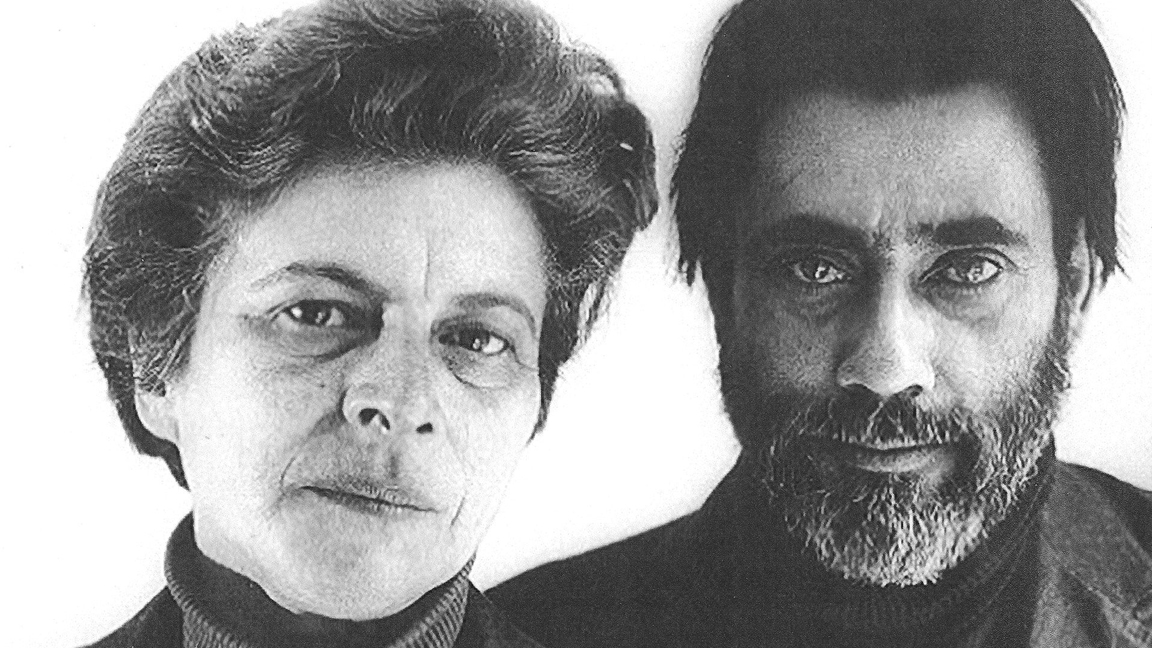
How two Santa Cruz artists changed the course of environmental history

KQED recently produced this profile of Helen and Newton Harrison, the parents of the eco-art movement. The piece includes a radio broadcast, and a more detailed web article with photos.
"Widely known as the parents of the eco-art movement, the Harrisons have become world-renowned for using art to tackle environmental problems on a massive, global scale."
The Harrisons partnered with UC Berkeley's Sagehen Creek Field Station and the Center for Art + Environment at the Nevada Museum of Art for a project looking at native vegetation manipulations to mitigate snowpack conversion to rain. This is part of a larger, worldwide, climate-themed effort they call "Force Majeure" that seeks to find answers to thorny environmental issues.

More info about the Harrison Project at Sagehen.

Sunday, October 11, 2015

Partnership for Community Engagement Pilot

This WESTAF program seems like a great, ready-made model for some types of FSML art (Partnership for Community Engagement Pilot).

* * *

WESTAF--the Western States Arts Federation--is a nonprofit arts organization dedicated to the creative advancement and preservation of the arts. To accomplish this, WESTAF works in cultural policy, research, and technology.

WESTAF provides other services that may be useful to FSML art programs:
  • "Since its launch in 2005, CallforEntry.org (CaFÉ) has grown to become the nation’s leading online call-for-entry application and jury management system. Thanks to a series of significant improvements and an expanding team, CaFÉ now has over 150,000 registered artists and is the only system with an active marketplace of artists who regularly search for and apply to calls through the site. The CaFÉ site consistently hosts more than 120 active calls, with over 60 new calls added each month. Each call receives an average of 220 submissions for juried exhibitions, art competitions, and public art commissions."
  • "The Public Art Archive (PAA) database is quickly approaching 10,000 records from almost 1,000 collections around the nation and abroad. As the database grows, the PAA team continues to work on ways to help more of the public discover and learn about public art collections. One big step towards this goal is the Collection Showcase Page feature, which allows administrators with collections in the PAA to develop their own home page as an access point to their collection. Using the showcase page in this way is far less expensive than designing a stand-alone public art site. In addition, because the PAA is heavily used, the public is better able to search for a collection in a locality rather than seeking one out that is often buried in state and local government sites."
  • "WESTAF has underwritten Barry’s Blog for 10 years now. The blog was initiated by Barry Hessenius, who, at the time of the blog’s founding, was the recent past executive director of the California Arts Council. WESTAF...invites our Update Notes subscribers to read Barry’s thoughts on 10 years of blogging about the arts by visiting: http://bit.ly/barry10."
  • See more services on the WESTAF website.

Wednesday, September 23, 2015

Request to form OBFS Ad Hoc ArtSciConverge Committee

Gothic Community Center.
In September, 2014, a Working Group on Art@FSMLs formed during the Wood's Hole Organization of Biological Field Stations/National Association of Marine Laboratories (OBFS/NAML) Joint Meeting. The group started this blog, and began to explore ways to facilitate and encourage art at sites of long-term environmental research.

Last week, OBFS held their 2015 Annual Meeting at the Rocky Mountain Biological Laboratory in Gothic, CO, along with concurrent meetings of the Global Network of Mountain Observatories (GNOMO) and iDigBio.

Photos here.

The Working Group presented an update of activities, and examples of several field station and marine lab art programs.

The OBFS Board recognized the growing importance of supporting interdisciplinary field station use, and is converting the Art@FSMLs Working Group into a permanent Ad Hoc Committee within the organization.


Local resident


View presentations: 
  • Intro and update (PDF)

  • Cedar Point, NE (PDF)

  • ArtLab, Mountain Lake, VA (PDF)

  • Art at LUMCON, LA (PDF)

* * *

Watch additional FSML art program videos:

Ann Carlson at Jasper Ridge...


Picture Jasper Ridge. A performance hike by artist, Ann Carlson. from Stanford Arts Institute on Vimeo.

Art at Cedar Point...


Art at Cedar Point from Kat Shiffler on Vimeo.


Wednesday, August 5, 2015

Artist residencies that welcome scientists, too

Some artist residencies that welcome scientists.
View larger map.
Hosting artists at field research sites is one way to encourage fertile collaboration and cross-pollination. But some artist residency programs also host scientists for the same reasons. Requirements for these residencies vary from no expectations, to participation in the community, to presentation of work.

Scientists often visit field research stations to write and reflect in an inspiring environment, rather than to conduct actual science. Artist residency programs might offer a similar option that also provides a potentially valuable connection to a different community.

Tuesday, July 28, 2015

Resources for art/science collaborations

Here's a helpful note from Tracey Bell, ecoorchestra.com via Fred Swanson:

======================

I wanted to share a few resources with you for your future explorations into this topic:

I'm not sure if you have connected with the folks that run the Cultural Programs of the National Academies of Science, but you should reach out to them for sure!

One example of national standards for art+science collaborations might be the evaluative criteria for the NEA's Artworks grant for cross-disciplinary art+science projects.

You could also check out the Americans For the Arts for everything from the economic impact of the arts to models for civic engagement in the arts. Subpages of potential interest to you:

  • National Arts Administration and Policy Research Database
  • Animating Democracy "As a program of Americans for the Arts, we bring national visibility to arts for change work, build knowledge about quality practice, and create useful resources. By demonstrating the public value of creative work that contributes to social change and fostering synergy across arts and other fields and sectors, we work to make the arts an integral and effective part of solutions to the challenges of communities and toward ensuring a healthy democracy."

With regard to other topics:

The Art and Social Justice movement looks at returning agency to traditionally oppressed or underrepresented groups and giving them the ability to tell their own story through performing arts, writing, or visual arts. Often projects have a connection to land, place, food, the environment. The Art and Social Practice movement , which is similar but not exactly the same, looks at socially engaged art making and often has an connection to the environment and place as an integral part of community life.  A great place to start looking for more information on these topics would be the Open Engagement Conference.  PSU also has an MFA program in Social Practice Art.

And last but not least, here are some examples of social practice/science/art work that I found in my research that might be of interest to you as well:

  • City as a Living Laboratory  Includes best practices framework for collaboration between artists and scientists. "Mary Miss / City as Living Laboratory (MM/CaLL) is an initiative spearheaded by artist Mary Miss to establish a platform for artists, working in collaboration with scientists, urban planners, policy makers, and the public, to make sustainability tangible through the arts. CaLL asks: by what means can we foster roles for artists and designers to shape and bring attention to the pressing environmental issues of our times?"
  • Highwater Line Performance piece that engages communities in dialogue about rising water levels and climate change and includes a action guide and educational materials. (Sponsored by Eco ArtSpace) 

Art/Science Residencies

Here's a great article on residencies that facilitate interdisciplinary work between art and science. Below are some interesting quotes from the article:

"We perceive a world where artists and scientists collaborate directly with each other to create innovative interdisciplinary work and projects that have a positive impact on society, technology and culture."

"The residency environment is also particularly well-suited for collaboration and synergy between often disparate-seeming disciplines...In this spirit, many multidisciplinary organizations are forming creative residencies as a way of addressing ecological and scientific issues."

"Art and imagery are inherent in the creative process in science and integral to the communication of its discoveries. For theoretical physics, images can be powerful expressions of elegant mathematical equations that are otherwise inaccessible to many."

"Artists often investigate ideas differently than scientists, and communicating this way of seeing can move the science forward."

"The artists were also surprised to find that some of the most innovative art was already being created at [CERN] by the engineers and lab technicians, who were crafting machines that combined state-of-the-art technology and some of the world's finest craftsmanship. The resulting dialogue explored the question of whether sculptural objects that were created without the intention of being art--but rather as scientific tools--were in fact art."

"While science dominates restoration thought, it seems increasingly clear that science is necessary, but not sufficient...and neither is art. I think this project can help establish a clear role for artists and humanists, not as solitary visionaries, but as participants; not as some mystical or magical process, but as an important, critical perspective; not as arbitrator, but as co-worker, one among many disciplines equally necessary to the recovery and revitalization of this whole place."


Read more at greenmuseum.org, a nonprofit online resource to support and advance the environmental art movement

Monday, July 27, 2015

Ecosphere paper on art at FSMLs

Fred Swanson has an essay in the Ecological Society of America's Ecosphere this month, on the past and present state of art at field research (and other) sites.

Titled, "Confluence of arts, humanities, and science at sites of long-term ecological inquiry", this paper was informed in part by the survey of FSML art programs we did recently, so thanks for participating! The publication is a fantastic synopsis of where we are and where we've been, which will be very helpful as we move forward with art/science integration.

Fred has a past ESA paper from 2008 that might also be of interest: "Bridging boundaries: scientists, creativewriters, and the long view of the forest" discusses the excellent Long-Term Ecological Reflections program:
"Developed as an analog to the Long-Term Ecological Research (LTER) program sponsored by the National Science Foundation, the Reflections program attempts to bridge the sciences and humanities in places like the HJ Andrews Experimental Forest LTER site (Oregon) and Mount St Helens (Washington State), where participants reflect, share ideas, and write."

Wednesday, July 15, 2015

#ArtSciConverge: NSF Workshop in Reno, NV - June 19-21, 2015

Perspectives: Examining Complex Ecological Dynamics through Arts, Humanities and Science Integration, Nevada Museum of Art • Reno, Nevada June 19-21, 2015

Proposal (NSF DEB-1543827) | Participant packet | Photos | Workshop report (will be posted when completed)

Dinner conversation
"The purpose of this workshop is to advance the integration of the arts and humanities (AH) with science in the interest of addressing complex ecological and social-ecological challenges. 

This effort is emerging organically from the recent groundswell in arts and humanities activities associated with Long Term Ecological Research (LTER) network sites (www.ecologicalreflections.com) and Field Stations and Marine Labs (FSML), and is expanding to incorporate an array of other organizations active in art and science integrative research and public outreach. 

Through this workshop, we aim to expand the depth and breadth of interdisciplinary efforts and to map a path forward in which AH contributes not only to outreach and education efforts, but also to fundamental inquiry and analyses of the grand challenges facing ecosystems and social-ecological systems. By integrating these different means of inquiry and observation, challenges may be met with greater power and insight than each discipline can offer in isolation."


Speaker Presentations:

Why are field research stations even interested in art?
Overview of the Recent National Academy of Science Publication on the Future of Field Stations and Marine Laboratories (FSMLs) 
Jerry Schubel, President and CEO, Aquarium of the Pacific:


* * *

What are artists already doing at field sites? Why are they doing it?
Art of the Anthropocene
Bill Fox, Director, Nevada Museum of Art - Center for Art + Environment:


* * *

Does art make us see the world differently than science does?
The Pliability of Perception
Art Shimamura, Helen Wills Neuroscience Institute at the University of California, Berkeley


* * *

What is the nature of creativity?
The Emerging Field of Neuroaesthetics and Why the Linkage Between Arts and Sciences Actually Engages our Brains in a Different Way
Michael Casey, James Wright Professor, Depts. of Music and Computer Science, Dartmouth College


* * *

Can art make useful discoveries about the world (vs. traditional outreach and illustration)?
Art Experience vs. Science Experience
Brandon Ballengée, Artist and Biologist


* * *

What are the mandates that drive environmental (and other) art? What are the metrics for success? What’s the future?
Panel Discussion: Arts Funding 
Bill O’Brien, Senior Advisor for Innovation to the Chairman, National Endowment for the Arts
Janet Brown, President and CEO, Grantmakers in the Arts


* * *

How Do You Work the Art/Science Interface and Get to Impact?
The Green Heart Project 
Helen and Newton Harrison, Artists


* * *

What are the issues around integrating art and science?
Overview of, “Steps to an Ecology of Networked Knowledge and Innovation", from the Sciences, Engineering, Arts, and Design (SEAD) Network.
Amy Ione, Artist and Educator


* * *

Humanities in Action: A look at work in the science/philosophy interface to promote social action
Michael Nelson, Ruth H. Spaniol Chair of Renewable Resources, Oregon State University


* * *

Complex Program Case Study:
Master Class on How to Create and Build an International Arts-Science-Technology Program Putting Them on the Same Level, Using Arts@CERN as an Example
Ariane Koek, Founder of Arts@CERN


* * *

Interviews:

| Xavier Cortada, artist and activist |


* * *

| Brian Smith, STEM to STEAM leader |


* * *

| Art Shimamura, neuroscientist |


* * *

| Janet Brown, arts funding representative |


* * *

List of Workshop Products
  • Grant proposals:
    • 2015 Planning Meeting (NSF DEB-1543827): Participant packet | Photos | Presentation videos (above) | NSF Progress Report (2016) | 
    • National Science Foundation (NSF) Research Coordination Network (RCN). Submitted, 2015. Resubmitted, 2016 (declined).
    • Clore Foundation Fellow, art/sci program feasibility study (accepted)
    • New York State Regional Economic Development Council funded a 2017 proposal from Harvestworks by Kevin Duggan:
    • "Art, Data and Ecology at NYS Field Stations" is a cultural mapping project to identify resources and best practices to support the creation and exhibition of new work by artists and cultural organizations in collaboration with biological field stations in New York State. Collaborators include the New York City Urban Field Station and the Huyck Preserve and Biological Research Station.
    • National Endowment for the Arts (NEA): NYC Harvestworks collaboration with Hubbard Brook, 2016. Lindsey Rustad and Kevin Duggan (declined):
"Experimental Forest: Media Art, Data and Ecology: Harvestworks will partner with the Hubbard Brook Research Foundation and a network of biological field stations and Long-Term Ecological Research (LTER) sites to support artist residencies on the creative use of environmental data. Six artists will collaborate with scientific researchers and staff at six national field stations – each with a distinct ecosystem and in many cases with decades of collected information—to develop new projects that can illuminate ecological issues and engage the public in new ways during in a time of intense environmental and climate change. Each location will produce public events centered on the residences, and outcomes will be broadly shared to inspire further collaborations between the arts and environmental research sites."
  • Meetings:
    • Bill Fox participated in several meetings as a direct result of the Reno workshop, including:
      • 2016 Grantmakers in the Arts (GIA) strategic meeting in NYC on putting funders next to art/sci initiatives, 
      • 2017 NSF strategy meeting in Washington, DC
  • Networking with additional potential partners, including: 
    • Los Angeles County Art Museum (LACMA). Faerthen Felix and Jeff Brown; 
    • Metabolic Studio, Los Angeles. Faerthen Felix and Newton Harrison; 
    • Alliance of Artist Communities. Faerthen Felix, Jeff Brown, Bill Fox; 
    • Western States Arts Foundation (WESTAF), Public Art Archive (PAA): Faerthen Felix; 
    • Lake Tahoe West. Jeff Brown (Jeff convinced the multi-agency forest planning project to embed an artist in the process).
    • In 2016, OBFS approved a permanent ArtSciConverge committee at the request of Faerthen Felix and Jeff Brown.
  • Archiving artist/scientist collaboration efforts:
    • Archive of #ArtSciConverge materials at the Nevada Museum of Art - Center for Art + Environment. NMA-CA+E also began archiving #ArtSciConverge materials for UC Berkeley's Sagehen Creek Field Station.
    • In 2016, Bill Fox produced guidelines for these archives.
  • ArtSciConverge presentations:
    • 2015 LTER All-Scientists meeting. Working Group Session: "Engagement of Arts and Humanities in LTER Sites and Programs". Fred Swanson, Lindsey Rustad, Mary Beth Leigh, and others from the LTER. Aug. 30-Sept. 2, 2015. Estes Park, CO.
    • Organization of Biological Field Stations (OBFS) 2015 annual meeting. Gothic, CO. Sept. 16-20, 2015. Concurrent Session: Faerthen Felix, Eric Nagy, Jon Garbisch, Murt Conover.
    • Proposed Mt. Mansfield Center Review. Burlington, VT. April 18-19, 2016. Faerthen Felix, Lindsey Rustad.
    • UC California Naturalist 2016 Statewide Conference. Los Angeles, CA. Sept. 9-11, 2016. Faerthen Felix, Charles Convis, Elkpen.
    • Organization of Biological Field Stations 2016 meeting. Sept. 21-25, 2016. Sitka, AK. Concurrent Session: Faerthen Felix and Mark Shultze.
    • Alliance of Artist Communities 2016 Conference. Oct. 4-7, 2016. Portland, OR. Breakout Session: "Cross Pollination: Art/Science Collaborations + Impact of Place". Faerthen Felix, Bill Fox, Deb Ford, Charles Goodrich.
    • TEDx Fairbanks: Seeing the Elephant: Toward Reintegration of the Arts, Humanities, and Ecological Sciences. Mary Beth Leigh. Feb.21, 2016. Fairbanks, AK. 
    • Alliance for Arts at Research Universities (a2ru) Meeting. Nov. 3-5, 2016. Panel Session: "Ecological Reflections: Integrating the Arts and Humanities with Science at Long-Term Ecological Research Sites". Mary Beth Leigh, Fred Swanson, and others. Denver, CO. 
    • Fred Swanson has given talks at North Temperate Lakes LTER and the Oregon State University Hatfield Marine Science Center. 
    • Mary Beth Leigh has given invited seminars at Oregon State University (June, 2016) and North Dakota State University (Nov. 2016).
    • Organization of Biological Field Stations 2017 meeting. Sept. 20-24, 2017. Itasca, MN. Concurrent Session: Sylvia Torti and Faerthen Felix.
    • Alliance of Artist Communities 2017 Conference. Oct. 2-5, 2017. Denver, CO. Breakout Session: "Beyond the Studio: Art/Sci Collaborations". Nina Elder, Fred Swanson, Collin Haffey, Cedra Wood.
    • Mary Beth Leigh has given oral presentations on this topic at: 
      • Oregon State University (June, 2016)
      • Invited seminar North Dakota State University (Nov. 2016)
      • Invited seminar University of Alaska Fairbanks (Sept. 2017)
      • Faculty seminar 6th International Symposium on Biosorption and Biodegradation/Bioremediation, June 25-29 2017, Prague, Czech Republic
      • Invited keynote lecture American Society for Microbiology Alaska Branch Meeting (Oct. 2017) in Anchorage, AK. Platform presentation
    • Lindsey Rustad curated the online twitter account IAmArtSci for a week where she discussed our various ArtSciConverge projects 
    • Michael Nelson was consulted on environmental science, arts, and humanities projects by the University of Virginia’s new Resilience Institute and the Georgia Coastal Long-Term Ecological Research Program at UVA. Nelson gave a formal presentation and led three faculty discussions on the subject.
    • Presentation to National Assoc. of Marine Labs (NAML) art/science committee about the activities of the ArtSciConverge committee of the Organization of Biological Field Stations (OBFS). Conference call, Faerthen Felix and Sylvia Torti. May 16, 2018.
    • "The Sagehen Art Program: Why does Science Need Art?" Faerthen Felix. 
      • E.A.R.T.H. Lab studio course, UC Santa Cruz, CA. May 11, 2016.
      • Sierra Club - Northern Sierra Chapter Meeting, Claire Tappan Lodge, CA. June 20, 2016. 
      • Art/Science Collaboration in the Great Basin. Playa, OR. April 22-25, 2016. 
      • Truckee, CA Morning Rotary, Aug. 15 2017. 
      • UC Santa Cruz Art and Environment Course. Santa Cruz, CA May 23, 2018.
      • Truckee Arts Alliance, June 25, 2018.
  • Planned products:
    • NSF Final Report (2018)
    • WESTAF Public Art Archive (PAA) for field station artworks
    • Structured coordination between Alliance of Artist Communities (AAC) and Organization of Biological Field Stations (OBFS)
    • Faerthen Felix worked with the Organization of Biological Field Stations (OBFS) and the Alliance of Artist Communities (AAC) to map field stations and marine labs with artist residencies that have an interest in ecology. We continue to work to add additional residencies, since many FSMLs also produce research in the social sciences and the humanities.
    • A short synthesis article focusing on the workshop is being planned by PI Leigh with Fred Swanson and Michael Nelson. 
    • Mary Beth Leigh, Michael Nelson, Lissy Goralnik, and Fred Swanson are writing a chapter in the forthcoming book “In The Challenges and Accomplishments of Long-Term Ecological Research: New Perspectives on the Past, Present, and Future of Ecological Science” (eds. Robert Waide and Sharon Kingsland) focused on the history of arts and humanities within the LTER Network.
    • Section on art at FSMLs in an upcoming Handbook of Best Practices for Mountain Observatories
    • National coordinator for art at FSMLs
    • Facilitate scientist participation in artist residencies (2015-)

Thursday, May 21, 2015

NEH Common Good program

The National Endowment for the Humanities is up to some interesting things.

Here's a note from Eva Caldera, Assistant Chairman for Partnership and Strategic Initiatives (emphasis added):
Our new NEH initiative, The Common Good: Humanities in the Public Square, includes an invitation to the humanities community to examine opportunities for the humanities to contribute to the changing understanding of the relationships between humans and the natural environment. If you or any of your colleagues would like to learn more about the initiative or its grant programs or the work of the Endowment more generally, please feel free to be in touch.

Tuesday, April 7, 2015

UCNRS emphasizes arts partnerships at reserves

The University of California Natural Reserve System (UCNRS) has identified building stronger arts/humanities ties as a focus in their recent strategic plan. This is the largest university-managed system of natural reserves on the planet, so that's influential.

From the plan:

Initiative 31. Expand the existing partnership with the UC Institute for Research in the Arts to offer more fellowships to art students to work at NRS reserves.

Initiative 32. Work with the University community to develop programs that enable arts and humanities students to appreciate, incorporate, and support the sciences.

Wednesday, March 4, 2015

Engaging the arts in field station collections

From the Florida Museum of Art and Culture:
"Science Bugs celebrates local ecology and research by exploring insects using three kinds of representation. 
Tim Lethbridge’s photography captures moments of insects “in the field,” giving us a glimpse into their lives and ecological roles. 
Dustin Angell’s studio-like photographic portraits offer an intimate view of specimens from scientific collections, highlighting the structures of their bodies and the scientific research related to them. 
Dr. Mark Deyrup’s scientific drawings of insects reveal the defining traits of species, and show how entomologists need standardized and highly detailed depictions of insects. 
Through these three artists, Science Bugs gives viewers a look at an important part of ecology as well as the methods of how insects are studied."
Archbold Biological Field Station provided the insect specimens.

=============
Update from Hilary:

"and even better

Our education coordinator took the startling black photos – Dustin Angell and our bug biologist Mark did the drawings – so cool

H"