Showing posts with label ecology. Show all posts

Monday, October 8, 2018

Powerful artists

Here are some artists currently doing remarkable work at the intersection of art, environment and science. Thanks to Josh Harrison for the suggestions:

David Haley

"Ecological artist, David Haley, believes our ability to survive Climate Change is the enactment of a complex evolutionary narrative. As the dance of creation and destruction, also, demands new opportunities and meanings for the other side of collapse, his inquiries into the nature of water, whole systems ecology, complexity, and integral critical futures thinking inform his arts practice, academic research, education and community developments."

Tim Collins & Reiko Goto

"Tim Collins is an artist, author and planner, working across art, science and philosophy for over twenty years. He has worked within a wide range of communities developing research, methods and practices that take best advantage of art and aesthetics in the public interest...Over the last decade, Collins and his partner Reiko Goto have been developing artwork, tools and technologies that attend to the silent, the invisible and the different temporal relationships that occur at the scale of forests and gardens."
Jonathan Baxter

"Jonathan Baxter is an ‘artist and …’ He works across disciplines – both art and non-art related – using psychoanalytic methodologies and performative practices to variously open up, challenge and propose what is."


Lucas Ihlein 

"Ihlein is an award-winning Australian artist whose work explores the relationship between socially engaged art, agriculture and environmental management."


=================

Recommendations for artists who are compatible with field station science

Take a look at these artist's websites to see if their work resonates with yours:

"...I promised to send along the list of artists I know of who would be a great fit for a residency at a field station (and/or they may have already done something like this in the past)

Carolina Aragon

Cathleen Faubert
Helen Glazer
Ryan Griffis
Sarah Kanouse
Brian Knep
Mikhail Mansion
Jane Marsching
Lize Mogel
Teri Rueb
Brooke Singer
Joseph Smolinski
Andi Sutton

These are some that are at the top of mind at the moment, but I could certainly come up with more if folks are interested.

Best wishes,

Catherine D'Ignazio

Assistant Professor, Emerson College
Senior Fellow, Emerson Engagement Lab
Research Affiliate, MIT Center for Civic Media
@kanarinka | www.kanarinka.com | 617-501-2441"

Thursday, June 21, 2018

Map of FSMLs and Artist-Residencies

Finding an artist-residency program to work with on ArtSciConverge at your field station or marine lab (FSML) can really help. They can refer good artists to you, and act as partners in art/sci projects, grant applications and other programs. Some of these residencies are even looking for scientists to enrich their residencies, and you can help them find some.

Many artist residencies are already focused on ecology. I've worked with the Organization of Biological Field Stations (OBFS) and the Alliance of Artist Communities (AAC) to produce a map to help you find each other. I'd like to keep developing the map with more residencies, since many FSMLs also produce research in the social sciences and humanities, as well as the hard sciences.

Let us know if you use the map to make a connection.


View Potential Partners in ArtSciConverge in a full screen map

Saturday, April 28, 2018

“What would power look like if it were art?”

Jim Mason is a Burning Man and San Francisco Bay area artist. Asking that question led Mason down a path that led to All Power Labs (APL), a $5M a year energy start up sustained entirely by sales.

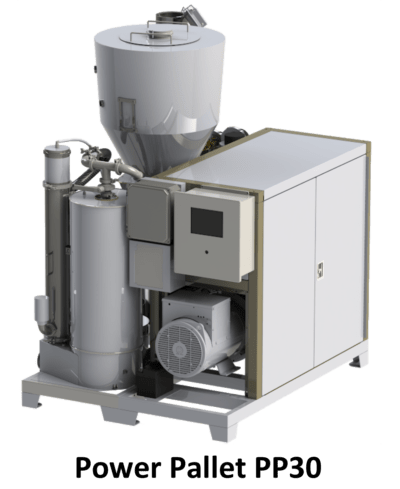
APL creates biomass gasifiers that produce heat, electricity and biochar from organic debris, creating negative carbon balance in the equation. The company actually aims to reverse the planetary damage done by burning fossil fuels over the past 150 years, moving atmospheric carbon into the soil in a stable form that enhances soil productivity over millennia. The technology is small scale for distributed production at the source of the feedstock, rather than requiring trucking of material to a large megawatt generator, as is our current cultural model...which is only better because some company can make billions that way.

Though APL's aims seem grandiose to the point of delusion, the artists are onto what may be the only solution out there, and the company is growing rapidly both domestically and world-wide.

APL's gasifiers are small, arriving on a pallet, and relatively affordable (if you have $50K and a handy source of biomass to feed it). But now, anyone can get in on the action, and improve their garden (or someone else's) at the same time: the company has borrowed the Community Supported Agriculture model and is offering biochar subscriptions through their new Local Carbon Network. You (or your designees) get periodic bags of this special charcoal shipped to your home (or farm), where you mix it with compost and till it into your soil. Your effort improves the soil productivity, reduces water needs, and banks carbon. It's worth the $25 Indie-Go-Go subscription just to support these visionaries!

Read article.


APL is not the only visionary, artist-led, Burning Man-inspired energy initiative underway.
"Black Rock Solar began its sun-capturing mission at Burning Man 2007, installing a 30-kilowatt solar power array on the playa in keeping with that year’s Green Man theme. After the event, the team donated and moved the installation to Gerlach’s Ernest Johnson Elementary School. The original array was later expanded to 90 kilowatts, providing the school with a third of its power and saving more than $15,000 per year, money that goes toward enrichment programs for the kids.  
Black Rock Solar’s financial model was innovative: use donations and grants to fund solar installations, receive significant solar rebates from Nevada’s electric utility, and use that money to fund more installations. Today, through Black Rock Solar’s efforts, more than 100 schools, non-profits and tribal community buildings, including the Pyramid Lake Paiute Tribes schools and facilities along the Route 447 stretch between Fernley and Gerlach are now powered by the sun’s rays."
In 9 years, BRS installed 7.6 megawatts worth of solar systems to generate clean, cheap power in Washoe County, Nevada, and points beyond. So much power, in fact, that the State of Nevada proclaimed Hwy 447 as America's Solar Highway, with more watts of distributed solar per mile than anywhere in the USA (451kW along 75 miles of highway, 17 watts per mile).

With the drop in solar hardware costs and the end of Nevada's incentive programs, Black Rock Solar's financing model was no longer effective; the company recently transitioned into Black Rock Labs, an accelerator for "best-in-class clean-tech innovations particularly suited to the Burning Man culture and in alignment with Burning Man principles. It will select projects that may start by bettering life in Black Rock City, but which can be scaled to serve the whole world."

One of their first efforts is the hexayurt: a simplified disaster relief shelter designed by artists and tested thoroughly on the harsh playa at Burning Man. The structures are simple, cheap, portable, and robust for use in disaster areas and other temporary communities.

More info.

Thursday, December 21, 2017

Natural Discourse: Artists, Architects, Scientists & Poets in the Garden

Jenny Kendler
Bewilder (Deimatic Eyespot Camouflage) 2016-2017
Living Proof: Flora, Fauna & Fossil Fuels
Space 151, San Francisco
Opening January 13, 2018. 5-8pm

"Jenny Kendler has printed wallpaper and fabric composed of thousands of collaged photographs of butterfly and moth eyespots. These bullseyes of color and form are thought to protect winged insects by frightening or confusing predators. In the Bewilder project, this deimatic camouflage becomes something new. Visitors are given eyespot temporary tattoos and invited to pose for a portrait in front of the brilliantly colored pattern. These colored marks confuse the digital gaze — just as butterflies' spots confuse predators — and disrupt facial-recognition software, creating a new type of camouflage for the modern, digital world of privacy loss and online tracking."
Natural Discourse: Artists, Architects, Scientists & Poets in the Garden’ is an ongoing series of symposia, publications and site-specific art installations that explore the connections between art, architecture and science within the framework of botanical gardens and natural history museums.

Natural Discourse began as a collaborative project between the University of California Botanical Garden at Berkeley (UCBG) and a multi-disciplinary group of artists, writers, architects and researchers who were invited to spend time in UCBG’s extraordinary collection of plants, engage with the horticulturalists and develop new site-specific work. 
 
The resulting exhibit was on view in the garden’s collection from July 2012 to January 2013. From 2012 to 2017 six day long Natural Discourse symposia combining artists and scientists have been held at UCBG, the LA County Arboretum and Botanical Gardens, The LA County Natural History Museum, the La Brea Tar Pits and Museum and the Huntington Library, Art Collections and Botanical Gardens. In 2016, the exhibit Digital Nature: An evening of Techno-Botanical Art in the Garden was held for two nights at the LA County Arboretum.

Saturday, December 16, 2017

Call for Open Peer Review: An Anthropocene Primer

Version 1.0 of An Anthropocene Primer is hosted by the IUPUI Arts and Humanities Institute as an open access book. In collaboration with Indiana University Press, we are inviting the public to participate in an open peer review of the volume between October 23, 2017 and February 1, 2018. We will revise the primer in response to the comments and intend to publish the text as an open access book as well as a hard copy volume in 2018.
An Anthropocene Primer is a great example of a project weaving humanities and science together seamlessly to explore a serious current socio-ecological issue. The online Hypothes.is software allows anyone to annotate and contribute to the project.

The primer website and blog also includes references to other interesting and successful art/sci collaborations, papers, and open peer review projects like the Rivers of the Anthropocene, and Environmental Humanities and Climate Change.

Here's how to get involved:


Sunday, October 29, 2017

In a Time of Change (ITOC)

The In a Time of Change (ITOC) program is a strong and well-developed model for art/sci collaborations at field stations, marine labs and artist residencies.

ITOC is a large effort that links a cohort of artists with dozens of scientists for over a year; but the model is scalable to smaller programs, shorter time periods and modest exhibitions. ITOC provides a potential partnership opportunity with museums and galleries near your field station, and could be structured as a university semester program linking art and science grad students. Or the program could provide a Broader Impacts opportunity to NSF-funded researchers at your site.

[ITOC] was founded in 2008 by artists and scientists in Fairbanks with support from University of Alaska - Fairbanks and the Bonanza Creek Long Term Ecological Research program.
ITOC recognizes that the arts, humanities, and sciences bring different, yet synergistic perspectives and reactions to the natural world. Collaborations between the arts, humanities and sciences engage people at the intellectual, intuitive, and emotional levels, and strengthen their appreciation for the environments and ecosystems in which they live. Combining these diverse perspectives also yields greater success in solving complex environmental problems and promoting outreach and education than science alone. 
ITOC was co-founded and is directed by Mary Beth Leigh, an Associate Professor in the Department of Biology and Wildlife and the Institute of Arctic Biology at the University of Alaska Fairbanks. Leigh is an environmental microbiologist with a background in the fine arts as a dancer, choreographer, and musician. She has a strong interest in fostering collaborative arts-humanities-science activities.
The ITOC programs connect a cohort of artists with numerous scientists over many months. The artists learn about the current project theme in the lab, the classroom and the field: on the UAF campus, the Bonanza Creek Experimental Forest and the Toolik Field Station. Artists in the program then develop works inspired by the theme.

Artistic media have included painting, sculpture, tile, printmaking, textiles, artist books, writing and multimedia, The project artworks are presented through gallery exhibits, websites, public readings, and other events. ITOC works have been included in exhibits at the National Science Foundation headquarters in Arlington, VA.

Past ITOC programs were themed on Microbial Worlds (2017),  Trophic Cascades (2013), The Art of Fire (2012), Envisioning the Future (2010), In a Time of Change (2008).

Another model that can be quickly adopted by additional field stations is the Ecological Reflections program at the HJ Andrews Experimental Forest.