"In the fall of 2017, Interlochen Arts Academy launched an initiative that explores the nexus of art and ecology, as a collaboration between the Visual Arts and R.B. Annis Math and Science Divisions." More info here.
In addition to the expected advertising, their work includes performance art created from 3D image tracking and mapping, and inspired by scientific and mathematical topics like light physics, geometry, neuroscience, and particle physics.
Their website includes many compelling projects, including these:
An Anthropocene Primer is a great example of a project weaving humanities and science together seamlessly to explore a serious current socio-ecological issue. The online Hypothes.is software allows anyone to annotate and contribute to the project.
This conference brought together over 36 local innovative experts in the fields of science, art, technology, and education who engaged in a series of roundtable discussions on (1) science-art collaboration, (2) STEAM and the future of education, and (3) the multi-directional relationship between science, art, and society. Each of these topics were specifically addressed two times, creating six roundtables total, with unique participants in each round who built off of the previous conversations of all roundtables. The format of spontaneous and generative dialogue was chosen with the aim to evolve a collective conversation over the course of three days, in attempts to gain intellectual progress on the most difficult, interesting, novel, and complex challenges we face as cross-, multi-, inter-, and trans-disciplinary practitioners.
What can art-science-tech collaborations result in? How do we form new educational models for the 21st century? How do we bridge the gulf between art and science, and between art, science, and society? These are only some of the questions that were addressed by the participants and active audience members.
Seeing the Elephant: Reintegrating Arts, Humanities & Sciences
"Collaborations between the arts, humanities and sciences can strengthen our connection to the ecosystems in which we live. This TEDx talk highlights work done by Mary Beth Leigh combining ecology, dance, visual art, and other media to advance the arts, sciences, and public understanding of social-ecological issues.
Mary Beth Leigh is an Associate Professor of Microbiology at the University of Alaska Fairbanks and is an organizer of state and national efforts to integrate the arts and humanities with ecological science. She directs the Alaska-based program, In a Time of Change, and co-organizes the nationwide networks, Ecological Reflections and ArtSciConverge.
This talk was given at a TEDx event using the TED conference format but independently organized by a local community. Learn more at http://ted.com/tedx"
Mariale Hardiman, Vice Dean, Academic Affairs, Professor of Clinical Education, and Co-founder and Director of the School of Education's Neuro-Education Initiative, Johns Hopkins University, Baltimore.
"The Aquarium of the Pacific has commissioned a project that brings art and science together to
translate the movement of sea jellies, or jellyfish, into a symphony...The Symphony of Jellies was developed based on an algorithm that tracks the movements of sea jellies and translates them into sounds...
Marty Quinn, founder of the Design Rythmics Sonification Research Lab, developed software and hardware to capture sea jellies movements with digital video footage and translate them into sounds through a process he calls MoveMusic sonification. Composer Eddie Freeman of Icarus Music used those sounds to create musical motifs and orchestration. Aquarium President and CEO Dr. Jerry Schubel and Aquarium Trustee Dennis Poulsen served as advisors and partners on the project."
Schubel and Quinn are members of the ArtSciConverge effort, and met as participants in the 2015 Reno Workshop.
Arts Associated with the Luquillo Experimental Forest and LTER Site, Puerto Rico – A Report by Dr. Grizelle Gonzalez, International Institute of Tropical Forestry, US Forest Service, and Luquillo Experimental Forest and Long-Term Ecological Research Program
The US Forest Service Institute of Tropical Forestry (IITF) and Luquillo Experimental Forest and Long-Term Ecological Research (LTER) program have helped organize a series of arts activities, including an art exhibit, artist residencies, publication of books, and other outreach activities. The exhibit, organized with the Museum of Contemporary Art (MAC) in Santurce, Puerto Rico, broke attendance records for the museum and won two awards: 1) 2014 USFS Wilderness Legacy Award and 2) Best 2014 Collective Exhibition in Puerto Rico awarded by the International Association of Art Critics (AICA). AICA is based in Paris and it is affiliated to the United Nations Educational, Scientific and Cultural Organization (UNESCO). Currently there are plans to take the exhibit to Chicago and link to the Hispanic community in the area.
El Toro Wilderness Residency, A Wilderness Science and Art Collaboration took place during the month of March, 2013 in collaboration with the Aldo Leopold Wilderness
Research Institute and the Colorado Art Ranch, as part of the commemoration of the Wilderness Act’s 50th anniversary. After the finalization of the residency and during 2013, plans were made to develop the exhibit “Poetic Science: arts-science approximations to el Yunque” that would 1) bring to fruition the celebration of the research/work for the benefit of the 50th Anniversary of the Wilderness Act, 2) show the general public the benefits of an arts and science collaboration, 3) bring science produced at the Institute to the general public and 4) could also improve employee morale. The list below highlights the various activities by which IITF engaged in a parallel calendar of educational activities that used the exhibit as a template for reaching the public via conversations, field trips, scientific demonstrations to teachers and students from all over Puerto Rico, using online publications, an audiovisual presentation and hardcopy products, such as literary books inspired by the arts and science residency in El Toro Wilderness.
List of most significant outcomes of the arts and science collaboration:
1. Associated Educational Activities:
The exhibition “Poetic Science” resulted from the work of artists and scientists that participated in the March, 2013 residency. And from this exhibition the “Documenting of Poetic Science” collaborative project was developed to highlight how the process of documentation, exploration and research are common to art and science. A series of workshops, seminars and activities were developed between IITF and MAC for those purposes.
∙ Opening of the exhibition – All IITF Staff was involved in the exhibition (February 6, 2014).
∙ Workshops with middle school student’s once a week during 3 months: Maria Rivera was working on the piece by artist Aline Veillat; she used it to teach students the soil sampling techniques and the importance of earthworms in the soil ecosystem. María Rivera also demonstrated the functions of the climate station. Samuel Moya, Maysaá Ittayem and Carlos Estrada assisted in these activities, when María Rivera was working in other activities.
∙ MAC Teacher’s Club (Activity of curriculum integration) - Dr. Tamara Heartsill participated in these activities that integrated science and art (February 21, 2014).
∙ Art Dreams/ Scavenger Hunt (Interactive activity that integrated science and art for elementary school kids) Maysaá Ittayem participated in these activities (February 28, 2014).
∙ Urban Wilderness Workshop- Dr. Tamara Heartsill and Dr. Ariel. Lugo collaborated with artists from “Piso Proyecto”, to educate teachers and the general public about the concept of “Urban Wilderness” while doing a fieldtrip of the green spaces in the city of Santurce (March 1, 2014).
∙ Panel discussion with scientist and artist - Dr. Grizelle González was part of the scientific panel in that discussed the book “ Libro de Fechas y la poética de la tierra”, by the Artist Elizabeth Robles, that was inspired by her experience as a guest artist in the residency (March 14, 2014).
∙ Panel discussion with scientists and artists about the exhibition, open to the general public. Institute scientists talked about the Poetic Science exhibition (the merging of arts and science in the study of El Toro Wilderness). Drs. Ariel Lugo, Grizelle González, William Gould and Tamara Heartsill participated in the panel (March 26, 2014).
∙ “Documentation of Poetic Science” Teacher’s Seminar. A full day seminar with science and art teacher’s. These full day seminar included a visit to El Yunque National Forest.
2. Written Articles:
∙ González, G., (In Press, In English and Spanish). “Puerto Rico Puerta al Paisaje: desde una perspectiva ecológica” /Puerto Rico: Gateway to Landscape from an Ecological Perspective. ISBN: 978-1-881723-15-8. Pp. 283-287 In: Puerto Rico Puerta al Paisaje. Ramirez Aponte, M., Marichal Lugo, F., Ramos Collado, L. et al. (Eds)
∙ Robles, E. (2014) El libro de fechas. San Juan, PR. ISBN: 978-1-881723-14-1
∙ Robles, E. (2014) Rescoldo Arrebol. San Juan, PR. Secta de Perros ISBN: 978-1-61887-406-1
∙ Ramirez Aponte, M., Marichal Lugo, F., Ramos Collado, L., Laureano, J.E., Oliver, M.F., Raquejo Grado, T., Rivera, D., Abruña, F., Mignucci, A., Jiménez Martínez, T. M., González, G., Rodríguez Casellas, M. In press. Puerto Rico Puerta al Paisaje. ISBN: 978-1-881723-15-8.
4. List of collaborating artists:
Aline Veillat, Switzerland
Jonathan Cohrs, New York
Grisha Coleman, School of Arts, Media and Engineering and the School of Dance at Arizona State University
Dhara Rivera, Escuela de Artes Plásticas of Puerto Rico, Puerto Rico
Noemí Segarra (Piso Proyecto), Puerto Rico
Félix Rodríguez (Piso Proyecto), Puerto Rico
Iván Acosta (Piso Proyecto), Puerto Rico
Mariela Parrilla (Piso Proyecto), Puerto Rico
Natalia Muñoz (Piso Proyecto), Puerto Rico
Javier Suarez, Puerto Rico
Jaime Suarez, Puerto Rico
5. Videos on the arts and science collaboration can be found at: Short version (3:10 min):
The Working Group presented an update of activities, and examples of several field station and marine lab art programs.
The OBFS Board recognized the growing importance of supporting interdisciplinary field station use, and is converting the Art@FSMLs Working Group into a permanent Ad Hoc Committee within the organization.
Scientist Stephen Tonsor, and artist Natalie Settles present at the DC Art Science Evening Rendezvous (DASER), September 15, 2011 held at the National Academy of Sciences, Washington DC.
Tonsor and Settles collaborate in the study of ecology and evolution. From Tonsor's lab page:
Settles and Tonsor have designed an interactive, projected wallpaper in which the fitness (and therefore local adaption) of the wallpaper’s many distinct motifs is determined by viewer attention... Viewers unwittingly participate as “blind watchmakers” in an evolutionary process to be revealed in a meta-exhibition.
Perspectives: Examining Complex Ecological Dynamics through Arts, Humanities and Science Integration, Nevada Museum of Art • Reno, Nevada June 19-21, 2015
"The purpose of this workshop is to advance the integration of the arts and humanities (AH) with science in the interest of addressing complex ecological and social-ecological challenges.
This effort is emerging organically from the recent groundswell in arts and humanities activities associated with Long Term Ecological Research (LTER) network sites (www.ecologicalreflections.com) and Field Stations and Marine Labs (FSML), and is expanding to incorporate an array of other organizations active in art and science integrative research and public outreach. Through this workshop, we aim to expand the depth and breadth of interdisciplinary efforts and to map a path forward in which AH contributes not only to outreach and education efforts, but also to fundamental inquiry and analyses of the grand challenges facing ecosystems and social-ecological systems. By integrating these different means of inquiry and observation, challenges may be met with greater power and insight than each discipline can offer in isolation."
Speaker Presentations:
Why are field research stations even interested in art? Overview of the Recent National Academy of Science Publication on the Future of Field Stations and Marine Laboratories (FSMLs)
Jerry Schubel, President and CEO, Aquarium of the Pacific:
* * *
What are artists already doing at field sites? Why are they doing it? Art of the Anthropocene
Bill Fox, Director, Nevada Museum of Art - Center for Art + Environment:
* * *
Does art make us see the world differently than science does? The Pliability of Perception
Art Shimamura, Helen Wills Neuroscience Institute at the University of California, Berkeley
* * *
What is the nature of creativity? The Emerging Field of Neuroaesthetics and Why the Linkage Between Arts and Sciences Actually Engages our Brains in a Different Way
Michael Casey, James Wright Professor, Depts. of Music and Computer Science, Dartmouth College
* * *
Can art make useful discoveries about the world (vs. traditional outreach and illustration)? Art Experience vs. Science Experience
Brandon Ballengée, Artist and Biologist
* * *
What are the mandates that drive environmental (and other) art? What are the metrics for success? What’s the future? Panel Discussion: Arts Funding
Bill O’Brien, Senior Advisor for Innovation to the Chairman, National Endowment for the Arts
Janet Brown, President and CEO, Grantmakers in the Arts
* * *
How Do You Work the Art/Science Interface and Get to Impact? The Green Heart Project
Helen and Newton Harrison, Artists
* * *
What are the issues around integrating art and science?
Overview of, “Steps to an Ecology of Networked Knowledge and Innovation", from the Sciences, Engineering, Arts, and Design (SEAD) Network.
Amy Ione, Artist and Educator
* * *
Humanities in Action: A look at work in the science/philosophy interface to promote social action
Michael Nelson, Ruth H. Spaniol Chair of Renewable Resources, Oregon State University
* * *
Complex Program Case Study: Master Class on How to Create and Build an International Arts-Science-Technology Program Putting Them on the Same Level, Using Arts@CERN as an Example
Ariane Koek, Founder of Arts@CERN
New York State Regional Economic Development Council funded a 2017 proposal from Harvestworks by Kevin Duggan:
"Art, Data and Ecology at NYS Field Stations" is a cultural mapping project to identify resources and best practices to support the creation and exhibition of new work by artists and cultural organizations in collaboration with biological field stations in New York State. Collaborators include the New York City Urban Field Station and the Huyck Preserve and Biological Research Station.
National Endowment for the Arts (NEA): NYC Harvestworks collaboration with Hubbard Brook, 2016. Lindsey Rustad and Kevin Duggan (declined):
"Experimental Forest: Media Art, Data and Ecology: Harvestworks will partner with the Hubbard Brook Research Foundation and a network of biological field stations and Long-Term Ecological Research (LTER) sites to support artist residencies on the creative use of environmental data. Six artists will collaborate with scientific researchers and staff at six national field stations – each with a distinct ecosystem and in many cases with decades of collected information—to develop new projects that can illuminate ecological issues and engage the public in new ways during in a time of intense environmental and climate change. Each location will produce public events centered on the residences, and outcomes will be broadly shared to inspire further collaborations between the arts and environmental research sites."
Meetings:
Bill Fox participated in several meetings as a direct result of the Reno workshop, including:
2016 Grantmakers in the Arts (GIA) strategic meeting in NYC on putting funders next to art/sci initiatives,
2017 NSF strategy meeting in Washington, DC
Networking with additional potential partners, including:
Los Angeles County Art Museum (LACMA). Faerthen Felix and Jeff Brown;
Metabolic Studio, Los Angeles. Faerthen Felix and Newton Harrison;
Alliance of Artist Communities. Faerthen Felix, Jeff Brown, Bill Fox;
Western States Arts Foundation (WESTAF), Public Art Archive (PAA): Faerthen Felix;
Lake Tahoe West. Jeff Brown (Jeff convinced the multi-agency forest planning project to embed an artist in the process).
In 2016, OBFS approved a permanent ArtSciConverge committee at the request of Faerthen Felix and Jeff Brown.
Artist/Scientist collaborations at field research sites:
Symphony of Jellies. Aquarium of the Pacific, Long Beach, CA. 2015. After the workshop, Jerry Schubel commissioned artist Marty Quinn to sonify jellyfish motion. This provided melodic components used by musicians Eddie Freeman and Marta Victoria to create a symphony performed by Los Angeles high school students in 2016. Photos.
Ever/Perma multimedia art project by Xavier Cortada on climate change and methane in the Florida Everglades and in Alaskan permafrost, with Annie Duffy and Mary Beth Leigh as collaborators (University of Alaska Fairbanks), 2016.
Archive of #ArtSciConverge materials at the Nevada Museum of Art - Center for Art + Environment. NMA-CA+E also began archiving #ArtSciConverge materials for UC Berkeley's Sagehen Creek Field Station.
In 2016, Bill Fox produced guidelines for these archives.
2015 LTER All-Scientists meeting. Working Group Session: "Engagement of Arts and Humanities in LTER Sites and Programs". Fred Swanson, Lindsey Rustad, Mary Beth Leigh, and others from the LTER. Aug. 30-Sept. 2, 2015. Estes Park, CO.
Alliance of Artist Communities 2016 Conference. Oct. 4-7, 2016. Portland, OR. Breakout Session: "Cross Pollination: Art/Science Collaborations + Impact of Place". Faerthen Felix, Bill Fox, Deb Ford, Charles Goodrich.
TEDx Fairbanks: Seeing the Elephant: Toward Reintegration of the Arts, Humanities, and Ecological Sciences. Mary Beth Leigh. Feb.21, 2016. Fairbanks, AK.
Alliance for Arts at Research Universities (a2ru) Meeting. Nov. 3-5, 2016. Panel Session: "Ecological Reflections: Integrating the Arts and Humanities with Science at Long-Term Ecological Research Sites". Mary Beth Leigh, Fred Swanson, and others. Denver, CO.
Fred Swanson has given talks at North Temperate Lakes LTER and the Oregon State University Hatfield Marine Science Center.
Mary Beth Leigh has given invited seminars at Oregon State University (June, 2016) and North Dakota State University (Nov. 2016).
Alliance of Artist Communities 2017 Conference. Oct. 2-5, 2017. Denver, CO. Breakout Session: "Beyond the Studio: Art/Sci Collaborations". Nina Elder, Fred Swanson, Collin Haffey, Cedra Wood.
Mary Beth Leigh has given oral presentations on this topic at:
Oregon State University (June, 2016)
Invited seminar
North Dakota State University (Nov. 2016)
Invited seminar
University of Alaska Fairbanks (Sept. 2017)
Faculty seminar
6th International Symposium on Biosorption and Biodegradation/Bioremediation, June 25-29 2017, Prague, Czech Republic
Invited keynote lecture
American Society for Microbiology Alaska Branch Meeting (Oct. 2017) in Anchorage, AK. Platform presentation
Lindsey Rustad curated the online twitter account IAmArtSci for a week where she discussed our various ArtSciConverge projects
Michael Nelson was consulted on environmental science, arts, and humanities projects by the University of Virginia’s new Resilience Institute and the Georgia Coastal Long-Term Ecological Research Program at UVA. Nelson gave a formal presentation and led three faculty discussions on the subject.
Presentation to National Assoc. of Marine Labs (NAML) art/science committee about the activities of the ArtSciConverge committee of the Organization of Biological Field Stations (OBFS). Conference call, Faerthen Felix and Sylvia Torti. May 16, 2018.
"The Sagehen Art Program: Why does Science Need Art?" Faerthen Felix.
E.A.R.T.H. Lab studio course, UC Santa Cruz, CA. May 11, 2016.
Sierra Club - Northern Sierra Chapter Meeting, Claire Tappan Lodge, CA. June 20, 2016.
Art/Science Collaboration in the Great Basin. Playa, OR. April 22-25, 2016.
Truckee, CA Morning Rotary, Aug. 15 2017.
UC Santa Cruz Art and Environment Course. Santa Cruz, CA May 23, 2018.
A short synthesis article focusing on the workshop is being planned by PI Leigh with Fred Swanson and Michael Nelson.
Mary Beth Leigh, Michael Nelson, Lissy Goralnik, and Fred Swanson are writing a chapter in the forthcoming book “In The Challenges and Accomplishments of Long-Term Ecological Research: New Perspectives on the Past, Present, and Future of Ecological Science” (eds. Robert Waide and Sharon Kingsland) focused on the history of arts and humanities within the LTER Network.
Section on art at FSMLs in an upcoming Handbook of Best Practices for Mountain Observatories
National coordinator for art at FSMLs
Facilitate scientist participation in artist residencies (2015-)
Some of us are looking for examples of art that precedes and sparks science.
Demonstrations of the opposite are easier to find, given that they result in an obvious artwork, and artists tend to discuss their motivations and influences more than scientists do.
I'd also propose this interesting bit that went around a few years back. it discussed how the CGI animators for the Lord of the Rings movies battle sequences were having trouble because they programmed their characters with AI (essentially, free-will) in order to avoid the artificial look of pre-programmed animation behavior.
Unfortunately for the animators, the characters wisely chose to run away rather than fight! As it turns out, this was apparently a bug in the software, but it triggered some intense discussion about the science of behavior, artificial intelligence, emergent properties, and the fight or flight response.
...I was showing them a book form, a pleated structure that sort of rotated around on itself, and this guy stood up and said, ‘That’s it!’ He had been working on something called an autophagosome, which has a double cell membrane and rotates around on itself during cellular division.” (...it’s like a temporary garbage truck that delivers cell waste to a lysosome, so that waste can be broken down) “He’d been trying for years to to visually depict how it moves. He could see it in his head, but couldn’t get it as a flat image to show his students. My book form moved the way forward.”
"Scientific thinking is almost synonymous with recognizing and forming patterns. Every hypothesis and theory is the discovery of a pattern within some set of observations. For this reason, artists, choreographers, and musicians, whose works invariably invent and play with patterns, have a great deal to teach scientists (Root-Bernstein & Root-Bernstein,
1999).
The father of the famous physicist Richard Feynman clearly understood this connection. He introduced his son to patterning games very much like those taught at such art schools as the Bauhaus when the boy was still a toddler. One of those games
involved colored tiles like those used to make mosaics. Feynman senior would start a pattern and see whether Richard could finish it. Soon the boy was making up his own patterns and yet another pattern was set in motion (Feynman, 1988). As an adult, Richard Feynman discovered many new patterns in physics, which later won him a Nobel Prize.
Ned Seeman, one of the founders of the new science of nanotechnology (the making of functional objects out of molecule-sized materials), was similarly inspired by M. C. Escher’s patterns. Stumped by a problem concerning ways to make cubic structures out of DNA, Seeman realized that an Escher print that pictured a school of fish-like creatures swimming in three dimensions provided the solution (Nadrian Seeman, n.d.). Seeman now studies artists’ patterns explicitly for their insights into the processes of making structures (Seeman,in press).
Other scientists have also looked to the work of artists—or used their expressive forms—to hunt for clues to hidden patterns. Physicists, for instance, have worked with choreographers to illuminate the movement patterns of electrons; microbiologists have squaredanced their way through the processes of gene regulation. Some educators have likewise used creative movement in the science classroom. Witness Zafra Lerman’s work teaching chemistry through dance and theater."
"Art Neuro is exploring the world of neuroscience through the visual arts to provide an exciting, thought-provoking and unique visual experience. We have teamed up 16 artists and 16 neuroscientists to work together in pairs to illustrate the importance of current neuroscience research. The artists will be immersed in this fascinating world of science, which will culminate in a collection of artworks that communicate their experience and the science behind it."
The Art Neuro exhibition took place last month in London. The project blog has great videos of presentations and posts from some of the artists about their projects.
So great to meet you all at the FSML meeting. Faerthen, thanks so much for starting this. I mentioned a collaboration that I had with the USC Animation department when I was the director of the COSEE program at USC. Here's a link to those student videos.


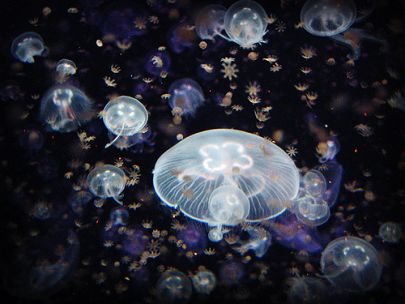 "The Aquarium of the Pacific has commissioned a project that brings art and science together to
 The OBFS Board recognized the growing importance of supporting interdisciplinary field station use, and is converting the Art@FSMLs Working Group into a permanent Ad Hoc Committee within the organization.


