Friday, February 26, 2016

Architecture of Life exhibit

UC Berkeley has a current show that includes anatomical drawings by Ramón y Cajal that are still used in medical textbooks today. From a review by NPR:
Santiago Ramón y Cajal: Microglia in the grey
matter of the cerebral cortex, 1920.
 "We forget that it is hard to see. To paraphrase Kant (loosely), seeing without understanding is blind, even if understanding without seeing is empty. A good drawing — for example of the working parts of an engine — is often much easier to interpret than an actual perceptual encounter with the engine itself. The engine, after all, is very complicated. What is important? What deserves notice? It's hard to know. But the drawing, when it is successful, is more than a mere representation; it is, really, the exhibition of what something is, of how it works, of what it is for. A good drawing is an image that has been imbued with thought."

Architecture of Life runs through March 29, 2016 at BAMPFA, the new visual arts center of UC Berkeley.

Thursday, February 11, 2016

How two Santa Cruz artists changed the course of environmental history

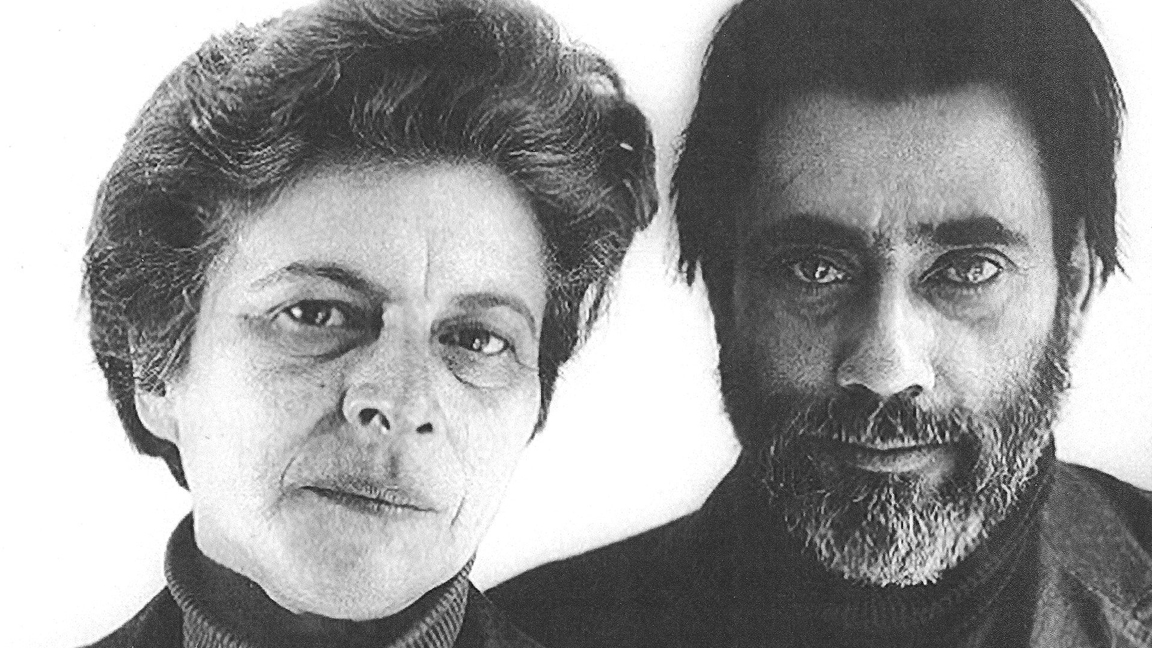
KQED recently produced this profile of Helen and Newton Harrison, the parents of the eco-art movement. The piece includes a radio broadcast, and a more detailed web article with photos.
"Widely known as the parents of the eco-art movement, the Harrisons have become world-renowned for using art to tackle environmental problems on a massive, global scale."
The Harrisons partnered with UC Berkeley's Sagehen Creek Field Station and the Center for Art + Environment at the Nevada Museum of Art for a project looking at native vegetation manipulations to mitigate snowpack conversion to rain. This is part of a larger, worldwide, climate-themed effort they call "Force Majeure" that seeks to find answers to thorny environmental issues.

More info about the Harrison Project at Sagehen.

Tuesday, January 19, 2016

How The Arts Enhance Learning


Mariale Hardiman, Vice Dean, Academic Affairs, Professor of Clinical Education, and Co-founder and Director of the School of Education's Neuro-Education Initiative, Johns Hopkins University, Baltimore.

Read the referenced paper, The Effects of Arts Integration on Long-Term Retention of Academic Content. Hardiman, et al. 2014.

The Natural Histories Project

"Natural history is a practice and a body of knowledge....Attention to and representation of nature, a focus on patterns observed at the organismal to landscape level, the value of accuracy.

The Natural Histories Project explores experiences and values that combine to create a wide range of natural histories, and through this exploration, we hope to initiate an international conversation on the value and future of Natural History.

We invite you to join the conversation. Spread the word, put your own comments on the site, and tell us what speaks to you."

Tuesday, December 22, 2015

Culture and Climate Change

Culture and Climate Change is a new UK effort that links art and science to influence society. Their projects include Narratives, Recordings, and Scenarios, like artist residencies.
"Climate change is urgent and important, but also, for many, boring, difficult and confusing. What kinds of stories and other artworks are being created in response to ‘the greatest challenge facing humanity’ — a challenge that is also apparently forgettable?"
"We convene workshops and events that invite contributions from leading researchers, artists, producers, journalists and policymakers."

Monday, December 7, 2015

Rot: The Afterlife of Trees

 "In 2014 Dr. Mark Harmon, a nationally recognized forest researcher from Oregon State University’s College of Forestry asked The Arts Center to help him mount an exhibition about decomposing logs. Rot: The Afterlife of Trees is a resulting multi-media exhibition coming to [the Main Gallery of the Art Center in Corvallis, Oregon] in January 2016."

Call to Artists and Scientists

CALL TO ARTISTS AND SCIENTISTS
PENCE GALLERY AND UC DAVIS ART/SCIENCE FUSION JURIED EXHIBITION 
THE CONSILIENCE OF ART AND SCIENCE 2016 
January 19 - February 28, 2016 | Reception: Friday, February 12, 6-9 PM

The goals of the exhibition are to show creative work that explores the intersection between art and science; to foster communication between the arts and sciences; and to spark new ways of viewing the world and ourselves. Creative work that transcends pure scientific illustration to explore the conceptual realm where art and science both reside is strongly encouraged. 

For more information and to apply, see this page.