Monday, December 7, 2015

Book Recommendations


This post is a running list of recent book recommendations from ArtSciConverge participants that explore the art/sci interface in the natural world. There is also a good list of related books on the "SciArt in America" blog.

I created a list on Amazon with additional titles that may be interesting.


Arts Programming for the Anthropocene: Art in Community and Environment, Bill Gilbert and Annica Cox.

Arts Programming for the Anthropocene argues for a role for the arts as an engaged, professional practice in contemporary culture, charting the evolution of arts over the previous half century from a primarily solitary practice involved with its own internal dialogue to one actively seeking a larger discourse. The chapters investigate the origin and evolution of five academic field programs on three continents, mapping developments in field pedagogy in the arts over the past twenty years. 

Drawing upon the collective experience of artists and academicians in the United States, Australia, and Greece operating in a wide range of social and environmental contexts, it makes the case for the necessity of an update to ensure the real world relevance and applicability of tertiary arts education. Based on thirty years of experimentation in arts pedagogy, including the creation of the Land Arts of the American West (LAAW) program and Art and Ecology discipline at the University of New Mexico, this book is written for arts practitioners, aspiring artists, art educators, and those interested in how the arts can contribute to strengthening cultural resiliency in the face of rapid environmental change.
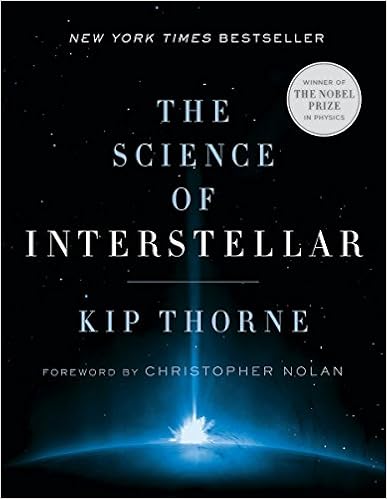

"...in The Science of Interstellar, Kip Thorne, the Nobel prize-winning physicist who assisted Nolan on the scientific aspects of Interstellar, shows us that the movie’s jaw-dropping events and stunning, never-before-attempted visuals are grounded in real science. Thorne shares his experiences working as the science adviser on the film and then moves on to the science itself. In chapters on wormholes, black holes, interstellar travel, and much more, Thorne’s scientific insights―many of them triggered during the actual scripting and shooting of Interstellar―describe the physical laws that govern our universe and the truly astounding phenomena that those laws make possible."
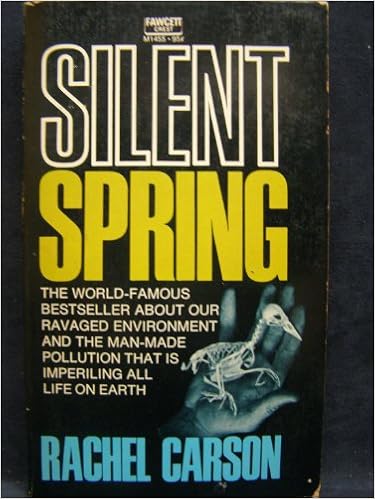

SILENT SPRING IS MORE THAN A SCIENTIFIC LANDMARK: IT’S LITERATURE
On the under-rated poetry of Rachel Carson's masterpiece.
"Carson accomplished the feat of raising a public outcry against DDT not just with her research on its deleterious effects, but with the descriptive imagery, strong rhetoric, and poetic language that lift Silent Spring into the realm of other great works of American literature."
Rachel Carson’s Radical Perspective On The Natural World

"Carson’s book Silent Spring, published in 1962, created a widespread shift in how the general population perceived the effects of human impact on the natural environment. Her writing combined scientific studies and research, with anecdotes from American house wives about dead birds and squirrels, to create a scathing argument against the negative impacts of chemical pesticide use, specifically DDT, in the post-war period. Silent Spring became a bestseller and went on to bolster the environmental conservation movement prompting significant U.S. government policy changes banning the use of DDT.

Silent Spring was not Carson’s first book. Her three previous titles dealt with the wonders of the sea. The NY Times reports: 'Carson believed that people would protect only what they loved, so she worked to establish a “sense of wonder” about nature. In her best-selling sea books — The Sea Around Us, The Edge of the Sea, and Under the Sea-Wind — she used simple and sometimes sentimental narratives about the oceans to articulate sophisticated ideas about the inner workings of largely unseen things.'"


"In this exquisitely researched work of fiction, Sylvia Torti explores sex and science, memory and forgetting, and how, in laboratory research on living organisms, we often destroy what we love.”--Sy Montgomery, author of The Soul of an Octopus, finalist for The National Book Award.

More info. Available on Amazon.


The term “PARANOMIA” has multiple meanings, one of them being that which exists alongside the normative. In his inquiry into the entangled aspects of science and contemporary art, Christoph Keller outlines how knowledge is derived in the respective fields.

Available at Spector Books.


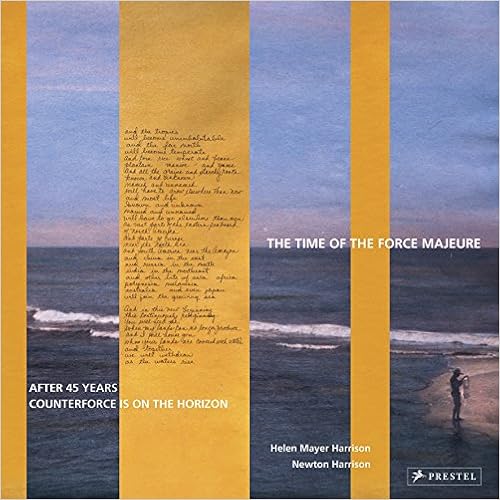
The Time of the Force Majeure: After 45 Years, Counterforce is on the Horizon

This book offers a 21st-century manifesto from the pioneers of the eco-art movement. Since the 1970s Helen and Newton Harrison have been creating art inspired by the earth. They established a worldwide network among biologists, ecologists, architects, urban planners, politicians, and other artists to initiate collaborative dialogues about ideas and solutions which support biodiversity and community development. This definitive survey traces an influential joint career that has lasted nearly half a century.
 
More here.


Vladimir Nabokov's career in science, included "a stint as the lepidoptery curator at Harvard University’s Museum of Comparative Zoology in the 1940s...his scientific work has mostly been treated as a curious fact rather than something of a significance on par with his writing. Fine Lines: Vladimir Nabokov’s Scientific Art, edited by Stephen H. Blackwell and Kurt Johnson and released earlier this year by Yale University Press, is one of the first works to thoroughly investigate his butterfly studies and scientific illustrations."
That Nabokov showed such insight despite working with such apparently limited tools at his disposal argues that he was more than just a competent taxonomist. His work in the Neotropical Polyommatus Blues stands out as a bold and brilliant scientific advance.


"Using the arts for conservation can help attract new audiences, increase understanding, introduce new perspectives, and create a dialogue among diverse people. The arts — painting, photography, literature, theatre, and music — offer an emotional connection to nature. This chapter provides examples of using the arts to inspire people to take action. Planning art activities requires reaching out to artists and the art community, audiences with whom scientists and educators may seldom interact. Conservation problems require creative solutions. It makes sense to access more ways of knowing the world in order to take care of it." -- Oxford Press


"Herman convincingly argues that closely analyzing works of art is an empowering exercise that translates to seeing the 'hidden' clues in many real-life scenarios...

Yet despite her expert clientele, Herman amply demonstrates that tapping into an inner Sherlock Holmes isn't only a skill for investigators and that heightened observation is critical to communicating effectively, empathizing with others, and making informed decisions." -- Amazon.com


"This anthology―which includes work by some of the nation's most accomplished writers, including Sandra Alcosser, Alison Hawthorne Deming, Jane Hirshfield, Linda Hogan, Freeman House, Robin Wall Kimmerer, Kathleen Dean Moore, Robert Michael Pyle, Pattiann Rogers, and Scott Russell Sanders―grows out of the work of the Long-Term Ecological Reflections program and showcases the insights of the program's thoughtful and important encounters among writers, scientists, and place.

These vivid essays, poems, and field notes convey a landscape of moss-draped trees, patchwork clear-cuts, stream-swept gravel bars, and hillsides scoured by fire, and also bring forward the ambiguities and paradoxes of conflicting human values and their implications for the ecosystem.

Forest Under Story offers an illuminating and multifaceted way of understanding the ecology and significance of old-growth forests, and points the way toward a new kind of collaboration between the sciences and the humanities to better know and learn from special places." -- Amazon.com


"Why do we covet beauty? Why does art, which seems to serve little practical purpose, feel fundamental to our lives?

Such questions have long fascinated philosophers and artists. Now neuroscientists are weighing in as well. The Aesthetic Brain explores the field of neuroaesthetics, the science of how our brain experiences and responds to art, music and objects of beauty. Chatterjee, a neuroscientist, argues that an instinct for beauty has helped our species endure. Art is a product of our quest for beauty and knowledge." -- Scientific American


Experiencing Art: In the Brain of the Beholder

"Shimamura has written the ideal introduction to what science can say about artworks, from prehistoric carvings to the latest video projections. It's readable, smart and informed. Better yet, it's a scientist's take that doesn't neglect the humanities: Shimamura cares about which neurons fire, but also about what Plato thought."

 -- Blake Gopnik, art critic, Newsweek and The Daily Beast


12-7-15: "An audacious collaboration between an award-winning novelist and a leading environmental philosopher, Love in the Anthropocene taps into one of the hottest topics of the day, literally and figuratively—our corrupted environment—to deliver five related stories (“Flyfishing,” “Carbon,” “Holiday,” “Shanghai,” and “Zoo”) that investigate a future bereft of natural environments, introduced with a discussion on the Anthropocene—the Age of Humanity—and concluding with an essay on love.

The “love” these writer/philosophers investigate and celebrate is as much a constant as is human despoliation of the planet; it is what defines us, and it is what may save us. Science fiction, literary fiction, philosophical meditation, manifesto? All the above. This unique work is destined to become an essential companion—a primer, really—to life in the 21st century."

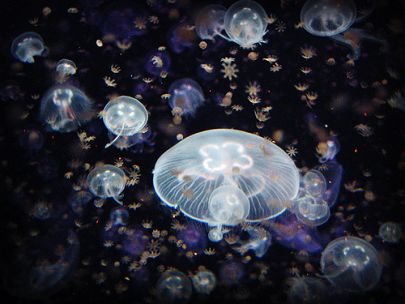
ArtSciConverge partnership at Aquarium of the Pacific

"The Aquarium of the Pacific has commissioned a project that brings art and science together to
translate the movement of sea jellies, or jellyfish, into a symphony...The Symphony of Jellies was developed based on an algorithm that tracks the movements of sea jellies and translates them into sounds...

Marty Quinn, founder of the Design Rythmics Sonification Research Lab, developed software and hardware to capture sea jellies movements with digital video footage and translate them into sounds through a process he calls MoveMusic sonification. Composer Eddie Freeman of Icarus Music used those sounds to create musical motifs and orchestration. Aquarium President and CEO Dr. Jerry Schubel and Aquarium Trustee Dennis Poulsen served as advisors and partners on the project."

Schubel and Quinn are members of the ArtSciConverge effort, and met as participants in the 2015 Reno Workshop.

Thursday, October 15, 2015

Stanford's Environmental Humanities Project

Here's a great project by Stanford grad students:
The Environmental Humanities Project provides a forum for an interdisciplinary approach to environmental issues. It foregrounds recent work of humanities scholars in disciplines such as cultural studies, history, literary studies, philosophy and anthropology that has engaged with environmental problems, and explores how this research contributes to current discussions about ecological crisis.

a2ru Newsletter and Best Practices

a2ru has some interesting things happening next month, including the 2015 conference, and the publication of the Mellon Guide to best practices in the integration of arts practice in US research universities.

You can already read the interim reports from this process. These reports are directly relevant to FSML programs, and might help you get out in front, and/or find support within your university administration.
Here's the latest newsletter.

Sunday, October 11, 2015

Partnership for Community Engagement Pilot

This WESTAF program seems like a great, ready-made model for some types of FSML art (Partnership for Community Engagement Pilot).

* * *

WESTAF--the Western States Arts Federation--is a nonprofit arts organization dedicated to the creative advancement and preservation of the arts. To accomplish this, WESTAF works in cultural policy, research, and technology.

WESTAF provides other services that may be useful to FSML art programs:
  • "Since its launch in 2005, CallforEntry.org (CaFÉ) has grown to become the nation’s leading online call-for-entry application and jury management system. Thanks to a series of significant improvements and an expanding team, CaFÉ now has over 150,000 registered artists and is the only system with an active marketplace of artists who regularly search for and apply to calls through the site. The CaFÉ site consistently hosts more than 120 active calls, with over 60 new calls added each month. Each call receives an average of 220 submissions for juried exhibitions, art competitions, and public art commissions."
  • "The Public Art Archive (PAA) database is quickly approaching 10,000 records from almost 1,000 collections around the nation and abroad. As the database grows, the PAA team continues to work on ways to help more of the public discover and learn about public art collections. One big step towards this goal is the Collection Showcase Page feature, which allows administrators with collections in the PAA to develop their own home page as an access point to their collection. Using the showcase page in this way is far less expensive than designing a stand-alone public art site. In addition, because the PAA is heavily used, the public is better able to search for a collection in a locality rather than seeking one out that is often buried in state and local government sites."
  • "WESTAF has underwritten Barry’s Blog for 10 years now. The blog was initiated by Barry Hessenius, who, at the time of the blog’s founding, was the recent past executive director of the California Arts Council. WESTAF...invites our Update Notes subscribers to read Barry’s thoughts on 10 years of blogging about the arts by visiting: http://bit.ly/barry10."
  • See more services on the WESTAF website.

Friday, October 9, 2015

Community Innovation Labs


"Community Innovation Labs offer the opportunity for the cultural sector to play a vital role in community change, using artistic practices to build a shared vision, explore new possibilities, and advance adaptive solutions...

Our Labs create the space and conditions for organizations to test innovative new ways to take on their most complex, intractable challenges. We do this by helping them bring together teams of 'unusual suspects,' unfreeze the status quo, and test their most promising ideas by putting them into action...

We believe that innovation is primarily a process, not a product, fueled by discipline, focus, and a strong will for change. It requires letting go of what is no longer useful and experimenting your way forward. This is difficult and vulnerable work. We also believe that artistic experiences help us learn to productively navigate the tension between thinking and feeling, both of which are required to respond to complex challenges."
The project asks several questions to find fruitful areas for collaboration:
  • What problematic situation(s) in your community would be a good fit to explore in a pilot Lab? 
  • In what ways might a pilot Lab build on existing momentum, networks, and efforts? 
  • What group of community stakeholders from a range of sectors and backgrounds might be champions of this effort? Who is already committed?
The Community Innovation Labs model is clearly applicable to FSMLs aiming to foment creative abrasion between arts and field science in pursuit of fundamental discovery and solutions to wicked environmental problems.

The project website has links to a recent Webinar and an incredibly insightful and valuable Information Packet.

Thursday, October 8, 2015

Art/Sci Jobs

I thought it would be useful to keep a running log of interesting art/sci job announcements, to advertise these positions, identify potential new partners, and to highlight institutions that are sufficiently interested in the intersection to put funding toward it.

Let me know if you have other announcements to add.


2-7-17: TENURE-TRACK FACULTY POSITION IN NEW MEDIA AT UNIVERSITY OF MAINE

The University of Maine seeks applicants with strengths in creative computer programming for a tenure-track Assistant Professor for the New Media program, effective fall 2017.

Candidates with teaching and research interests in creative programming are encouraged to apply to enhance and/or complement UMaine's New-Media strengths in digital storytelling; video, photographic, and audio production; Web design and development; rapid prototyping; and user experience and interaction design. Candidates may either be programming language experts who focus on creative content or creative artists with strong programming credentials.

Applicants should have extensive experience in writing custom software for online, mobile, and physical environments. Teaching responsibilities will include introductory programming and server-side development.

Review of applications will begin on February 15, 2017 and continue until the position is filled. Questions can be addressed to NewMediaSearch@umit.maine.edu. Representatives of the New Media program will also be available to answer questions about the position at the College Art Association conference in New York from 15-18 February.

More at http://umainenewmedia.org/new-media-position.


4-27-16: The Arts at MIT welcomes applicants for the position of...

Director of the Council for the Arts at MIT.

The Director of the Council for the Arts at MIT (CAMIT) stewards the relationship between the volunteer members of the organization with the various aspects of the arts at MIT and administers all of the programs funded by the Council’s budget. Working closely with the Executive Director of Arts Initiatives, the Associate Provost with responsibility for the arts, and the Executive Committee of the Council, as needed, the director is responsible for long-range planning, implementation of strategic vision, recruitment of new members and the overall fiscal and operational activities of the Council. The director acts as a liaison between CAMIT members and students, faculty, staff and other CAMIT members, and provides timely communication of news, events and programs both inside and outside of the Council’s purview. The director creates a professional, but convivial, atmosphere for the accomplishment of CAMIT business. The director communicates CAMIT news and programs to the greater MIT community.

http://arts.mit.edu/opportunities/jobs/


4-11-16: a2ru is officially hiring! PLEASE SPREAD THE WORD.

Two positions found here:

a2ru Associate Director (5/7 deadline):  this is a multi-faceted opportunity for the right arts administrator to take the lead forwarding the Alliance for the Arts in Research Universities' (a2ru's) national agenda. It requires vision, autonomy and excellent communications skills. Responsibilities include: forwarding national arts integrative research initiatives, conference planning with national partner universities, partnership servicing and cultivation, and leading development efforts.

AND....

ArtsEngine/a2ru Program Coordinator (4/28 deadline): this position calls for someone super organized to run the office and execute the details of our annual national conferences, student summits and multiple on- /off-campus programs (curricular and co-curricular).

a2ru is a membership-based boundary organization housed at the University of Michigan under ArtsEngine, currently with 35 American research universities in our national network.

Questions? Contact Laurie Baefsky, executive director @ lbaefsky@umich.edu


12-7-15: Research Fellow ArtsEngine/a2ru, U of Michigan

ArtsEngine and a2ru invite applicants for a two-year post-doctoral arts research fellowship, funded by The Andrew W. Mellon Foundation.

ArtsEngine and the Alliance for the Arts in Research Universities (a2ru) seeks a highly skilled postdoctoral Mellon research fellow for the SPARC Project – Supporting Practice in the Arts, Research, and Curricula. The SPARC Project will:

 (1) disseminate and apply a recently completed three-year study investigating the role of arts integration, research and practice on research university campuses;
 (2) develop an online platform for broad distribution of current information and further research; and
 (3) create tangible tools and resources for the application of current data collected.

The SPARC Project will investigate a large body of qualitative data from a recently completed three-year study of over 800 interviews, identifying the impact and challenges of arts integrative collaborations as well as a broad range of arts practices employed in higher education. The SPARC Project will use these findings as a foundation for an expanding a2ru research agenda.


10-8-15: Creative Technologies and Design

The ATLAS Institute at the University of Colorado Boulder seeks two curious, unconventional, polymath tenure-track faculty members in creative technologies and design. They will establish and lead research groups that explore trans-disciplinary fields and paradigms, produce internationally recognized work, and develop collaborative relationships in academia as well as industry and the community. Applicants should have a PhD or equivalent experience, be able to publish in peer-reviewed venues, and obtain funding to support their work. They should value innovative and effective teaching for students from different cultural and intellectual backgrounds.

ATLAS academic programs in the College of Engineering and Applied Science include a Technology, Arts, and Media undergraduate program, and graduate programs (MS and PhD) in Technology, Media, and Society.

We are building a faculty with theoretical and methodological versatility with the goal of designing experiences and technologies to improve life. ATLAS is a growing Institute, looking for people who will help us foster a culture and community of wild innovation. The most innovative research and teaching will come from a faculty varied in life experiences and academic disciplines, so we seek applicants who will promote diversity in all ATLAS programs. ATLAS Institute faculty members creatively design, engineer, and apply technologies.

Promising applicants will combine engineering virtuosity with a commitment to creative and thoughtful design. We will consider applicants who do so through a variety of approaches, including, but not limited to:
  • Designing new technologies for creative play and learning for families and communities
  • Using participatory design to empower communities to create resources for local change
  • Inventing technologies (e.g. games, music, apps, wearables, etc.) that transcend physical and virtual spaces
  • Developing technologies to effect societal change
The opening is targeted at the level of Assistant Professor, but experienced candidates with outstanding credentials may be considered for Associate or Full Professor. Review of applications will begin on November 1, 2015. Applications will be accepted until the positions are filled. See http://atlas.colorado.edu/join-us and apply online at http://www.jobsatcu.com/postings/109024. After Nov 4 please refer to www.cu.edu/careers, posting #F02969.

(Thanks to NSEAD for the original post)


8-25-15: FULL-TIME FACULTY POSITION IN SCIENCE

The Liberal Arts Department of the School of the Art Institute of Chicago seeks a scientist with a PhD to fill a full-time, tenured or tenure-track faculty position to begin Fall 2016. We seek to add a full-time faculty member whose research and teaching relate to environmental or climate science. The ideal candidate has additional expertise in one or more of the following areas - computational modeling, large data sets, and/or innovative data visualization - and will contribute to the diversity of the School by bringing a perspective, way of thinking, and/or a unique set of experiences that expands the intellectual conversation of the field. Candidates must have a commitment to teaching science that informs the major social and political debates of our times. This position is for someone who is committed to an interdisciplinary approach, a scholarly community of colleagues well outside the fields of science, and creative students. The successful applicant must demonstrate outstanding communications skills and a talent for teaching the non-scientist. Depending on the candidate, this position also offers the possibility for potential collaborations in innovative teaching and research across various departments of the School, such as Art and Technology Studies, Architecture, Sculpture, Fiber and Materials Studies and various departments through the development of innovative courses. Rank and salary are commensurate with experience, teaching, and current professional status.

 PROGRAM PROFILE
SAIC is a college offering undergraduate and graduate degrees in the fine arts and design. The Department of Liberal Arts, one of 23 departments at the school, is chaired by a full-time faculty member with 14 full-time faculty and over 100 part-time faculty that offers 200 courses each year, primarily to undergraduate students pursuing a BFA in Studio Art. Liberal Arts courses provide the intellectual foundation for success at the school and in students' continuing practice as artists and scholars. The department offers courses in English, the Humanities, Social Sciences, Natural Science, and foreign languages, as well as English for International Students, and Academic Access, a probationary academic enrichment program. Current science faculty maintain research and teaching affiliations with a number of area universities, labs and museums. The School of the Art Institute of Chicago is affiliated (and physically connected) with the world- renowned Art Institute of Chicago, and is in close proximity to other Chicago museums like the Shedd Aquarium, the Field Museum of Natural History, and the Adler Planetarium. The area boasts three world-class research universities, two national laboratories, and a large number of smaller universities and colleges. Further information can be found at http://www.saic.edu/academics/departments/libarts/ 

RESPONSIBILITIES
The successful candidate will join a science faculty of 14 (currently three full-time) in teaching introductory and interdisciplinary courses in science to undergraduate art and design students. The position also involves assisting in the coordination of the math and science program; contributing to the program and School through other administrative duties and service; and ongoing engagement in scholarly and professional activities.

QUALIFICATIONS Required: PhD in environmental and/or climate science or equivalent. Prior teaching experience required. Supervisory and administrative experience preferred.

APPLICATION PROCEDURES By or before Friday, November 20, 2015, please submit application materials at http://SAICfaculty.slideroom.com. You will be asked to create an account, and then complete the application that is a combination of fill-in fields and uploaded documents. SAIC will underwrite the application fees; you will not be charged to apply for the position. You are encouraged to begin the application well before the deadline. No applications may be submitted beyond the deadline for any reason.