Festival for the Earth is a 2-day international gathering proposing...transformations, reflections and alternative modalities to reframe environmental issues. Knowledge access and
information flows are highly important as actual environmental emergencies urge a radical change of perspective and
practices. To this end, the Festival for the Earth is conceived by the artist Maria Rebecca Ballestra as an art project for
social transformation that aims to instigate creativeness directed at positive transformation processes in science,
humanities, economy, ecology and art. The conference’s location alternates between Venice and the Principality of
Monaco, two cities that are already linked by strong historical ties, two symbolic places where the relationship between
“water” and land (characterized by its scarcity) has shaped both the minds of their citizens and their history. In
December 2018 the Festival’s third edition will return to Venice and will be hosted in the prestigious locations of Ca’
Foscari University Venice, Ateneo Veneto, the Natural History Museum of Venice and the Botanical Garden of Padova.
For more information about the Festival and requests for interviews:
Monaco, 04 October 2018 – Festival for the Earth comes back to the most famous lagoon in the world for its
2018 edition, with a wide range of conferences, workshops, artist talks and events to be held in different
locations around Venice on December 3 and 4. In its third edition, however, the Festival will also expand its
reach to the Botanical Garden of Padua, one of the most ancient and beautiful in the world, which will host
film projections and discussions at its Auditorium.
Once again, Festival’s guest speakers will come from the top of the academia and professional world (Nobel,
Pulitzer and Goldman Prize Winners will join us in Venice), but also members of influential international
organizations. We are honored to announce that HSH Prince Albert II of Monaco and Mr. Youba Sokona,
UN’s Intergovernmental Panel on Climate Change (IPCC) Vice-Chair will give the opening speeches of the
Festival, followed among others by world renowned climatologist Nigel Tapper, who contributed to the IPCC
study that resulted in the joint award of the Nobel Prize to Al Gore and the IPCC, by Pulitzer Prize Daniel
Fagin and by Goldman Prize Rossano Ercolini.
Smithsonian curator Joanna Marsh highlights 9 contemporary artists whose practices are conscious-raising and problem-solving. Here are some quotes from the full article:
"Part of the reason that there is a lot of public inaction around climate change and environmental issues more broadly is because the science isn't communicated in an accessible way that triggers emotional responses and curiosity on the part of the public." -- Joanna Marsh
"I frankly believe we’re at a moment where we have some really big problems and we need as many minds that can come together from as many different perspectives as possible to address these issues because we’re not going to resolve them just within one field of study." -- Krista Caballero
"One of the challenges of our time is that people feel disconnected from – perhaps even insensitive to – the world’s great problems. We do not see ourselves as agents in a global society. Climate change, poverty, war, and illness are all challenges that vie for our attention. The overwhelming avalanche of information in society today, coupled with the PR efforts aimed directly at us, as individuals, have resulted in many of us accepting that something has to be done. Yet there is a huge gap between what we know and what we feel. How can we translate knowledge into action, and really change our behavior? Of course, it is necessary to present the facts and data supporting climate change science, but this is not where action begins. Only by embodying knowledge can we gain a sense of responsibility and commitment." -- Olafur Eliasson
Between 2010-2015, the University of New Mexico ran Advancing Integration of Museums into Undergraduate Programs (AIM-UP): a NSF Research Coordination Network program themed around natural history museum collections.
The goal of the RCN was to emphasize the critical current value of these collections by
"refining existing efforts and developing new integrated approaches to collections-based training in large-scale questions using the expertise of educators, curators, collection managers, database managers, and scientists whose work spans disciplines."
"Communication between fields is important within science but there also is a greater need for interdisciplinary exchange between biologists, artists, historians, and other researchers to share resources and methods for building collective knowledge. Such collaborations help identify the ties between cultural history and natural history, as we pose new questions and foster a more expansive approach to answering these questions by connecting their diverse histories. Collections can help foster the development of creativity, generative thinking, and rigorous inquiry that will be required of future leaders in research and practice. While scientific education and research offer rigorous methods for creating new knowledge, arts education and practice provide the tools to foster exploration."
The project created a blog that is a rich source of art/sci content and links. The blog was meant to be:
"A space for posting thoughts, ideas, references, resources, and works. The theme of our seminar and workshop series is 'Morphology and Geographic Variation.' We will use the natural history collection as our starting point and hear from scientists, artists, designers, programmers, musicians, and more on place-based study."
"Le Laboratoire Cambridge is an interdisciplinary culture lab that invites visitors to explore the experiments and wonders of innovative artists, designers, chefs, and more discovering at the frontiers of science.
Founded in Paris in 2007 by inventor, material scientist, and Harvard Professor David Edwards, Le Laboratoire now lives in Cambridge as the flagship of ArtScience Labs, a global organization dedicated to radical idea development."
* * *
Le Laboratoire is part of a larger effort at art/sci convergence for cultural change called, Artscience Labs.
"Many of the questions that we face today — questions of innovation, of change — are not really questions we can deal with in a classical science lab."
ArtScience Labs includes an educational program called the ArtScience Prize, a global "catalyst for student learning through passionate pursuit of innovative art and design ideas at the cutting edge of science...the ArtScience Prize [is] an interdisciplinary education program that supports young people as they explore and develop groundbreaking ideas around an annual scientific theme, seek[ing] to prepare the next generation of innovators."
The winners of all the ArtScience Prize programs are invited to the annual ArtScience Labs Annual Innovation Workshop, which is like a Silicon Valley development incubator.
UC Berkeley has a current show that includes anatomical drawings by Ramón y Cajal that are still used in medical textbooks today. From a review by NPR:
Santiago Ramón y Cajal: Microglia in the grey
matter of the cerebral cortex, 1920.
"We forget that it is hard to see. To paraphrase Kant (loosely), seeing without understanding is blind, even if understanding without seeing is empty. A good drawing — for example of the working parts of an engine — is often much easier to interpret than an actual perceptual encounter with the engine itself. The engine, after all, is very complicated. What is important? What deserves notice? It's hard to know. But the drawing, when it is successful, is more than a mere representation; it is, really, the exhibition of what something is, of how it works, of what it is for. A good drawing is an image that has been imbued with thought."
Architecture of Life runs through March 29, 2016 at BAMPFA, the new visual arts center of UC Berkeley.
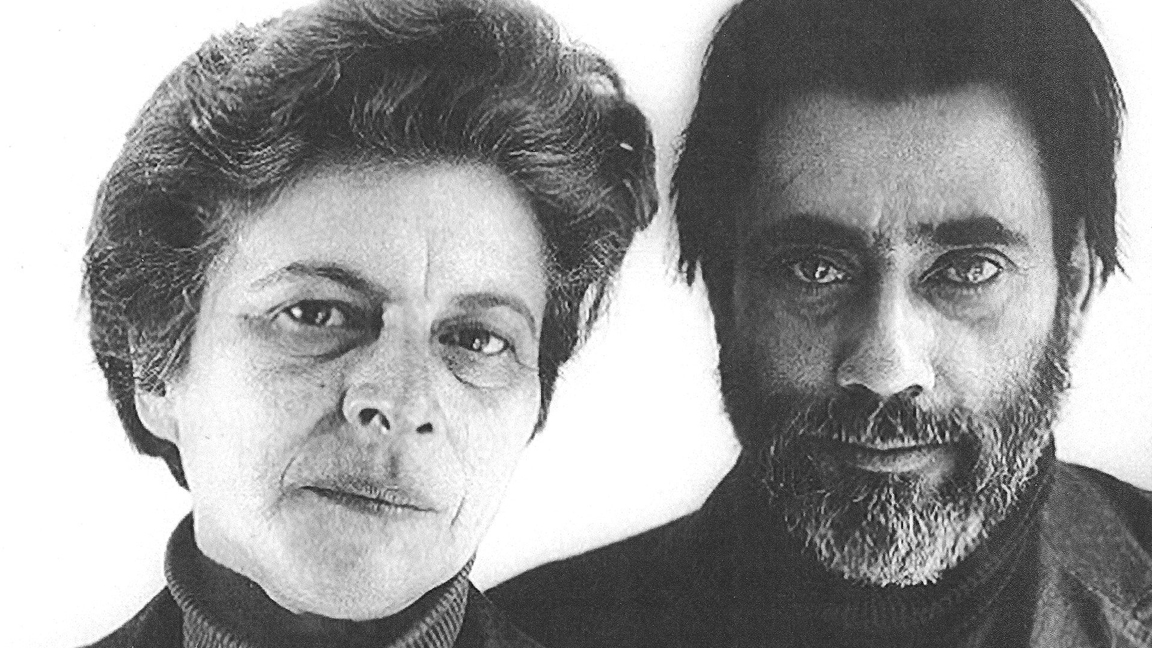
KQED recently produced this profile of Helen and Newton Harrison, the parents of the eco-art movement. The piece includes a radio broadcast, and a more detailed web article with photos.
"Widely known as the parents of the eco-art movement, the Harrisons have become world-renowned for using art to tackle environmental problems on a massive, global scale."
The Harrisons partnered with UC Berkeley's Sagehen Creek Field Station and the Center for Art + Environment at the Nevada Museum of Art for a project looking at native vegetation manipulations to mitigate snowpack conversion to rain. This is part of a larger, worldwide, climate-themed effort they call "Force Majeure" that seeks to find answers to thorny environmental issues.
"In 2014 Dr. Mark Harmon, a nationally recognized forest researcher from Oregon State University’s College of Forestry asked The Arts Center to help him mount an exhibition about decomposing logs. Rot: The Afterlife of Trees is a resulting multi-media exhibition coming to [the Main Gallery of the Art Center in Corvallis, Oregon] in January 2016."
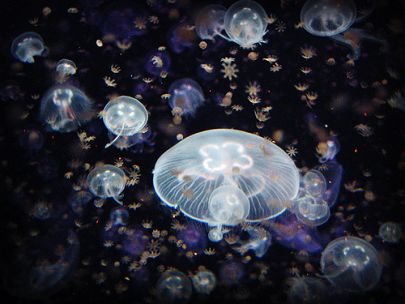
"The Aquarium of the Pacific has commissioned a project that brings art and science together to
translate the movement of sea jellies, or jellyfish, into a symphony...The Symphony of Jellies was developed based on an algorithm that tracks the movements of sea jellies and translates them into sounds...
Marty Quinn, founder of the Design Rythmics Sonification Research Lab, developed software and hardware to capture sea jellies movements with digital video footage and translate them into sounds through a process he calls MoveMusic sonification. Composer Eddie Freeman of Icarus Music used those sounds to create musical motifs and orchestration. Aquarium President and CEO Dr. Jerry Schubel and Aquarium Trustee Dennis Poulsen served as advisors and partners on the project."
Schubel and Quinn are members of the ArtSciConverge effort, and met as participants in the 2015 Reno Workshop.
These comments are based on an encounter with Director Bern Sweeney at the 2015 LTER All-Scientists
Meeting in Estes Park, CO, which he had been invited to attend as lead of an LTREB project. I first
encountered Bern while visiting with Robin Vannote, then Director of Stroud, during the River
Continuum Concept (RCC) project period of the late 1970s and later as I visited my parents who lived
only 25 mi away in northern-most Delaware.
xxxxxxxxxxxxxxxxxxx
The Stroud Water Research Center was established in 1967 in the Brandywine Creek valley,
southeastern Pennsylvania. The Stroud family owns extensive rolling farm and forest land in the area
where they have a long history of crop, dairy, and poultry production. The Stroud home (mansion)
contains an impressive art collection (I viewed it during a dinner for a gathering of scientists working on
a renewal proposal for the RCC), and the agreement to create the Stroud Center facilities and program
stipulated that art be displayed in the facilities, even chemistry labs where the air quality can damage
the art.
At the 2015 All-Scientists Meeting Bern told this story:
Mr. Stroud called him up one morning and asked
him to go over to the house. When Bern arrived, Mr. Stroud told him that one of the many art pieces in
the house had been appraised in the range of $1.5 - 2 million, and if Bern could pick it out, the piece
would be sold and the funds donated to the endowment for the Stroud Center.
Bern gave a couple tries
and failed, so Mr. Stroud took him to the front entryway and identified a very large brown painting with
a single, horizontal black stripe – a Rothko. Eventually the transaction was conducted.
Art has been a part of the Stroud Center programs in many forms, especially in education programs.
One such class involves art students learning about aquatic science while canoeing down the
Brandywine Creek. At one point in the program they collect and view aquatic invertebrates under
microscopes streamside, and then are asked to take a sheet of paper and draw their favorite
mayfly or caddisfly that they have collected.
However, they are asked to draw the critter with one half
of it showing the individual “as is” and then, let their creative juices flow, and draw the other half
freeform to better represent their impressions from the field experience. Eventually the class makes its
way downstream and pulls out on a grassy bank. The students go to the nearby house where artist
Jamie Wyeth (of the many generations of famous Wyeth artists in the area) greets them and shows
them around his studio.
Scientist Stephen Tonsor, and artist Natalie Settles present at the DC Art Science Evening Rendezvous (DASER), September 15, 2011 held at the National Academy of Sciences, Washington DC.
Tonsor and Settles collaborate in the study of ecology and evolution. From Tonsor's lab page:
Settles and Tonsor have designed an interactive, projected wallpaper in which the fitness (and therefore local adaption) of the wallpaper’s many distinct motifs is determined by viewer attention... Viewers unwittingly participate as “blind watchmakers” in an evolutionary process to be revealed in a meta-exhibition.
"We perceive a world where artists and scientists collaborate directly with each other to create innovative interdisciplinary work and projects that have a positive impact on society, technology and culture."
"The residency environment is also particularly well-suited for collaboration and synergy between often disparate-seeming disciplines...In this spirit, many multidisciplinary organizations are forming creative residencies as a way of addressing ecological and scientific issues."
"Art and imagery are inherent in the creative process in science and integral to the communication of its discoveries. For theoretical physics, images can be powerful expressions of elegant mathematical equations that are otherwise inaccessible to many."
"Artists often investigate ideas differently than scientists, and communicating this way of seeing can move the science forward."
"The artists were also surprised to find that some of the most innovative art was already being created at [CERN] by the engineers and lab technicians, who were crafting machines that combined state-of-the-art technology and some of the world's finest craftsmanship. The resulting dialogue explored the question of whether sculptural objects that were created without the intention of being art--but rather as scientific tools--were in fact art."
"While science dominates restoration thought, it seems increasingly clear that science is necessary, but not sufficient...and neither is art. I think this project can help establish a clear role for artists and humanists, not as solitary visionaries, but as participants; not as some mystical or magical process, but as an important, critical perspective; not as arbitrator, but as co-worker, one among many disciplines equally necessary to the recovery and revitalization of this whole place."
Read more at greenmuseum.org, a nonprofit online resource to support and advance the environmental art movement
Perspectives: Examining Complex Ecological Dynamics through Arts, Humanities and Science Integration, Nevada Museum of Art • Reno, Nevada June 19-21, 2015
"The purpose of this workshop is to advance the integration of the arts and humanities (AH) with science in the interest of addressing complex ecological and social-ecological challenges.
This effort is emerging organically from the recent groundswell in arts and humanities activities associated with Long Term Ecological Research (LTER) network sites (www.ecologicalreflections.com) and Field Stations and Marine Labs (FSML), and is expanding to incorporate an array of other organizations active in art and science integrative research and public outreach. Through this workshop, we aim to expand the depth and breadth of interdisciplinary efforts and to map a path forward in which AH contributes not only to outreach and education efforts, but also to fundamental inquiry and analyses of the grand challenges facing ecosystems and social-ecological systems. By integrating these different means of inquiry and observation, challenges may be met with greater power and insight than each discipline can offer in isolation."
Speaker Presentations:
Why are field research stations even interested in art? Overview of the Recent National Academy of Science Publication on the Future of Field Stations and Marine Laboratories (FSMLs)
Jerry Schubel, President and CEO, Aquarium of the Pacific:
* * *
What are artists already doing at field sites? Why are they doing it? Art of the Anthropocene
Bill Fox, Director, Nevada Museum of Art - Center for Art + Environment:
* * *
Does art make us see the world differently than science does? The Pliability of Perception
Art Shimamura, Helen Wills Neuroscience Institute at the University of California, Berkeley
* * *
What is the nature of creativity? The Emerging Field of Neuroaesthetics and Why the Linkage Between Arts and Sciences Actually Engages our Brains in a Different Way
Michael Casey, James Wright Professor, Depts. of Music and Computer Science, Dartmouth College
* * *
Can art make useful discoveries about the world (vs. traditional outreach and illustration)? Art Experience vs. Science Experience
Brandon Ballengée, Artist and Biologist
* * *
What are the mandates that drive environmental (and other) art? What are the metrics for success? What’s the future? Panel Discussion: Arts Funding
Bill O’Brien, Senior Advisor for Innovation to the Chairman, National Endowment for the Arts
Janet Brown, President and CEO, Grantmakers in the Arts
* * *
How Do You Work the Art/Science Interface and Get to Impact? The Green Heart Project
Helen and Newton Harrison, Artists
* * *
What are the issues around integrating art and science?
Overview of, “Steps to an Ecology of Networked Knowledge and Innovation", from the Sciences, Engineering, Arts, and Design (SEAD) Network.
Amy Ione, Artist and Educator
* * *
Humanities in Action: A look at work in the science/philosophy interface to promote social action
Michael Nelson, Ruth H. Spaniol Chair of Renewable Resources, Oregon State University
* * *
Complex Program Case Study: Master Class on How to Create and Build an International Arts-Science-Technology Program Putting Them on the Same Level, Using Arts@CERN as an Example
Ariane Koek, Founder of Arts@CERN
New York State Regional Economic Development Council funded a 2017 proposal from Harvestworks by Kevin Duggan:
"Art, Data and Ecology at NYS Field Stations" is a cultural mapping project to identify resources and best practices to support the creation and exhibition of new work by artists and cultural organizations in collaboration with biological field stations in New York State. Collaborators include the New York City Urban Field Station and the Huyck Preserve and Biological Research Station.
National Endowment for the Arts (NEA): NYC Harvestworks collaboration with Hubbard Brook, 2016. Lindsey Rustad and Kevin Duggan (declined):
"Experimental Forest: Media Art, Data and Ecology: Harvestworks will partner with the Hubbard Brook Research Foundation and a network of biological field stations and Long-Term Ecological Research (LTER) sites to support artist residencies on the creative use of environmental data. Six artists will collaborate with scientific researchers and staff at six national field stations – each with a distinct ecosystem and in many cases with decades of collected information—to develop new projects that can illuminate ecological issues and engage the public in new ways during in a time of intense environmental and climate change. Each location will produce public events centered on the residences, and outcomes will be broadly shared to inspire further collaborations between the arts and environmental research sites."
Meetings:
Bill Fox participated in several meetings as a direct result of the Reno workshop, including:
2016 Grantmakers in the Arts (GIA) strategic meeting in NYC on putting funders next to art/sci initiatives,
2017 NSF strategy meeting in Washington, DC
Networking with additional potential partners, including:
Los Angeles County Art Museum (LACMA). Faerthen Felix and Jeff Brown;
Metabolic Studio, Los Angeles. Faerthen Felix and Newton Harrison;
Alliance of Artist Communities. Faerthen Felix, Jeff Brown, Bill Fox;
Western States Arts Foundation (WESTAF), Public Art Archive (PAA): Faerthen Felix;
Lake Tahoe West. Jeff Brown (Jeff convinced the multi-agency forest planning project to embed an artist in the process).
In 2016, OBFS approved a permanent ArtSciConverge committee at the request of Faerthen Felix and Jeff Brown.
Artist/Scientist collaborations at field research sites:
Symphony of Jellies. Aquarium of the Pacific, Long Beach, CA. 2015. After the workshop, Jerry Schubel commissioned artist Marty Quinn to sonify jellyfish motion. This provided melodic components used by musicians Eddie Freeman and Marta Victoria to create a symphony performed by Los Angeles high school students in 2016. Photos.
Ever/Perma multimedia art project by Xavier Cortada on climate change and methane in the Florida Everglades and in Alaskan permafrost, with Annie Duffy and Mary Beth Leigh as collaborators (University of Alaska Fairbanks), 2016.
Archive of #ArtSciConverge materials at the Nevada Museum of Art - Center for Art + Environment. NMA-CA+E also began archiving #ArtSciConverge materials for UC Berkeley's Sagehen Creek Field Station.
In 2016, Bill Fox produced guidelines for these archives.
2015 LTER All-Scientists meeting. Working Group Session: "Engagement of Arts and Humanities in LTER Sites and Programs". Fred Swanson, Lindsey Rustad, Mary Beth Leigh, and others from the LTER. Aug. 30-Sept. 2, 2015. Estes Park, CO.
Alliance of Artist Communities 2016 Conference. Oct. 4-7, 2016. Portland, OR. Breakout Session: "Cross Pollination: Art/Science Collaborations + Impact of Place". Faerthen Felix, Bill Fox, Deb Ford, Charles Goodrich.
TEDx Fairbanks: Seeing the Elephant: Toward Reintegration of the Arts, Humanities, and Ecological Sciences. Mary Beth Leigh. Feb.21, 2016. Fairbanks, AK.
Alliance for Arts at Research Universities (a2ru) Meeting. Nov. 3-5, 2016. Panel Session: "Ecological Reflections: Integrating the Arts and Humanities with Science at Long-Term Ecological Research Sites". Mary Beth Leigh, Fred Swanson, and others. Denver, CO.
Fred Swanson has given talks at North Temperate Lakes LTER and the Oregon State University Hatfield Marine Science Center.
Mary Beth Leigh has given invited seminars at Oregon State University (June, 2016) and North Dakota State University (Nov. 2016).
Alliance of Artist Communities 2017 Conference. Oct. 2-5, 2017. Denver, CO. Breakout Session: "Beyond the Studio: Art/Sci Collaborations". Nina Elder, Fred Swanson, Collin Haffey, Cedra Wood.
Mary Beth Leigh has given oral presentations on this topic at:
Oregon State University (June, 2016)
Invited seminar
North Dakota State University (Nov. 2016)
Invited seminar
University of Alaska Fairbanks (Sept. 2017)
Faculty seminar
6th International Symposium on Biosorption and Biodegradation/Bioremediation, June 25-29 2017, Prague, Czech Republic
Invited keynote lecture
American Society for Microbiology Alaska Branch Meeting (Oct. 2017) in Anchorage, AK. Platform presentation
Lindsey Rustad curated the online twitter account IAmArtSci for a week where she discussed our various ArtSciConverge projects
Michael Nelson was consulted on environmental science, arts, and humanities projects by the University of Virginia’s new Resilience Institute and the Georgia Coastal Long-Term Ecological Research Program at UVA. Nelson gave a formal presentation and led three faculty discussions on the subject.
Presentation to National Assoc. of Marine Labs (NAML) art/science committee about the activities of the ArtSciConverge committee of the Organization of Biological Field Stations (OBFS). Conference call, Faerthen Felix and Sylvia Torti. May 16, 2018.
"The Sagehen Art Program: Why does Science Need Art?" Faerthen Felix.
E.A.R.T.H. Lab studio course, UC Santa Cruz, CA. May 11, 2016.
Sierra Club - Northern Sierra Chapter Meeting, Claire Tappan Lodge, CA. June 20, 2016.
Art/Science Collaboration in the Great Basin. Playa, OR. April 22-25, 2016.
Truckee, CA Morning Rotary, Aug. 15 2017.
UC Santa Cruz Art and Environment Course. Santa Cruz, CA May 23, 2018.
A short synthesis article focusing on the workshop is being planned by PI Leigh with Fred Swanson and Michael Nelson.
Mary Beth Leigh, Michael Nelson, Lissy Goralnik, and Fred Swanson are writing a chapter in the forthcoming book “In The Challenges and Accomplishments of Long-Term Ecological Research: New Perspectives on the Past, Present, and Future of Ecological Science” (eds. Robert Waide and Sharon Kingsland) focused on the history of arts and humanities within the LTER Network.
Section on art at FSMLs in an upcoming Handbook of Best Practices for Mountain Observatories
National coordinator for art at FSMLs
Facilitate scientist participation in artist residencies (2015-)
In 2011, the San Francisco Exploratorium hosted a NSF-funded conference called "Art as a Way of Knowing".
The organizers, "wanted to know
how the arts expand our engagement and understanding of the natural and social worlds...The premise of "Art as a Way of Knowing" was that art is a fundamental part of being human,
and that learning in and through the arts is a serious form of interacting with the world by
engaging with its questions, formulating ideas, and deepening knowledge."
The purpose of the conference was to gather a broad range of artists, scientists, and educators to
explore the history, practice, and value of the arts as a means of inquiring into the natural
world. The conference brought together some 125 leading international thinkers—representing work in education, art and science museums, contemporary art, and interdisciplinary research.
Eric Magrane is a Ph.D. candidate in Cultural Geography at the University of Arizona in Tucson.
Eric's work is, "particularly interested in the encounters that ensue when creative practices occur within environmental research or tourism sites and how contemporary artworks and poetries may reflect, complicate, or disrupt environmental narratives."
Magrane is Poet in Residence at the Arizona-Sonora Desert Museum, leading the design for poetry installations at the museum. Eric is currently in a van with a group of students somewhere in the Great Basin, leading a class that is visiting many of the iconic land art sites, and several field research facilities in the American Southwest.
"This is not about making scientists out of artists or vice versa; it is perhaps more about rethinking the Renaissance ideal of intellectual versatility in the context of very complicated times. It’s about developing a fully developed understanding of the environments we enjoy and on which we must necessarily depend."
"Science Bugs celebrates local ecology and research by exploring insects using three kinds of representation.
Tim Lethbridge’s photography captures moments of insects “in the field,” giving us a glimpse into their lives and ecological roles.
Dustin Angell’s studio-like photographic portraits offer an intimate view of specimens from scientific collections, highlighting the structures of their bodies and the scientific research related to them.
Dr. Mark Deyrup’s scientific drawings of insects reveal the defining traits of species, and show how entomologists need standardized and highly detailed depictions of insects.
Through these three artists, Science Bugs gives viewers a look at an important part of ecology as well as the methods of how insects are studied."
A new exhibit at The Phillips Collection highlights Man Ray's photographs of mathematical models, displaying the objects alongside the photographs, and the later paintings they inspired.
“The mathematical models would then become specific personalities featured in Shakespeare plays that would be familiar to his audience and invite curiosity...”
Exhibition curator Wendy A. Grossman asks in her catalog essay, 'Squaring the Circle : The Math of Art', if the Surrealists used modern math in pursuit of unreality...
"Is this confluence merely coincidental, or do Surrealism and modern mathematics share something of the same spirit? Or is there something Surreal about mathematics that drew these artists to this realm?"
The full article has some interesting ideas about the collision of art and science, and is worth a read.
"Nobel laureate scientists have made amazing breakthroughs, but most were taken aback when photographer Volker Steger gave each of them a large sheet of paper, a handful of crayons and told them, “Draw your discovery!” Once they put down the crayons, he took a photo of each holding the drawing he or she had made.
The resulting 50 portraits and a selection of the original drawings, complemented by multimedia information, make up the exhibition “Sketches of Science: Photo Sessions with Nobel Laureates” on display Jan. 6-28 at the Mondavi Center for the Performing Arts at the University of California, Davis. This is the first and only planned showing of the exhibition in the United States."
The effect holds for STEM students, as well. In addition to outperforming their peers, early and continuing arts and crafts participation by engineers, technical entrepreneurs and innovators is a better predictor of success than childhood economic privilege.
Field science has not always done a great job of connecting itself to the broader culture in a way that resonates. Left with a vacuum, politicians and the media often step in to help the public figure out what emerging science means. Their messages are not always what the scientific community would prefer.
Gwen provided this link to an excellent report that points out that, "Our brains are designed for stories. They are the best way for us to grasp deep truths. Understand a complicated sprawl of facts." The document provides some interesting ideas about using story to convey messaging.
Researchers in many fields are discovering hard evidence that stories shape culture. This video suggests that the even the scientific theories of seminal thinkers like Darwin were shaped by their literary preferences, and not always toward greater accuracy.
We've just returned from the triennial Art + Environment Conference at the Nevada Museum of Art in Reno. The conference occurred around a new, taxidermy-themed exhibit entitled "Late Harvest", that was thought-provoking and ground-breaking. If you are in the area, you might try to see it.
The conference is an absolutely remarkable event focused on "art that walks in the world", that is to say, art that has a real contribution to and influence on the culture and environment. Jeff and I presented very briefly about Sagehen during one of the lunch sessions on the Harrison project, and I believe we have started conversations that will lead to new art/science projects on the ground at Sagehen.
This is the premiere event of its kind in the world, and I can't recommend the conference highly enough to anyone with an interest in the intersection of art and science. Attendees came from all over the world and included educators and science practitioners, as well as museum reps, artists, writers and poets. Everyone seems to value collaboration and discussion with scientists, though many folks I spoke to don't seem to know where to start.
"Fighting Lions" by A. Worthington, c. 1880.
There were some very interesting presentations on more theoretical aspects of the linkage between art and science, including one from Adam Duncan Harris, the Peterson Curator of Art and Research at The National Museum of Wildlife Art in Jackson Hole, which lent a number of historic wildlife paintings to the Late Harvest exhibit.
Harris discussed how Darwin was influenced by the Romantic tradition of wildlife painting to emphasize a vision of inter-species competition that was far bloodier, over-the-top and dramatic than more recent scholarship has revealed to be the case.
Of course, Darwin's own work then fed back into the art world and made it mandatory to create natural history illustrations from life observations within the natural environment, rather than from the out-of-context and often falsely depicted taxidermy models previously employed.
The NMA video-recorded the conference and will eventually make the material available on line, though the timeline is somewhat hazy. I'll update this post when the videos become available.
===================
Update: 10-18-14
The Nevada Museum of Art has generously shared the PDF of the Late Harvest exhibit catalog with us. This catalog includes the essay by Adam Duncan Harris mentioned above, as well as additional relevant material.
Enjoy, and let us know what you think!
Update: 12-27-14
Orion Magazine has published a series of conference recap posts. There is an interesting and thought-provoking comment made by artist David Brooks about how biologists are the true avant-garde thinkers of our time.