Showing posts with label research. Show all posts

Wednesday, May 16, 2018

Long-awaited paper now out

The Integration of the Humanities and Artswith Sciences, Engineering, and Medicine inHigher Education: Branches from the Same Tree (read online, or order a hard copy).

The National Academy of Sciences commissioned this report on the value of STEMM integration in higher education. From a highlights document:
"This study examined an important trend in higher education: integration of the humanities and arts with sciences, engineering, and medicine at the undergraduate and graduate level—which proponents argue will better prepare students for work, life, and citizenship...This movement in higher education raises an important question: what impact do these curricular approaches have on students? 
To address this question, the National Academies of Sciences, Engineering, and Medicine formed a 22-member committee to examine 'the evidence behind the assertion that educational programs that mutually integrate learning experiences in the humanities and arts with science, technology, engineering, mathematics, and medicine (STEMM) lead to improved educational and career outcomes for undergraduate and graduate students.' The committee conducted an in-depth review and analysis of the state of knowledge on the impact of integrative approaches on students."
 The results are encouraging:
"Aggregate evidence indicates that some approaches that integrate the humanities and arts with STEMM are associated with positive learning outcomes. Among the outcomes reported are increased critical thinking abilities, higher-order thinking and deeper learning, content mastery, problem solving, teamwork and communication skills, improved visuospatial reasoning, and general engagement and enjoyment of learning. 
An important observation was that the kinds of outcomes associated with certain integrative approaches in higher education are the educational outcomes that many employers presently seek. Employer surveys consistently show that employers want well-rounded individuals with a holistic education who can take on complex problems and understand the needs, desires, and motivations of others. Importantly, these learning goals and competences are similarly valued by institutions of higher education. The committee considered multiple forms of evidence as it developed the following recommendations for institutions, faculty, administrators, scholars of higher education, and federal and private funders. The recommendations fall under four main areas:"

  1. Support for Integrative Approaches
  2. Evaluating Integrative Courses and Programs
  3. Enhancing Inclusivity Through Integrative Courses and Programs
  4. Removing the Barriers to Integrative Approaches 
The paper concludes that:
"Higher education should strive to offer all students—regardless of degree or area of concentration—an education that exposes them to diverse forms of human knowledge and inquiry and that impresses upon them the fact that all disciplines are 'branches of the same tree.' Such an education should empower students to understand the fundamental connections among the diverse branches of human inquiry—the arts, humanities, sciences, social sciences, mathematics, engineering, technology, and medicine."

Monday, June 12, 2017

Request for Journal Submissions

Dear Community:

Mapping Meaning is pleased to announce that submissions are being accepted for the first issue of Mapping Meaning, the Journal. 

CALL FOR SUBMISSIONS

Submission Deadline: August 31, 2017
Notification Date: January 1, 2018
Publication: May, 2018
Website: http://www.mappingmeaning.org/journal
E-mail: editors@mappingmeaning.org

ISSUE SCOPE

How might interdisciplinary practices promote a reconsideration of the role that humanity plays in a more-than-human world?

In a deeply fragmented and disciplined-based world, Mapping Meaning creates a space to encounter divergent approaches toward “surveying” landscapes in the face of radical global change and ecological and social crises.

Inspired by a photograph from 1918 depicting an all-female survey crew, Mapping Meaning supports the creative work and scholarship of all those working at the margins and ecotones.

In its inaugural issue, Mapping Meaning, the Journal, seeks submissions that cross and/or challenge traditional boundaries between social, psychological and environmental ecologies with the greatest potential to revitalize dialogue and foster alternative narratives. We solicit work from scientists, humanists, and artists from within or outside the academy and are especially interested in field-based research and learning. Work will be reviewed by issue editors and the editorial board (please see website for details).

AREAS OF PARTICULAR INTEREST:
  • Experimental Knowledge Practices that utilize divergent approaches to address issues of ecological complexity in our physical, social, and spiritual worlds.
  • Collaborative Methodologies showing examples across discipline, distance, and generation.
  • (Re)Surveying Scholarship and Creative Work that uncovers unrecognized histories.

FOR FURTHER INFORMATION INCLUDING SUBMISSION GUIDELINES,
PLEASE VISIT OUR WEBSITE.
www.mappingmeaning.org/journal


Sunday, June 11, 2017

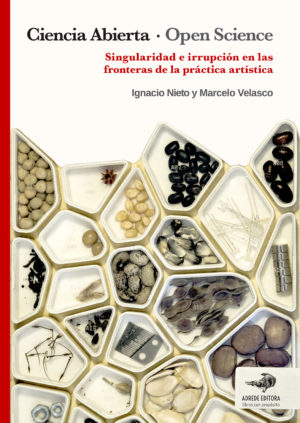
Open Science: Singularity and Irruption on the Frontiers of Artistic Practice

"'Open Science: Singularity and Irruption on the Frontiers of Artistic Practice' is research that deals with the work done by artists who [are trained in and] use scientific methodologies for their work production."

The publication proposes that when artists undertake science, their questions, methodologies and results are different than those of non-artistic scientists, and based in their very different "premises, ethics, prior knowledge, liberties, problematizations and aesthetics."

"The publication works with the hypothesis that art can produce knowledge, reviewing the relationship between art and science, based on interviews with five artists residing in different countries: Dmitry Bulatov (Russian Federation), Susana Soares (Portugal), Rachel Mayeri (USA), Gilberto Esparza (Mexico) and Perdita Phillips (Australia)."

Perception Is Not Static

It turns out that people with different personalities actually see different things. Artists and scientists, with their highly divergent training and experience, also see differently. Putting them to work on the same problems offers the potential for greater discovery, since we generally see what we expect to see, not what is really there.

Friday, June 2, 2017

Research support for art/sci intersections


The Notre Dame Institute for Advanced Study (NDIAS) is dedicated to
fostering and supporting integrative scholarship addressing ultimate
questions at the intersection of the arts, engineering, the
humanities, law, and the formal, natural, and social sciences,
especially those that transcend disciplinary boundaries.
http://ndias.nd.edu/fellowships/residential/

Research Support
The NDIAS offers residential fellowships for periods ranging from
three weeks to a full academic year (fall and spring semesters, August
through May). Fellowships range up to a maximum of $60,000 (gross
amount) per academic year (up to a maximum of $30,000 [gross amount]
per semester) or pro-rated amounts for shorter periods. In addition,
fellows who do not reside in the greater Michiana area are provided
with subsidized visiting faculty housing located adjacent to the
University during their fellowship. Applicants who require additional
support beyond the fellowship stipend should seek supplementary
funding in the form of external grants or sabbatical and other
contributions from their home institutions. When preferable due to
reasons such as faculty retirement contributions, ongoing employment,
or the tracking of external funding, the NDIAS will pay a fellowship
stipend directly to a Fellow’s home institution.

Application Instructions
https://ndias.nd.edu/fellowships/residential/application-instructions/

Monday, May 8, 2017

"Dan Goods, JPL's science seer"

Dan Goods, "Out There" at JPL.

This article from the LA Times archive profiles Dan Goods: Jet Propulsion Labs' (JPL) resident "Visual Strategist". Some quotes from Dan:
"I love the theme of seeing the unseen." 
"Everyone should have the opportunity to have a moment of awe about the universe. If I can create that, then I feel I've been successful."

"I've always had a good reaction [from scientists]. Sometimes their inner geek comes out: 'How did you do that?' These are huge problems these people are working on, really difficult and technical, and sometimes they forget about the big picture. So when I show them something, they're like, 'Yeah, that's why I'm doing this.' Now people come to me when they want something from a different perspective. They say, 'Oh, we should just go talk to Dan.'"
See more of Dan's work at his website:
http://www.directedplay.com/

And on his Vimeo channel:
https://vimeo.com/dangoods

Wednesday, April 19, 2017

Leonardo Abstract Services (LABS) for art/sci theses


Dear Faculty:

This is a reminder that you recommend to your students who have successfully finalized an MA, MFA or PhD thesis that in some way explores the intersection of art, science and/or technology to submit an abstract of their thesis to Leonardo Abstract Services (LABS). This database, which has over 500 thesis abstracts, can be found at collections.pomona.edu/labs/.

LABS offers an international platform for graduate work so that artists and scholars can participate in a dialogue with peers from around the world. Your support of their work and this project helps to invigorate the next generation and faculty who guide them. Thanks for your help with this.

All the best,

Sheila Pinkel
LABS English Language Coordinator

Thursday, February 2, 2017

Recent research on art at LTERs

From the authors...
-----------------------

Over the last 15 years activities at the art-science interface have grown within the US National Science Foundation-sponsored Long-Term Ecological Research (LTER) Network, a collection of 25 sites committed to long-term, place-based investigation of the natural world.

However, there is little empirical work on the value and effectiveness of this work. After launching a survey (n = 24, all PIs in the LTER Network) in 2013 to assess the values and challenges associated with arts and humanities in the LTER Network (Goralnik et al. 2015), which identified empathy as a meaningful potential outcome of this creative work, we conducted a follow-up analysis to understand:

  1. the relevance of empathy in the LTER Network; 
  2. the role of empathy in bridging arts, humanities, and science collaborations; and
  3. the capacity of empathy to connect wider audiences both to LTER science and to the natural world. 
Phone interviews with representatives from 15 LTER sites, as well as an audience perception survey at an LTER-hosted art show, found that arts- humanities-science collaborations have great potential to catalyze relationships between scholars, the public, and the natural world; cultivate inspiration and empathy for the natural world; and spark awareness shifts that can enable pro- environmental behavior (Goralnik et al. 2016).

This research demonstrates the potential for art-humanities- science collaborations to facilitate conservation attitudes and action in the Network and beyond.


Goralnik, L., Nelson, M.P., Gosnell, H., and Leigh, M.B. 2016. Arts and humanitiesinquiry in the Long-Term Ecological Research Network: Empathy, Relationships,and Interdisciplinary Collaborations. Journal of Environmental Studies and Sciences, forthcoming.

Goralnik, L., Nelson, M.P., Gosnell, Hannah, and Ryan, Leslie. 2015. Arts and humanities efforts in the US LTER network: Understanding perceived values and challenges. In R. Rozzi, F.S. Chapin, J.B. Callicott, S.T.A. Picket, M.E. Power, J.J. Armesto, and R.H. May Jr. (EDs.) Earth Stewardship: Linking Ecology and Ethics in Theory and Practice (pp. 249-269). Springer, Berlin.

Friday, November 18, 2016

Patterns of narrative

More and more, it seems clear that human thought naturally organizes itself along patterns of narrative.

Story is how we process and understand our world, then encode that information to pass along to others. There is an argument that information passed down through aboriginal Australian songs may encode verifiable geological events from 8,000 years ago. Their visual art tradition appears to do something similar. And--at its best--what is the Judeo-Christian bible if not distilled wisdom about how to be a human from about 10,000 years ago to 100 a.d.?

Business theory accepts this idea. The "knowledge transfer cycle" states that:
"Knowledge can be stored in databases, documentation, process tables, decision trees, wikis and quick reference guides. But one of the most powerful ways to store knowledge is through stories. Much knowledge, especially tacit knowledge, exists in the minds of the experts and can be made accessible through mentoring or through connections using social media tools."
In the 1960's, Philosopher Roland Barthes worked to understand in narrative, "a principle of classification and a basis of description," pointing out that "there is a deep gulf between the most complex product of chance, and the most simple conscious construction..." He looked for the rules governing narrative construction in narrative itself: all narrative.

More recently, story narrative has been getting attention from science.
"...mathematicians at the University of Vermont have now looked at more than 1,000 texts to see if they could automatically extract their emotional arcs. And their results show something interesting, not just about narratives, but also about using this approach to study literature."
Using digitized texts from Project Gutenberg, the study found 6 consistent patterns of story. And--startlingly--these patterns hold not just in fiction but in non-fiction as well. We impose these patterns on all communication.

So what does that mean to FSMLs? Only that if we are not creating our own narrative, someone else will do it for us (and we may not be happy with the results). Understanding narrative may be a scientific process, but creating it is not: it is an artistic one.

Friday, October 28, 2016

ArtScience Labs

"Le Laboratoire Cambridge is an interdisciplinary culture lab that invites visitors to explore the experiments and wonders of innovative artists, designers, chefs, and more discovering at the frontiers of science. 
Founded in Paris in 2007 by inventor, material scientist, and Harvard Professor David Edwards, Le Laboratoire now lives in Cambridge as the flagship of ArtScience Labs, a global organization dedicated to radical idea development."
* * *

Le Laboratoire is part of a larger effort at art/sci convergence for cultural change called, Artscience Labs.
"Culture labs conduct or invite experiments in art and design to explore contemporary questions that seem hard or even impossible to address in more conventional science and engineering labs."
"Many of the questions that we face today — questions of innovation, of change — are not really questions we can deal with in a classical science lab."


"Labs are places of experience. We enter to explore. Each minute in a functioning lab is like a page of a smart novel that loses meaning without reference to what came before and is about to follow. 
Art, like science, is such an experience, and, yet, we encounter art and science in our museums more frequently as outcome, as product – dug up, carved down, highly edited – that follows a mysterious process of creative thought and engagement... 
At The Laboratory, we look for novel ideas of art and design that cannot be properly formulated without a sustained encounter with a pioneering edge of science. We then help broker encounters between artists and scientists that permit concrete idea formulation. Once ideas are formulated, we invest in development of the experimental projects that result. In this way, artscience, the process of creative thought that synthesizes esthetic and analytical methods, becomes a catalyst for innovation and the basis for partnership."
ArtScience Labs includes an educational program called the ArtScience Prize, a global "catalyst for student learning through passionate pursuit of innovative art and design ideas at the cutting edge of science...the ArtScience Prize [is] an interdisciplinary education program that supports young people as they explore and develop groundbreaking ideas around an annual scientific theme, seek[ing] to prepare the next generation of innovators."

2013-14 Boston ArtScience Prize from ArtScience Prize on Vimeo.


The winners of all the ArtScience Prize programs are invited to the annual ArtScience Labs Annual Innovation Workshop, which is like a Silicon Valley development incubator.

2015 ArtScience Innovation Workshop from ArtScience Prize on Vimeo.

More videos from ArtScience Labs on Vimeo and Youtube 1 | 2.
Books on ArtScience by David Edwards:


Monday, September 19, 2016

Ars Biotica

From Ariane Koek:

=======================

Ars Biotica is a long term art and science collaboration between the Finnish society of Bioart, and Kilpisjarvi Biological Station which belongs of the Faculty of Biological and Environmental Sciences of the University of Helsinki. It has fostered interdisciplinary work since 2008, hosting arts and science activities as well as an artist in residency programme. The focus of the work is on Arctic nature, biology and ecology, with a special interested in the biology of war, snow and ice, environmental and climate change, and the relations between nature and culture perceived
through the lens of art and science.

Since 2010, around 40 artists from Finland and abroad have participated in the Ars-Bioarctica artist residency programme.

They have also hosted a biennial art and science field lab called Field_Notes that took place in 2011 and 2013. These labs were about supporting artistic fieldwork as a catalyst for other environmental
investigations.

Currently the majority of collaborations between the artists and the scientists have been initiated by the artists.

http://bioartsociety.fi/ars-bioarctica
http://bioartsociety.fi/ars-bioarctica-residency
Blog... http://www.bioartsociety.fi/residency/

Monday, August 22, 2016

Recent scholarship on art/science

Here are some interesting recent publications at the art/sci interface:


The Routledge Companion to the Environmental Humanities

Abstract:
The Routledge Companion to the Environmental Humanities, edited by Ursula K. Heise, Jon Christensen, and Michelle Niemann, is a collection of 45 essays, many of which were first drafted for the UCLA Sawyer Seminar on the Environmental Humanities in 2014-2015. It will be published in late 2016 or early 2017; see the table of contents below for a sneak peak. The volume brings together work by an international, interdisciplinary group of scholars and writers who address the Anthropocene, domestication, posthumanism, multispecies communities, narratives of decline and resilience, environmental history and memory, literature and ecocriticism, and environmental media, technologies, and art. The result is an important reflection on and assessment of the environmental humanities now.

More Info: Forthcoming in late 2016 or early 2017


Combining Art and Science for Conservation Outreach of Ectothermic Vertebrates (Amphibians and Fishes), Brandon Ballengee & Prosanta Chakrabarty

Abstract: 

Although artists and biologists tend to stay confined to their professional boundaries, and their discourses largely remain inaccessible to larger audiences, evidence is presented here for a combined approach, which may affectively disseminate knowledge about amphibians and fishes to non-specialists through novel art-science participatory research and exhibitions. In this study evidence is presented that suggests combining art with biology may successfully increase public understanding of the international decline of amphibian and fish populations, as members of the public achieved increased understanding of ectothermic vertebrate conservation issues through direct participation (citizen science) in primary scientific studies. Likewise, art inspired from these research experiences was exhibited internationally with the intention of furthering a conservation message and results from questionnaires suggests visitors gained an increased awareness of the threats many species of amphibians and fishes currently face. Historically many scientists utilized varied creative art forms to disseminate scientific insights to a larger populace of non-specialists, such strategies as visually provocative artworks may still be effective to captivate contemporary audiences. As today's environmental issues are often complex and large-scale, finding effective strategies that encourage public awareness and stewardship maybe paramount for long-term conservation of species and ecosystems.


Constructing reality - The Museum of Jurassic Technology
Mapping the Musesphere - Cultures of Exhibition and Technologies of Display MPhil/PhD, Media and Communications, Goldsmiths College, University of London, 2006, Chapter 5 - Displaying Mimesis: Fakes, Facsimiles and Fabrications

While we might be confident in our faith in our fakes, we have a different kind of faith in museums. Through their traditions of integrity and open-door policy, and as inscribed in legislation, museums assure their public of their authority to collect, conserve and exhibit the cultural heritage on behalf of their public... Confounding the very notion of the integrity of the museum to tell the truth, though, the Museum of Jurassic Technology in Los Angeles, California tells another story. Promoted as an educational institution dedicated to the advancement of knowledge and the public appreciation of the Lower Jurassic, their narratives do not fall into any known museum categories.

Friday, June 17, 2016

CFP: Ecology and Society

From Susan Jacobson:
Editors-in-Chief Carl Folke and Lance Gunderson are pleased to announce the publication of Volume 20, Issue 4 of Ecology and Society. 
The Reconciling Art and Science for Sustainability special feature edited by Frances Westley, Marten Scheffer, and Carl Folke will remain open to submissions until July 2016. This feature invites papers on the topic of how art and science may be integrated for transformative understanding, increased motivation and new insights.
"Why is science  perceived as entirely different from art? Both attempt to capture the essence of the world around us in novel and eye-opening ways. Still, the approaches are strikingly complementary. This suggests the potential for synergy. What can we learn from each other when it comes to the process of creative inquiry? Could we cooperate to fathom the unknown unknowns, finding important new questions that we had never thought of? This special feature invites papers on the topic of how art and science may be integrated for transformative understanding, increased motivation and new insights into how to build social ecological resilience."

Note: page charges may apply.

Thursday, June 9, 2016

The Confluence Projects, Todd Gilens


Artist Todd Gilens works with Sagehen Creek Field Station outside of Truckee, CA and Reno, NV, and the Sierra Nevada Aquatic Research Lab (SNARL) near Mammoth Lakes, CA. His work there includes:
"...literature reviews, interviews and field work with researchers to understand the language, methods and motivations of stream science, as well as how streams are responding to climate changes."
Gilens has been working in the field and lab with invertebrate biologists David Herbst, Bruce Medhurst and Ian Bell, "considering how to bring aspects of their work to the average urban citizen".

A recent post from the artist's project newsletter illuminates some of the work emerging from that relationship.

From Gilen's crowd-funding website:
In my artworks, I borrow lecture halls, public transit vehicles, nursery propagation houses and other existing structures, adding images that make their meanings more legible. This new project emerged from visits to ecological field stations, where I compared my methods to those of field scientists’ and considered how both could inform our understanding of critical urban systems.  
“Confluence” will use the tops of urban curbs as a space to communicate with pedestrians about flowing water, stream science and the urbanization of landscapes. Using script fonts derived from local historical people’s handwriting, texts will be cut from bright yellow reflective traffic-marking tape and laid down along a mile of curbs, zigzagging from block to block on routes that follow the street grid overlay of former stream channels.

Tuesday, January 19, 2016

How The Arts Enhance Learning


Mariale Hardiman, Vice Dean, Academic Affairs, Professor of Clinical Education, and Co-founder and Director of the School of Education's Neuro-Education Initiative, Johns Hopkins University, Baltimore.

Read the referenced paper, The Effects of Arts Integration on Long-Term Retention of Academic Content. Hardiman, et al. 2014.