Showing posts with label book. Show all posts

Wednesday, May 16, 2018

Long-awaited paper now out

The Integration of the Humanities and Artswith Sciences, Engineering, and Medicine inHigher Education: Branches from the Same Tree (read online, or order a hard copy).

The National Academy of Sciences commissioned this report on the value of STEMM integration in higher education. From a highlights document:
"This study examined an important trend in higher education: integration of the humanities and arts with sciences, engineering, and medicine at the undergraduate and graduate level—which proponents argue will better prepare students for work, life, and citizenship...This movement in higher education raises an important question: what impact do these curricular approaches have on students? 
To address this question, the National Academies of Sciences, Engineering, and Medicine formed a 22-member committee to examine 'the evidence behind the assertion that educational programs that mutually integrate learning experiences in the humanities and arts with science, technology, engineering, mathematics, and medicine (STEMM) lead to improved educational and career outcomes for undergraduate and graduate students.' The committee conducted an in-depth review and analysis of the state of knowledge on the impact of integrative approaches on students."
 The results are encouraging:
"Aggregate evidence indicates that some approaches that integrate the humanities and arts with STEMM are associated with positive learning outcomes. Among the outcomes reported are increased critical thinking abilities, higher-order thinking and deeper learning, content mastery, problem solving, teamwork and communication skills, improved visuospatial reasoning, and general engagement and enjoyment of learning. 
An important observation was that the kinds of outcomes associated with certain integrative approaches in higher education are the educational outcomes that many employers presently seek. Employer surveys consistently show that employers want well-rounded individuals with a holistic education who can take on complex problems and understand the needs, desires, and motivations of others. Importantly, these learning goals and competences are similarly valued by institutions of higher education. The committee considered multiple forms of evidence as it developed the following recommendations for institutions, faculty, administrators, scholars of higher education, and federal and private funders. The recommendations fall under four main areas:"

  1. Support for Integrative Approaches
  2. Evaluating Integrative Courses and Programs
  3. Enhancing Inclusivity Through Integrative Courses and Programs
  4. Removing the Barriers to Integrative Approaches 
The paper concludes that:
"Higher education should strive to offer all students—regardless of degree or area of concentration—an education that exposes them to diverse forms of human knowledge and inquiry and that impresses upon them the fact that all disciplines are 'branches of the same tree.' Such an education should empower students to understand the fundamental connections among the diverse branches of human inquiry—the arts, humanities, sciences, social sciences, mathematics, engineering, technology, and medicine."

Saturday, April 28, 2018

Classic book in the art/sci genre

A Cultural History of Physics, by Karoly Simonyi.


"While the physical sciences are a continuously evolving source of technology and of understanding about our world, they have become so specialized and rely on so much prerequisite knowledge that for many people today the divide between the sciences and the humanities seems even greater than it was when C. P. Snow delivered his famous 1959 lecture, "The Two Cultures."
In A Cultural History of Physics, Hungarian scientist and educator Karoly Simonyi succeeds in bridging this chasm by describing the experimental methods and theoretical interpretations that created scientific knowledge, from ancient times to the present day, within the cultural environment in which it was formed. Unlike any other work of its kind, Simonyi's seminal opus explores the interplay of science and the humanities to convey the wonder and excitement of scientific development throughout the ages.

These pages contain an abundance of excerpts from original resources, a wide array of clear and straightforward explanations, and an astonishing wealth of insight, revealing the historical progress of science and inviting readers into a dialogue with the great scientific minds that shaped our current understanding of physics.

Beautifully illustrated, accurate in its scientific content and broad in its historical and cultural perspective, this book will be a valuable reference for scholars and an inspiration to aspiring scientists and humanists who believe that science is an integral part of our culture."
Download an excerpt here. If you happen to have a real copy, consider scanning it for us--it's impossible to find (except for hundreds of dollars--or more--from scalpers on Amazon). It's even expensive on Kindle!

Read another review.

Sunday, November 5, 2017

Article from Conservation Biology, and book from Oxford Press

Here's an interesting 2007 article by Jacobson, McDuff and Monroe from the journal Conservation Biology, titled Promoting Conservation through the Arts: Outreach for Hearts and Minds:
Emotions play a central role in the decisions we make. For example, we often make poor investment choices because we are driven by our emotions rather than rational judgment (Tversky & Kahneman 1991). On the positive side, when emotional input is added to learning experiences, it makes them more memorable and exciting. The brain deems the information more important and enhances memory of the event. Presenting facts alone is less likely to result in long-term changes in feelings and behaviors (Sylwester 1994; Weiss 2000; Cable & Ernst 2003). 
The arts offer a way to make an emotional connection to people, and the visual and performing arts can help conservation practitioners reach new audiences. Art can provoke reactions that typical education and outreach methods do not. Art has the potential to inform audiences or participants in a new way about conservation topics, and it can stimulate new dialogues and actions...


The essay was based in part on the planning, implementation, and evaluation guidelines for using the arts in conservation, published as a meaty and thought-provoking chapter in Conservation Education and Outreach Techniques, Susan K. Jacobson, Mallory D. McDuff, and Martha C. Monroe.


Monday, October 30, 2017

Environmental Art and Green Economy at COP23 in Bonn

Von: Environment Europe <environment.europe@gmail.com>
An: Climate Change Info Mailing List <climate-l@lists.iisd.ca>
Datum: 29. Oktober 2017 um
Betreff: Environmental Art and Green Economy at COP23 in Bonn
Dear Colleagues,

Environment Europe Ltd is very pleased to announce a Green Economy and Environmental Art focused session at the forthcoming UNFCCC COP23 meeting in Bonn to take place at 15:00 November 17th, [2017] in the Press Conference Room 2 in the Bula Zone.

Environmental art could be a new language to reach the hearts and minds of wider public on the most important issues our planet is facing. The “Magical Realism” series to be exhibited at the forthcoming United Nations UNFCCC COP23 meeting in Bonn is drawing our attention to the importance of ecosystems in everything we do. 'Magical realism' series depicts ecologically sensitive and often protected areas in Latin America. Through his work with International Union for Conservation of Nature, the artist developed a new approach to assess the value of ecosystems, highlighting social, ecological and economic dimensions. By capturing unique and meditative landscapes in most exotic locations, the artist aims to communicate the fragile beauty of nature, something money can’t buy. Ecosystems support life on this planet, regulating water cycles, generating oxygen, capturing CO2, absorbing dust, purifying water and processing organic waste. Ecosystems need to be restored and preserved for other reasons other than economic. What is required seems to be a paradigm shift in economic thinking, that could be inspired by ecological economics, a new interdisciplinary field.

The new series from Colombia, one of the world’s “megadiverse” countries, hosting close to 10% of the planet’s biodiversity according to the Convention on Biological Diversity, includes travel notes from high altitude wax palm forest 'El Bosque la Samaria', a charming coffee-producing town of Salamina, Colombian humming birds, Sumapaz Paramo National Park, the beautiful and colourful Cartagena de Indias, the ancient Spanish port city, which saw violent pirate attacks from Francis Drake, and, finally, Tayrona National Park on the Caribbean coast, where fresh jaguar footprints were found on one of the beaches. A small selection of images from this series, made using Hasselblad medium format film camera and Fuji film will be exhibited at the forthcoming United Nations COP23 meeting in Bonn.

Environmental art can be a powerful language to attract attention to the world’s most important problems: climate change, biodiversity loss, plastics pollution in our oceans, the impact our production activities have on this planet. Following in the footsteps of great environmental artists: Sebastiao Salgado, Edward Burtynsky, James Balog, David Maisel and Yann Arthus-Bertrand, Dr Stanislav Shmelev trying to address the issues the world is facing not just through the language of science but the language of art. Engaging the audience’s emotional intelligence and the art historical connotations, his works are aiming to make people pause and think. The most interested viewer could of course read the volumes of theory that Dr Shmelev has edited and written. One of them is called ‘Ecological Economics: Sustainability in Practice’ (2012) and has become a bestseller with over 26000 downloads. The executive education Summer and Winter Schools in Ecological Economics which Dr Shmelev has initiated and run are focusing on inspiring change for sustainability and have already been attended by participants from 52 countries.

The forthcoming session to take place on the 17th of November 2017 will also be a cause for celebration of a new collaborative book that Dr Shmelev has edited. It is entitled 'Green Economy Reader' and is a collection of though provoking articles by the leading sustainability thinkers of our time. State of the art in sustainability thinking, inspired by interdisciplinary ideas of ecological economics, this book is focusing on sustainability pathways, new economic theory, democracy and institutions, multidimensional assessment of sustainability, macroeconomic modelling and policies, climate change and renewable energy, resource flows and circular economy, regenerative cities, environmental conflicts and values. It will be helpful for MSc and PhD students in Economics, Management, Environmental Change, Ecological Economics, Development Economics, Sustainability and practitioners in business, international and nongovernmental organizations, such as UNDP, UNEP, IUCN, OECD. Rich, diverse and thought provoking collection of top level contributions, it will help to facilitate the transition towards sustainability and educational reform.

This is what the endorsements read:
  • A fabulous composition of papers by the authors who really count! -- Ernst von Weizsäcker, The Club of Rome
  • The authors present a refreshing perspective on the possibilities of human progress in harmony with nature, without the need for economic growth to secure long term human welfare and wise use of nature's services. Extremely relevant. -- Peter May, Past President, International Society for Ecological Economics and Professor, UFRRJ, Rio de Janeiro, Brazil
  • The book goes well beyond the Green Economy, offering arguments and blueprints for a complete makeover of the current economic system. With multi- and interdisciplinary contributions ranging from moderately to fundamentally critical of current economics, it raises fundamental questions of value and power, draws on a wide range of theories, opens the eyes for the historical processes that brought about the current crises and demonstrates the value of ecological, but also classical economic thinking to their solution. If better politics require better theories, this is a must read for academics and decision makers in the time of climate crisis. -- Joachim Spangenberg, Sustainable Europe Research Institute, SERI Germany e.V.


Press inquiries regarding the forthcoming presentation at UNFCCC COP23 meeting in Bonn should be directed to director@environmenteurope.org

Dr Stanislav Shmelev is an award winning British photographer, painter, and ecological economist. Holding PhD in Ecological Economics (2003), a LEAD Europe Fellowship (2007) and named on of top four most promising young economists in the world by the Handelsblatt Newspaper.

Stanislav combines his interest in fine art and sustainability and expresses his admiration for the natural world through oil paintings and photographs, printed on aluminium plates. Passionate about green economy, nature protection and sensitive ecosystems, Stanislav creates evocative environmental landscapes inspired by his travels in Brazil, Colombia, Malaysia, UK, France and the countries of the Mediterranean. Formerly a member of the IUCN World Commission on Protected Areas, Senior Researcher at the Oxford University, and Visiting Professor at Universities of Geneva, Paris and Versailles.

Stanislav devotes all his energy to the promotion of sustainability ideas both through the language of art and of science. Stanislav has been a Member of the St Ives Arts Club, was represented by DEBUT Contemporary Gallery in Notting Hill (London), had several solo shows at Oxford University, exhibited with the STITCH ‘Art for the Earth’ auction in London alongside Vivienne Westwood and Marc Quinn, STITCH & OCEANA show at PHILLIPS (London), Swiss Cottage Gallery (London), Royal College of Art (London), O3 Gallery (Oxford), OVADA Gallery (Oxford), Studio 44AD (Bath), Prince Galitzine Library (St Petersburg), British Council (St Petersburg), FOTONOVIEMBRE de Tenerife International Photography Festival (Spain), Brighton Photo Biennial 2014 (Brighton), Brighton Photo Fringe 2014 (Brighton), Global Landscapes Forum (Lima, Peru), United Nations (Vienna, Austria) and is selling his work through SAATCHI ART. 

Stanislav is an author ‘Ecological Economics: Sustainability in Practice’ (Springer, 2012) and author and editor of 'Green Economy Reader' (Springer, 2017) and 'Sustainability Analysis: An Interdisciplinary Approach' (Palgrave, 2012). His image ‘Complex Systems. Dorset’ is published by National Geographic in an edited volume.

--

Dr Stanislav E. Shmelev
Director, Environment Europe Ltd,
Oxford, UK

Environment Europe Limited is incorporated in the United Kingdom under the Companies Act 2006 as a private company, Reg. 9328647
Tel: +44(0) 7729 733366
E-mail: director@environmenteurope.org
http://environmenteurope.org/education/7 http://twitter.com/#!/Environment_EU http://twitter.com/#!/Environment_Art http://www.facebook.com/EnvironmentEurope

New article: Shmelev and van den Bergh (2016) Optimal Diversity of Renewable Energy Alternatives under Multiple Criteria: an Application An Application to the UK': http://www.sciencedirect.com/science/article/pii/S1364032116001301

New book: Shmelev S.E. (2016) Green Economy Reader: Lectures in Ecological Economics and Sustianability: http://www.springer.com/kr/book/9783319389172 New book: Ecological Economics: Sustainability in Practice (Springer, 2012) http://www.springer.com/economics/book/978-94-007-1971-2

New book: Sustainability Analysis: an Interdisciplinary Approach (Palgrave, 2012) http://www.palgrave.com/products/title.aspx?pid=539023

Tuesday, September 20, 2016

The Time of the Force Majeure...

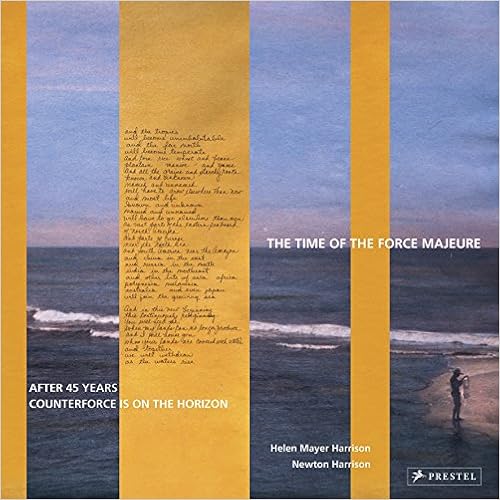
The Time of the Force Majeure: After 45 Years, Counterforce is on the Horizon
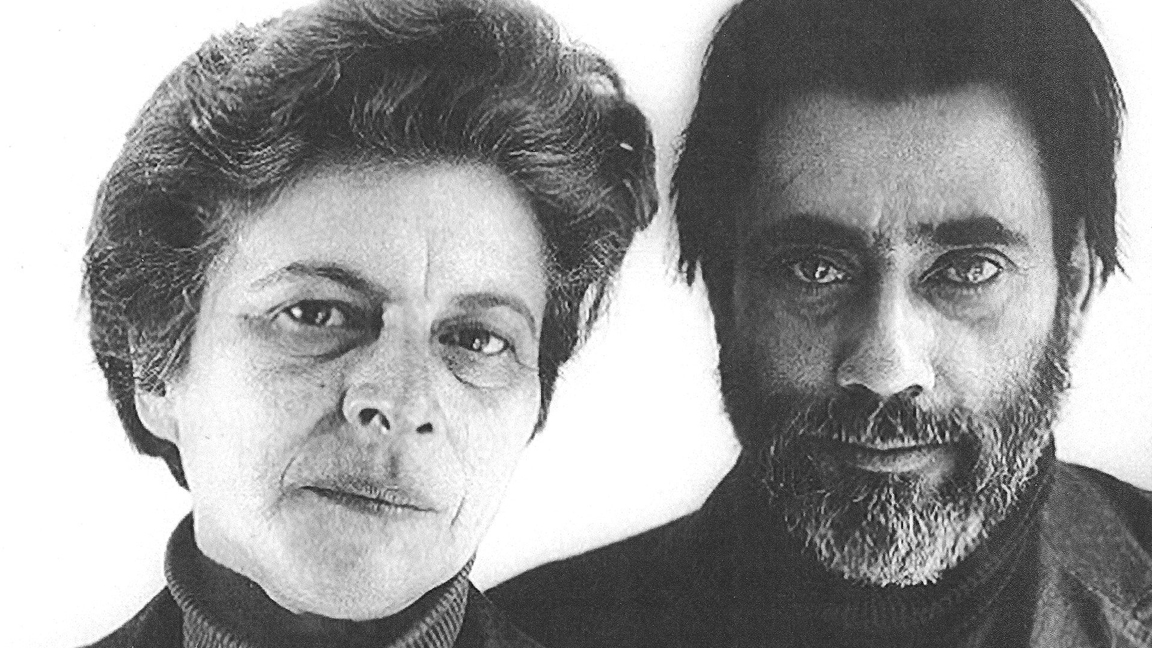
This book offers a 21st-century manifesto from the pioneers of the eco-art movement. Since the 1970s Helen and Newton Harrison have been creating art inspired by the earth. They established a worldwide network among biologists, ecologists, architects, urban planners, politicians, and other artists to initiate collaborative dialogues about ideas and solutions which support biodiversity and community development. This definitive survey traces an influential joint career that has lasted nearly half a century. Organized chronologically, it features works from each decade, from their earliest installations to their continent-traversing work of the 1990s; and their most recent works both educating people about global warming and designing large scale responses to the phenomena itself.
Helen and Newton Harrison's work demonstrates the surprising power of art to change society and influence or even create environmental policy. The scope and impact of their work is astonishing and transcends typical art boundaries. For example:
  • 1974- Crab Farm. First people in the world to discover how to get a mangrove crab to reproduce and survive in captivity. As a result first artists ever awarded a Sea Grant by Scripps institute. 
  • 1981- Baltimore Promenade. Citywide redesign centered on rebuilding the decaying promenade system in downtown Baltimore creating the cultural corridor. $15 million dollar work was incorporated into the city plan. 
  • 1989- Sava River. Long-term environmental recovery plan for Sava River, the largest tributary of the Danube. Adopted by Croation Water Department prior to breakup of Yugoslavia. Plan survived the Civil Wars and was expanded to neighboring Drava River system. Awarded Nagoya Biennale prize. 
  • 1994-2001 Greenheart Vision. Worked with a team of planners in Holland to save the 800 sq km “Greenheart” of Holland from a $220B destructive development plan. Transformed regional development. Awarded Groenveld prize. 
  • 2005-2007 Greenhouse Britain. 3-year collaboration with the Department for Environment, Food & Rural Affairs to increase climate awareness in England. Large-scale community work successful at democratizing the planning process. Awarded CIWEM prize.

Thursday, February 11, 2016

How two Santa Cruz artists changed the course of environmental history

KQED recently produced this profile of Helen and Newton Harrison, the parents of the eco-art movement. The piece includes a radio broadcast, and a more detailed web article with photos.
"Widely known as the parents of the eco-art movement, the Harrisons have become world-renowned for using art to tackle environmental problems on a massive, global scale."
The Harrisons partnered with UC Berkeley's Sagehen Creek Field Station and the Center for Art + Environment at the Nevada Museum of Art for a project looking at native vegetation manipulations to mitigate snowpack conversion to rain. This is part of a larger, worldwide, climate-themed effort they call "Force Majeure" that seeks to find answers to thorny environmental issues.

More info about the Harrison Project at Sagehen.

Monday, December 7, 2015

Book Recommendations


This post is a running list of recent book recommendations from ArtSciConverge participants that explore the art/sci interface in the natural world. There is also a good list of related books on the "SciArt in America" blog.

I created a list on Amazon with additional titles that may be interesting.


Arts Programming for the Anthropocene: Art in Community and Environment, Bill Gilbert and Annica Cox.

Arts Programming for the Anthropocene argues for a role for the arts as an engaged, professional practice in contemporary culture, charting the evolution of arts over the previous half century from a primarily solitary practice involved with its own internal dialogue to one actively seeking a larger discourse. The chapters investigate the origin and evolution of five academic field programs on three continents, mapping developments in field pedagogy in the arts over the past twenty years. 

Drawing upon the collective experience of artists and academicians in the United States, Australia, and Greece operating in a wide range of social and environmental contexts, it makes the case for the necessity of an update to ensure the real world relevance and applicability of tertiary arts education. Based on thirty years of experimentation in arts pedagogy, including the creation of the Land Arts of the American West (LAAW) program and Art and Ecology discipline at the University of New Mexico, this book is written for arts practitioners, aspiring artists, art educators, and those interested in how the arts can contribute to strengthening cultural resiliency in the face of rapid environmental change.
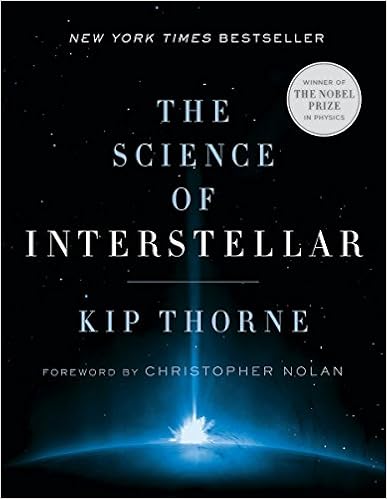

"...in The Science of Interstellar, Kip Thorne, the Nobel prize-winning physicist who assisted Nolan on the scientific aspects of Interstellar, shows us that the movie’s jaw-dropping events and stunning, never-before-attempted visuals are grounded in real science. Thorne shares his experiences working as the science adviser on the film and then moves on to the science itself. In chapters on wormholes, black holes, interstellar travel, and much more, Thorne’s scientific insights―many of them triggered during the actual scripting and shooting of Interstellar―describe the physical laws that govern our universe and the truly astounding phenomena that those laws make possible."


SILENT SPRING IS MORE THAN A SCIENTIFIC LANDMARK: IT’S LITERATURE
On the under-rated poetry of Rachel Carson's masterpiece.
"Carson accomplished the feat of raising a public outcry against DDT not just with her research on its deleterious effects, but with the descriptive imagery, strong rhetoric, and poetic language that lift Silent Spring into the realm of other great works of American literature."
Rachel Carson’s Radical Perspective On The Natural World

"Carson’s book Silent Spring, published in 1962, created a widespread shift in how the general population perceived the effects of human impact on the natural environment. Her writing combined scientific studies and research, with anecdotes from American house wives about dead birds and squirrels, to create a scathing argument against the negative impacts of chemical pesticide use, specifically DDT, in the post-war period. Silent Spring became a bestseller and went on to bolster the environmental conservation movement prompting significant U.S. government policy changes banning the use of DDT.

Silent Spring was not Carson’s first book. Her three previous titles dealt with the wonders of the sea. The NY Times reports: 'Carson believed that people would protect only what they loved, so she worked to establish a “sense of wonder” about nature. In her best-selling sea books — The Sea Around Us, The Edge of the Sea, and Under the Sea-Wind — she used simple and sometimes sentimental narratives about the oceans to articulate sophisticated ideas about the inner workings of largely unseen things.'"


"In this exquisitely researched work of fiction, Sylvia Torti explores sex and science, memory and forgetting, and how, in laboratory research on living organisms, we often destroy what we love.”--Sy Montgomery, author of The Soul of an Octopus, finalist for The National Book Award.

More info. Available on Amazon.


The term “PARANOMIA” has multiple meanings, one of them being that which exists alongside the normative. In his inquiry into the entangled aspects of science and contemporary art, Christoph Keller outlines how knowledge is derived in the respective fields.

Available at Spector Books.


The Time of the Force Majeure: After 45 Years, Counterforce is on the Horizon

This book offers a 21st-century manifesto from the pioneers of the eco-art movement. Since the 1970s Helen and Newton Harrison have been creating art inspired by the earth. They established a worldwide network among biologists, ecologists, architects, urban planners, politicians, and other artists to initiate collaborative dialogues about ideas and solutions which support biodiversity and community development. This definitive survey traces an influential joint career that has lasted nearly half a century.
 
More here.


Vladimir Nabokov's career in science, included "a stint as the lepidoptery curator at Harvard University’s Museum of Comparative Zoology in the 1940s...his scientific work has mostly been treated as a curious fact rather than something of a significance on par with his writing. Fine Lines: Vladimir Nabokov’s Scientific Art, edited by Stephen H. Blackwell and Kurt Johnson and released earlier this year by Yale University Press, is one of the first works to thoroughly investigate his butterfly studies and scientific illustrations."
That Nabokov showed such insight despite working with such apparently limited tools at his disposal argues that he was more than just a competent taxonomist. His work in the Neotropical Polyommatus Blues stands out as a bold and brilliant scientific advance.


"Using the arts for conservation can help attract new audiences, increase understanding, introduce new perspectives, and create a dialogue among diverse people. The arts — painting, photography, literature, theatre, and music — offer an emotional connection to nature. This chapter provides examples of using the arts to inspire people to take action. Planning art activities requires reaching out to artists and the art community, audiences with whom scientists and educators may seldom interact. Conservation problems require creative solutions. It makes sense to access more ways of knowing the world in order to take care of it." -- Oxford Press


"Herman convincingly argues that closely analyzing works of art is an empowering exercise that translates to seeing the 'hidden' clues in many real-life scenarios...

Yet despite her expert clientele, Herman amply demonstrates that tapping into an inner Sherlock Holmes isn't only a skill for investigators and that heightened observation is critical to communicating effectively, empathizing with others, and making informed decisions." -- Amazon.com


"This anthology―which includes work by some of the nation's most accomplished writers, including Sandra Alcosser, Alison Hawthorne Deming, Jane Hirshfield, Linda Hogan, Freeman House, Robin Wall Kimmerer, Kathleen Dean Moore, Robert Michael Pyle, Pattiann Rogers, and Scott Russell Sanders―grows out of the work of the Long-Term Ecological Reflections program and showcases the insights of the program's thoughtful and important encounters among writers, scientists, and place.

These vivid essays, poems, and field notes convey a landscape of moss-draped trees, patchwork clear-cuts, stream-swept gravel bars, and hillsides scoured by fire, and also bring forward the ambiguities and paradoxes of conflicting human values and their implications for the ecosystem.

Forest Under Story offers an illuminating and multifaceted way of understanding the ecology and significance of old-growth forests, and points the way toward a new kind of collaboration between the sciences and the humanities to better know and learn from special places." -- Amazon.com


"Why do we covet beauty? Why does art, which seems to serve little practical purpose, feel fundamental to our lives?

Such questions have long fascinated philosophers and artists. Now neuroscientists are weighing in as well. The Aesthetic Brain explores the field of neuroaesthetics, the science of how our brain experiences and responds to art, music and objects of beauty. Chatterjee, a neuroscientist, argues that an instinct for beauty has helped our species endure. Art is a product of our quest for beauty and knowledge." -- Scientific American


Experiencing Art: In the Brain of the Beholder

"Shimamura has written the ideal introduction to what science can say about artworks, from prehistoric carvings to the latest video projections. It's readable, smart and informed. Better yet, it's a scientist's take that doesn't neglect the humanities: Shimamura cares about which neurons fire, but also about what Plato thought."

 -- Blake Gopnik, art critic, Newsweek and The Daily Beast


12-7-15: "An audacious collaboration between an award-winning novelist and a leading environmental philosopher, Love in the Anthropocene taps into one of the hottest topics of the day, literally and figuratively—our corrupted environment—to deliver five related stories (“Flyfishing,” “Carbon,” “Holiday,” “Shanghai,” and “Zoo”) that investigate a future bereft of natural environments, introduced with a discussion on the Anthropocene—the Age of Humanity—and concluding with an essay on love.

The “love” these writer/philosophers investigate and celebrate is as much a constant as is human despoliation of the planet; it is what defines us, and it is what may save us. Science fiction, literary fiction, philosophical meditation, manifesto? All the above. This unique work is destined to become an essential companion—a primer, really—to life in the 21st century."

Wednesday, June 10, 2015

Scientist turns writer

Author Mark Winston studied bees academically for decades before turning to lyrical prose. This book is an interesting example of both his science and art.

Tuesday, March 3, 2015

Sunday, October 12, 2014

Art + Environment Conference, Oct. 9-11, 2014

We've just returned from the triennial Art + Environment Conference at the Nevada Museum of Art in Reno. The conference occurred around a new, taxidermy-themed exhibit entitled "Late Harvest", that was thought-provoking and ground-breaking. If you are in the area, you might try to see it.

The conference is an absolutely remarkable event focused on "art that walks in the world", that is to say, art that has a real contribution to and influence on the culture and environment. Jeff and I presented very briefly about Sagehen during one of the lunch sessions on the Harrison project, and I believe we have started conversations that will lead to new art/science projects on the ground at Sagehen.

This is the premiere event of its kind in the world, and I can't recommend the conference highly enough to anyone with an interest in the intersection of art and science. Attendees came from all over the world and included educators and science practitioners, as well as museum reps, artists, writers and poets. Everyone seems to value collaboration and discussion with scientists, though many folks I spoke to don't seem to know where to start.

"Fighting Lions" by A. Worthington, c. 1880.
There were some very interesting presentations on more theoretical aspects of the linkage between art and science, including one from Adam Duncan Harris, the Peterson Curator of Art and Research at The National Museum of Wildlife Art in Jackson Hole, which lent a number of historic wildlife paintings to the Late Harvest exhibit.

Harris discussed how Darwin was influenced by the Romantic tradition of wildlife painting to emphasize a vision of inter-species competition that was far bloodier, over-the-top and dramatic than more recent scholarship has revealed to be the case.

Of course, Darwin's own work then fed back into the art world and made it mandatory to create natural history illustrations from life observations within the natural environment, rather than from the out-of-context and often falsely depicted taxidermy models previously employed.

The NMA video-recorded the conference and will eventually make the material available on line, though the timeline is somewhat hazy. I'll update this post when the videos become available.

===================

Update: 10-18-14

The Nevada Museum of Art has generously shared the PDF of the Late Harvest exhibit catalog with us. This catalog includes the essay by Adam Duncan Harris mentioned above, as well as additional relevant material.

Enjoy, and let us know what you think!

Update: 12-27-14

Orion Magazine has published a series of conference recap posts. There is an interesting and thought-provoking comment made by artist David Brooks about how biologists are the true avant-garde thinkers of our time.